Health Board greens Tallinn's 2-member ambulance crews
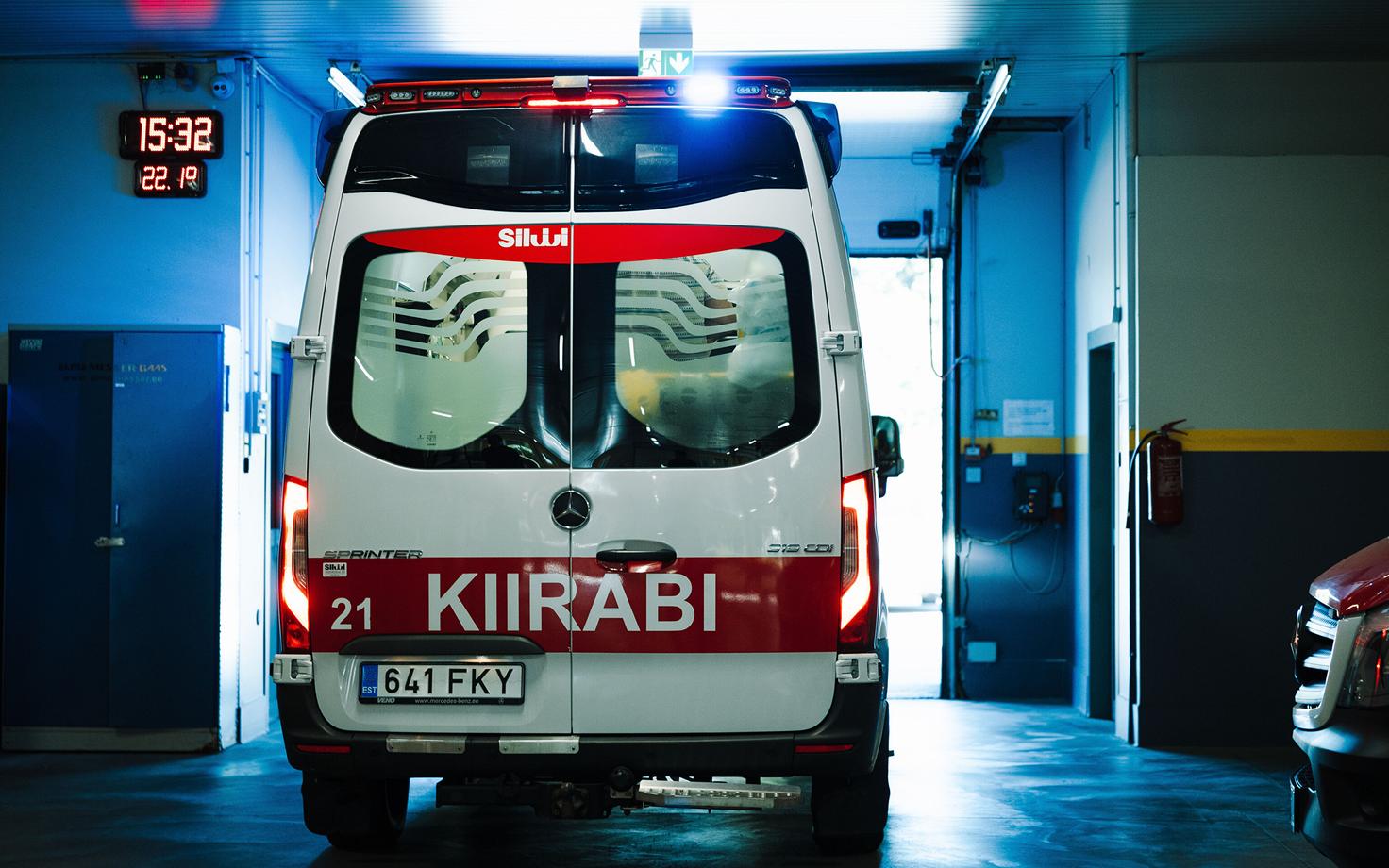
The Health Board has authorized Tallinn Ambulance to operate two reduced-staff nursing ambulance crews during daytime hours in 2027.
Birgit Lao, director general of the Health Board, signed a decision this week allowing Tallinn Ambulance to operate two reduced-staff nursing ambulance crews from January 1 through the end of 2027. One crew will be based in Haabersti and the other in Lasnamäe.
The reduced-staff crews may operate only during daytime hours, from 9 a.m. to 9 p.m.
The main reason the Health Board granted Tallinn the authorization is the city's population growth over the past 15 years. Between 2012 and this year, the capital's population has increased by nearly 50,000 people, or 12 percent, while growth has been even faster in percentage terms in the municipalities surrounding Tallinn.
"Population growth and aging are expected to increase demand for ambulance services and the likelihood of simultaneous emergency calls. It is therefore justified to expand Tallinn's ambulance resources to ensure that emergency medical services remain accessible and capable of responding even as demand grows," Lao said.
According to the Health Board, the data collected provides sufficient evidence that the increased workload in Tallinn is neither isolated nor temporary, but reflects a persistent gap between the region's ambulance resources and actual demand.
The Health Board noted that authorizing additional reduced-staff crews is also consistent with the findings of its analysis of ambulance network planning.
Under a regulation dating from 2016, the Health Board may authorize an ambulance service provider to operate a reduced-staff crew if doing so improves the quality, accessibility and efficiency of ambulance services.
The Health Board's decision has also been approved by the Estonian Health Insurance Fund.
According to the Health Board's 2025 analysis of ambulance utilization, Tallinn's ambulance crews had a utilization rate of 53 percent during the day, between 9 a.m. and 8:59 p.m., compared with 28 percent at night, between 9 p.m. and 8:59 a.m. This indicates an excessive workload, with utilization rates nearly twice as high as in other counties.
The decision noted that Tallinn has experienced situations in which its regular ambulance resources were insufficient to handle the volume of emergency calls. As a result, additional crews have repeatedly had to be deployed in Tallinn, approximately 10 times a year, with the approval of the Health Board's on-call operations staff.
--
Editor: Marko Tooming, Marcus Turovski


