Estonia to cut doctor-led ambulance crews as medics split over plan
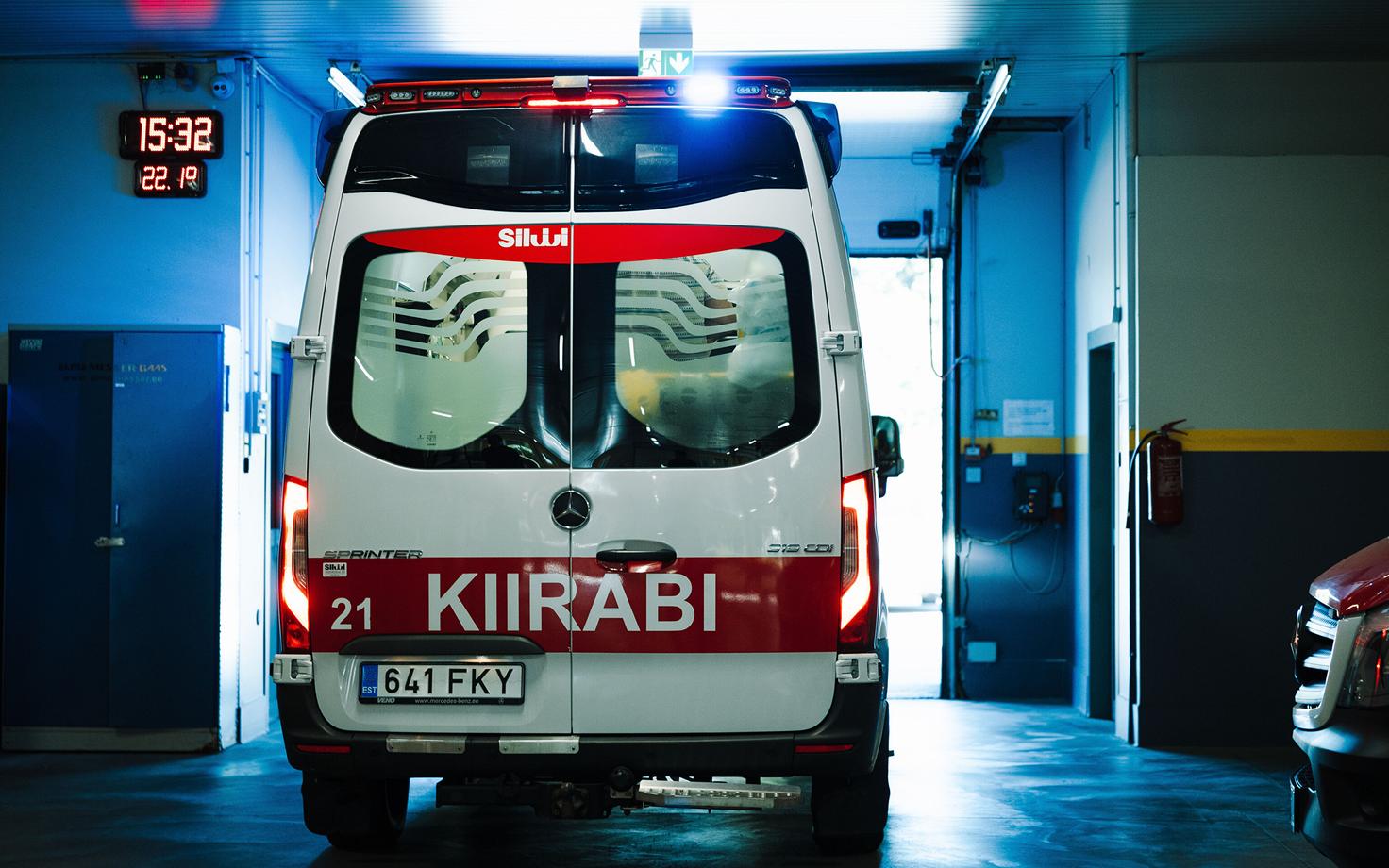
The Ministry of Social Affairs plans to cut back on Estonia's 13 doctor-led ambulance crews, a move which has divided medics and left potential job losses unclear.
Arvi Vask, head of South Estonian Hospital (õuna-Eesti haigla), argues the doctor-led crews are not sensible and that nurses can do the job just as well.
Estonia has 13 ambulance crews that include a doctor as well as a nurse, in addition to mobile intensive care units, paid for by the Health Insurance Fund at higher rates.
"As far as I know, there is one doctor-led ambulance crew in Annelinn because it was once claimed that Annelinn is very far from the university hospital, so there must be a doctor-led crew in Annelinn. That's nonsense. In Otepää, it has been claimed that there are many international events there, so there must be a doctor-led crew there," Vask told "Aktuaalne kaamera".
According to the hospital director, this is a waste of doctors' resources. The Health Insurance Fund (Tervisekassa) pays €15,000 more per month for a doctor-led crew than for a nurse-led crew, which Vask says is precisely why there is reluctance to give them up, although not all of that money goes toward doctors' wages.
"Instead of these doctor-led crews, there could be more ambulance crews, because today a doctor-led crew is much more expensive. These top doctors who work in ambulances could replace family doctors in primary care, or work in hospital emergency departments," Vask said.
Tuuli Paju, a member of the management board at the Tartu Ambulance Service, which covers much of South Estonia, said the proposal may be motivated by staff shortages at smaller hospitals, which it is hoped ambulance doctors could help alleviate.
"I know that, first of all, some of these people already work in emergency departments and hospitals, and secondly, there are specialists working in the ambulance service who would not go to work in a county hospital emergency department," Paju said.
Tartu Ambulance Service has doctors on duty in Paide, Viljandi, Põltsamaa and Räpina, as well as Tartu itself,, with one crew alternating between Otepää, Jõgeva and Tartu. Paju said smaller places cannot rely on separate doctor-led support crews because of the distances.
The Ministry of Social Affairs confirmed doctor-led crews will not be scrapped, just that there are plans in place to reduce their number.
"We want to review how many of them are actually needed and where, so that they are not predominantly responding to calls that a nurse could actually handle, allowing us to use our resources optimally. We are not giving them up completely, and some will remain," said Nikita Panjuškin, head of the ministry's healthcare services department.
New ambulance service arrangements are expected to be made public in the coming weeks.
Estonia plans to shift to mostly two-person ambulance crews, down from three, by 2028 in any case. The Health Board and Health Insurance Fund say the new model will position crews closer to demand and reduce regional disparities. Under the 2028 plan there will be 63 three-person and 43 two-person crews by day, and 63 three-person and 30 two-person crews at night.
--
Follow ERR News on Facebook and Twitter and never miss an update!
Editor: Andrew Whyte, Johanna Alvin
Source: 'Aktuaalne kaamera'


