Data center boom in Estonia: Who is building, where and at what cost
Developers have filed grid connection requests for 2,900 megawatts of data centers in Estonia, nearly double the country's current peak electricity demand of 1,700 megawatts.
While only one major facility operates today, billions of euros in proposed artificial intelligence (AI) and cloud campuses across western and northern Estonia could reshape both power prices and grid stability.
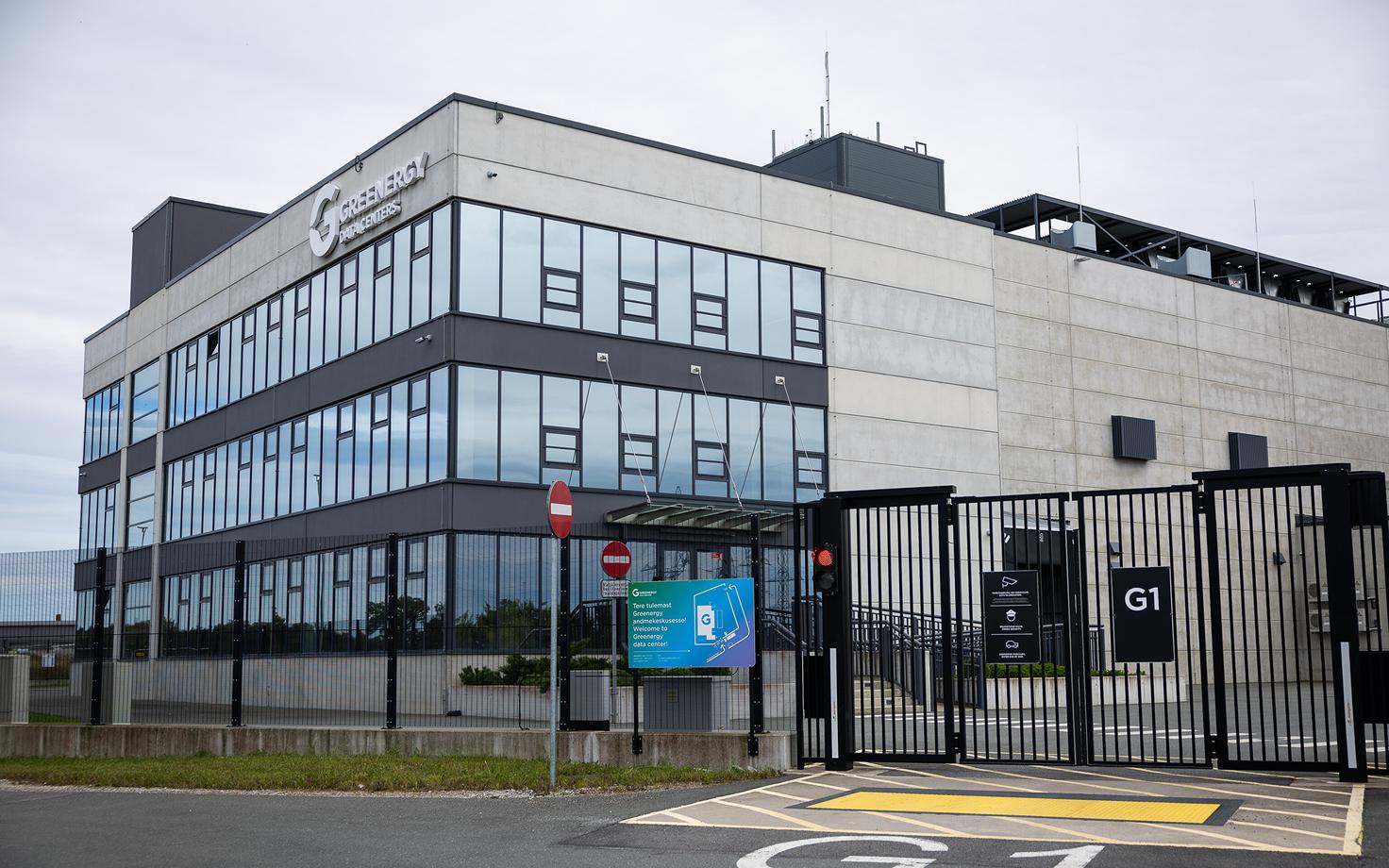
National grid operator Elering has received seven connection applications totaling 2,900 megawatts. By contrast, Estonia's sole existing next-generation facility — Greenergy Data Centers in Hüüru, near Tallinn — currently draws just 2 megawatts, though it plans to scale to 200 megawatts by early 2028.
Lääne County emerges as the main hotspot
Most of the proposed capacity is clustered along high-voltage transmission lines in western Estonia's Lääne-Nigula and Lääneranna municipalities, particularly around the small towns of Risti and Lihula.
In Risti, Estonian renewable energy firm Sunly and Norway's Magnora Data Center are jointly developing a campus designed to connect at 180 megawatts initially and expand up to 400 megawatts if the local substation is upgraded — a buildout estimated at €1.7 billion.
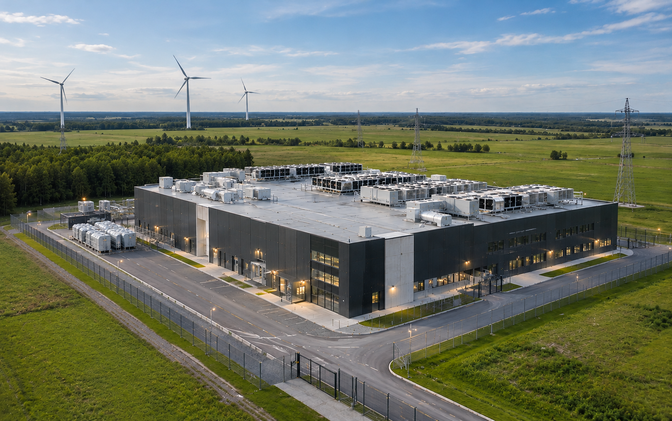
Domestic renewables developer Evecon is also pursuing a 41-hectare industrial park next to Risti featuring two data center buildings and up to nine industrial facilities, projected to create around 150 jobs. A third developer, Sinfra, has initiated planning for a center in nearby Jõgisoo village, while a fourth unnamed company has made early-stage inquiries.
Lääne-Nigula Mayor Janno Randmaa said Sunly's project is furthest along because the company is pairing the campus with a local solar park to cover its power demand. For the others, he said, municipalities still lack clarity on energy and cooling-water needs.
"These applications come in fairly quickly, and at times the question is whether this is a serious trend or a passing fad, and how much of it will actually become reality," Randmaa said, noting that local residents have so far focused on practical questions around water use and noise rather than outright opposition.
Thirty kilometers south in Lihula, Evecon has entered detailed planning for a 100-megawatt data center, while Norwegian group Northern Europe Energy Group has unveiled plans for a 136-hectare site targeting 100 MVA initially and up to 1,100 MVA via a nearby 330-kilovolt line. Project manager Janis Paeglitis said the venture remains at an early feasibility stage, with final scale and investment yet to be set.
Evecon CEO Karl-Joonatan Kvell said pairing data centers with generation is a logical business model: steady, long-term power buyers make new renewable and storage projects far easier to finance.
Billions eyed in northern and southwestern Estonia
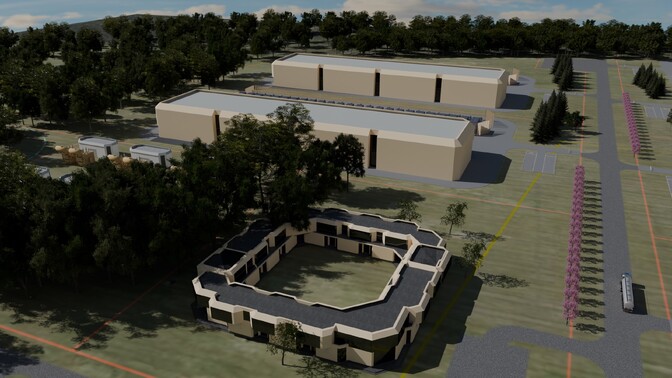
Plans extend beyond the west coast. In Tapa, domestic firms Sustainable Investments and Sinfra, alongside Finland's Ehrnrooth business family, are weighing an investment of up to €3.4 billion.
Evecon has also received design conditions for a project in Varja, Lüganuse Municipality, in northeastern Estonia, and applied for a 100-megawatt facility near Kilingi-Nõmme in Saarde Municipality — a proposal that sparked a local council dispute over municipal jurisdiction and triggered the collapse of the local governing coalition.
State backs local AI compute, warns against 'closed' campuses
The Ministry of Justice and Digital Affairs considers domestic data centers essential for running critical public and private digital services and safeguarding sensitive state data.
"Artificial intelligence infrastructure technologies and their security are still in an early stage of development, which is why it is safer to keep servers close to home," the ministry said.
Estonia has joined the European Commission's AI gigafactory joint procurement, pledging €20 million over 2028–2032 to purchase high-performance computing capacity on condition that one branch of the facility is located in Estonia. However, the ministry warned that closed campuses built solely for a single foreign tech giant's global operations bring minimal economic benefit compared to centers serving Estonian businesses, researchers and public institutions.

What 2,900 megawatts could mean for electricity bills
If even a fraction of the 2,900 megawatts is built without matching new power generation, Estonia will rely more heavily on electricity imports from Finland — where a parallel data center boom is already poised to push Nordic exchange prices higher, according to Baltic Energy Partners board member Marko Allikson.
Still, Allikson noted that actual data center demand in Estonia stands at just 2 megawatts today and may barely top 20 megawatts next year, remaining marginal in the short term. Over the longer run, he said, data centers could unlock subsidy-free power plants through long-term power purchase agreements — pointing to Finland, where Google's off-take deal helped utility Fortum justify extending the lifespan of its Loviisa nuclear reactors.
Energy expert Arvi Hamburg added that higher overall consumption could reduce per-kilowatt-hour grid and frequency-reserve fees for ordinary consumers — unless developers connect via direct lines that bypass the public network.
Hamburg also warned that Estonia's small grid faces technical risks from rapid load swings at large server farms, urging authorities to site facilities strictly near major backbone substations and require operators to help keep the system balanced.
In an interview given to ERR's science portal Novaator, Tallinn University of Technology (TalTech) professor Mart Landsberg explained the impact of data centers on the electricity system in more detail, here.
--
Follow ERR News on Facebook and Twitter and never miss an update!
Editor: Andrew Whyte


