Estonian experts: Xi Jinping came out on top at US-Russia-China summit
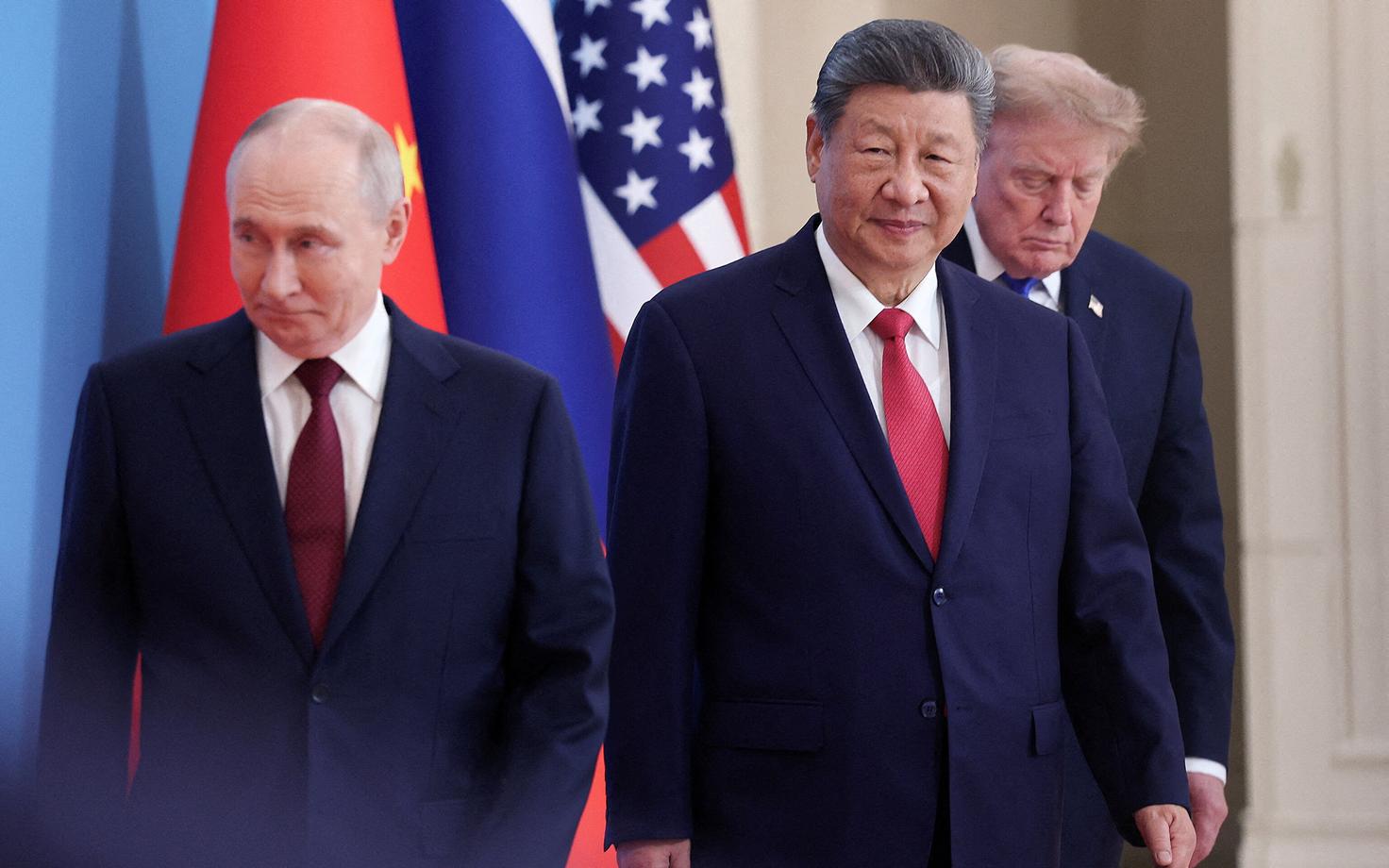
Thursday's trilateral summit between the leaders of the United States, Russia and China produced no major decisions, leaving Chinese President Xi Jinping the clear winner.
Estonian foreign policy analysts said from the three nuclear powers, Beijing projected equal superpower status, on par with Washington, while Russian leader Vladimir Putin was visibly sidelined.
Xi, Putin and U.S. President Donald Trump discussed United Nations reform and nuclear arms limits during the meeting on the sidelines of the APEC summit in Shenzhen, China, but reached no concrete agreements. While a "peace declaration" emerged from the trilateral talks, the wars in Ukraine and Iran were skipped.
More significant is the extent to which Russia has been sidelined in comparison with the two other nations.
"The Chinese and American leaders met, and Putin simply tagged along, because he actually played no significant role in that context," Member of the European Parliament Riho Terras (Isamaa) told "Aktuaalne kaamera".

Terras said Beijing had signaled with its every move that Moscow is no longer a major player on the world stage.
MP Raimond Kaljulaid (SDE) argued that Putin should never have been handed the opportunity to appear as a legitimate statesman in the first place.
"This is still someone covered in blood from head to toe, and the president of the United States certainly should not have gone into a photo op and an embrace like that with him," Kaljulaid said.
Analysts described the gathering primarily as a diplomatic triumph for Xi, who presented himself as a composed global leader with China as an equal nuclear power to the U.S.
"China has stepped onto the same level where we once saw the Soviet Union and the U.S., and perhaps to some extent Russia as the Soviet Union's successor," security expert and presidential adviser Rainer Saks said. "This should be seen as a reflection or visual confirmation of a broader shift in the international system."

Saks noted that Beijing showed no desire to discuss Russia's war in Ukraine, though the conflict inevitably came up in bilateral exchanges — particularly after POLITICO reported that U.S. President Donald Trump had phoned European allies afterwards and cast sharp doubt on continued military aid for Kyiv.
Kaljulaid said the dynamic also underscored Putin's ability to persuade counterparts behind closed doors. "What is clear is that he was able to deliver his messages in a setting where no one else was in the room — neither Ukrainian nor European representatives," Kaljulaid said.
Putin also invited European leaders to Moscow for bilateral talks ahead of broader peace negotiations.
Saks called that invitation a classic tactical move to prevent or fracture a united European front, though he added it should not be dismissed outright either. Terras, however, warned that European leaders must not travel to Moscow, insisting any talks take place on neutral ground and even then only once Russia is genuinely ready for peace.
The Guardian reported that at the Shenzhen summit, the three leaders pledged to maintain strategic stability, back UN reform, boost refined oil supplies and guard against nuclear war without setting out a denuclearization framework or mentioning the conflicts in Ukraine and Iran. Analysts noted the meeting carried heavy symbolic weight—including a pushback against International Criminal Court jurisdiction—while offering few concrete breakthroughs. European leaders reacted sharply to warm optics between Trump and Putin during separate bilateral talks, while analysts said Beijing sought to project superpower status without taking on the diplomatic risks of brokering peace.
--
Follow ERR News on Facebook and Twitter and never miss an update!
Editor: Andrew Whyte, Marko Tooming
Source: 'Aktuaalne kaamera'


