Estonian MEP: Europe should not join spheres-of-influence talks just to salvage prestige
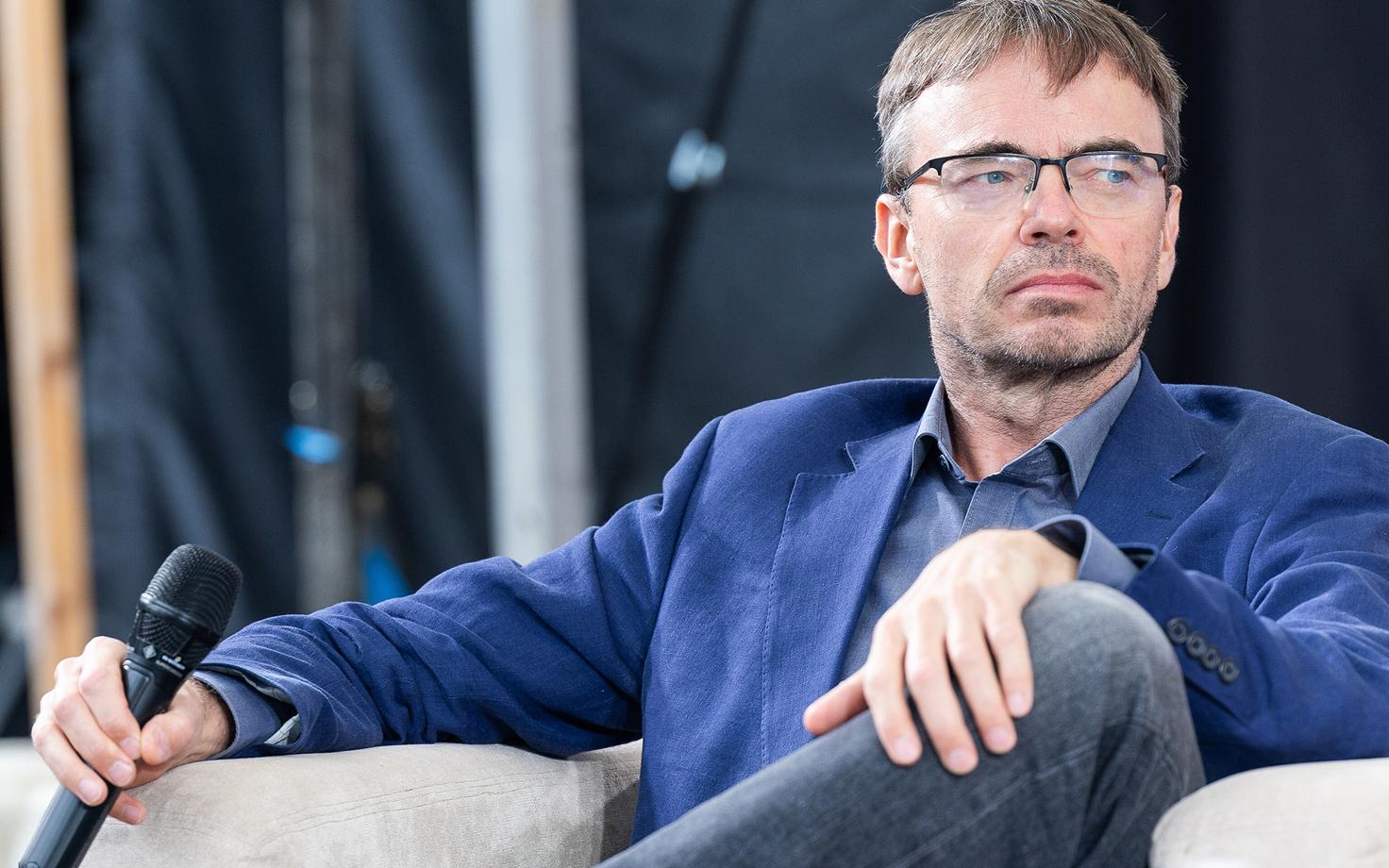
Europe does not need to force its way to every negotiating table simply to salvage its prestige if the aim is to return the world to spheres-of-influence politics, Member of the European Parliament Sven Mikser told ERR.
The Xi-Putin-Trump meeting continued Thursday, attracting enormous attention from the media and the public. But is there really enough substance to justify all the discussion and analysis?
Perhaps not so much substance, but certainly a lot of symbolism and pageantry. The leaders of three major powers are meeting in this way for the first time at a moment when global security is extremely fragile, when at least two of these three leaders are waging protracted wars far from home or, in Russia's case, just beyond its borders.
They talk about world peace, but I think these three leaders attach somewhat different meanings to that concept. As we have already heard, the idea is that when the leaders of major powers reach agreements among themselves, the world is stable. Whether the kind of stability based on spheres-of-influence politics, which had seemingly been consigned to the dustbin of history, is desirable is another question.
It is downright grotesque even to watch this meeting. Three men are talking about world peace and fighting for peace, yet two of them have started wars. Chinese leader Xi has not started a war, but he constantly threatens Taiwan with one. What are we supposed to make of all this?
Each of the three certainly has his own objectives and reasons for attaching importance to such a meeting.
The biggest winner in terms of propaganda is undoubtedly Putin, who, after quite a long time, not only gets to enjoy the company of his counterparts and other totalitarian leaders but is actually called a friend by the leader of what has until now been the democratic world. He can present himself as one of the major players at the highest level, despite the fact that Russia is by no means economically on an equal footing with the United States or China on the world stage today.
For Xi, this is certainly a diplomatic triumph as well, although, against the backdrop of the broader regional summit, he may not feel such a pressing need for a trilateral meeting.
What are Donald Trump's objectives? It is certainly no secret that he has long wanted to etch his name into history and has been pursuing a peace prize that he will probably never receive, apart from that FIFA peace prize.
But there are certainly other considerations behind his actions. He has just suffered a devastating defeat in the midterm elections at home. He faces the final two years of his presidency, during which he will be unable to make much progress on his domestic legislative agenda.
So he is trying to find other ways to attract attention. We know that he is motivated by economic self-interest on the one hand and personal vanity on the other. Leaders like Putin and Xi certainly know how to play people like that like a fiddle.
At the same time, there are fears of a new Yalta Conference. There is talk of major world leaders making agreements over Europe's head that others find unacceptable, whether driven by economic interests or a desire to avoid democracy. Is that a real possibility, or is it just talk?
We certainly have to take seriously the possibility that attempts will be made to reach agreements on Ukraine's future over Ukraine's head, or to agree on the principles of some new European security architecture without Europe's involvement.
On the other hand, it is also clear that as long as Ukraine continues to resist on the battlefield and strike Russian strategic targets, no one can reach an agreement to carve up Ukraine behind its back. And as long as the European Union stands firmly behind Ukraine and continues to support it.
It is equally clear that Europe does not need to elbow its way to every negotiating table at any cost simply to demonstrate its importance, particularly if doing so risks legitimizing objectives that we consider profoundly illegitimate, potentially even the war crimes committed by Putin.
We certainly need to approach these rather ugly images and deeply troubling statements with strategic patience.
At the same time, their trilateral meeting lasted just an hour and a half, which is considered very short. Is that a good sign or can we draw any conclusions from it at all? Was the entire meeting symbolic or did they discuss substantive issues?
A tremendous amount of preparatory work goes into meetings like this at various lower levels, provided the goal is to reach concrete agreements.
In this case, it is clear that patting one another on the back and calling one another friends does not eliminate the major strategic differences and conflicting interests that exist in several key areas.
One worrying possibility is that they will agree on broad principles for returning to spheres-of-influence politics, under which the immediate neighbors of every major power would automatically fall within that power's privileged sphere of interests and influence.
But if we consider broader technological development, for example, or the overall framework of international law, there are quite a few conflicting interests.
Then again, if we look at the provisions in that four-point joint statement concerning the International Criminal Court and the functioning of international law more broadly, it is worrying that the United States did not present itself at this meeting as the leader of the free and democratic world.
Instead, it appeared to take its place on the other side of the table, alongside the leaders of authoritarian major powers.
Putin and Trump also met separately. What might they have discussed? We do not know exactly what was said yet, although we will probably learn more in the coming days. What can we expect, or fear, from those talks?
Ahead of the meeting, the American side mainly emphasized nuclear issues.
Why did the nuclear issue come up?
The United States and Russia still possess the world's largest strategic nuclear arsenals and much of the treaty framework designed to limit nuclear weapons has fallen apart in recent years, including the agreements established toward the end of the Cold War.
So a nuclear agreement is a genuine issue?
There are certainly substantive elements to it. How much either side is actually concerned about them is another matter.
Another issue is that although China remains a long, long way behind the United States and Russia, its nuclear capabilities are growing.
There has been considerable discussion, particularly in the Western Hemisphere, about the need to include China in future nuclear agreements or follow-up treaties. China has said that it is not a player in that league and does not wish to participate in such discussions.
We know that Trump has used the "N-word" quite frequently in his domestic rhetoric, although, of course, that expression has a somewhat different meaning in American culture. He has used it to mean "nuclear," painting a picture of the horrors of nuclear war. I believe he takes the issue fairly seriously.
On the other hand, Russia said that Ukraine would certainly be discussed. Although the Americans were initially rather cool toward the idea, Trump himself said before the meeting that they would probably exchange views on Ukraine after all.
We know that Trump's special envoys for Ukraine and Russia have made remarkably pro-Russian and Ukraine-critical statements in recent months.
There has also been a great deal of discussion about how nothing in China happens by accident — the fact that Putin was not greeted at the airport, where he was positioned in photographs and the fact that he even sat at a separate table during the formal dinner. Do these details really carry as much significance as the media attaches to them?
They certainly do. Just as people once scrutinized Soviet leaders' funerals, examining who held which position on the funeral committee and who stood closest to the coffin, protocol certainly sends certain messages.
But it is also clear that Trump likes to portray himself as one of the big boys alongside Xi. I think he has a certain inferiority complex, coupled with a degree of vanity.
In some ways, he certainly envies leaders who enjoy greater absolute power in their own countries than he does in the United States.
But if he believes that establishing personal friendships will somehow persuade Xi and Putin to forget their countries' strategic interests, as they themselves define them, that is certainly naive wishful thinking.
Putin invited European leaders to Moscow. What does that mean?
I think Putin has played every propaganda card this meeting had to offer in the space of half a day.
I think European leaders now need to carefully define the parameters under which they would be prepared to discuss Ukraine's future.
What matters is that we adhere to these core principles: Crimes must be punished, perpetrators must face genuine accountability and Ukraine's future must be decided by Ukrainians themselves, including which alliances they wish to join in the future.
And the fundamental principle of international law that national borders cannot be changed through military force remains valid.
These are the starting points from which Europe can engage in discussions at the negotiating table.
But if Europe simply wants to force its way to the table to salvage its own prestige, when the discussion is about how to return the world to spheres-of-influence politics, that is not a table we should be rushing to join.
--
Editor: Marcus Turovski, Johanna Alvin


