Police to step up patrols at dangerous crosswalks as pedestrian injuries rise
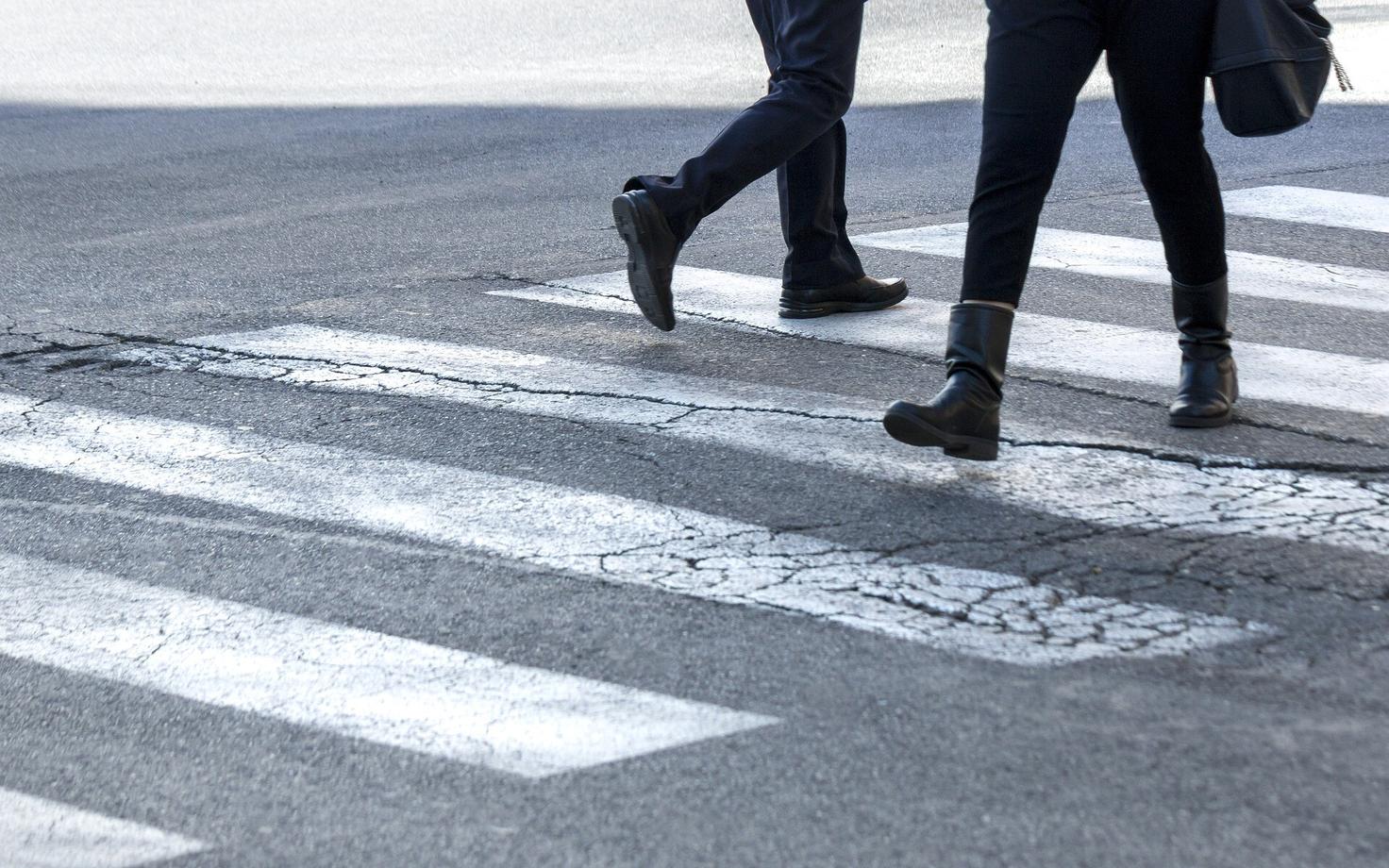
The Police and Border Guard Board (PPA) is to step up patrols at high-risk pedestrian crossings to improve safety during the darker months.
This will mean temporarily scaling back some speed checks and e-scooter enforcement, however, PPA head of traffic supervision Taavi Kirss said, and it will not entail a PPA officer stationed at every crossing.
Kirss told ERR that while overall traffic crashes involving injuries or deaths tend to fall gradually over the fall and winter, collisions involving pedestrians rise, as the daylight hours become shorter.
"With the electric scooter season drawing to a close for the year and the peak season for crashes involving pedestrians now underway, police decided to shift the focus of traffic enforcement and pay more attention to pedestrian safety starting this week," Kirss said.
Estonia posted 227 traffic collisions involving pedestrians from the start of the year through to November 12, up 10 percent on the year. While there were six fewer fatalities than last year, 221 people have been injured — a 12 percent rise.
According to PPA statistics compiled this year, drivers accounted for 67 percent of those who caused traffic crashes, pedestrians themselves for 14 percent and cyclists for 4 percent. Minors accounted for 8 percent and older people for 22 percent of the total.
Shift in enforcement resources
Kirss said the campaign does not mean police will stop enforcing the other traffic rules, just that local stations and traffic units will identify the most dangerous locations in their areas — including problem zones submitted through the PPA's crowd-sourced traffic hazard map — and plan targeted patrols and larger enforcement operations there.
Resources will be freed up primarily as officers spend less time monitoring e-scooters. If necessary, the PPA will also temporarily scale back roadside calming stops and speed checks carried out by assistant police officers.
"Unfortunately, we can't meet the expectation that there will be officers based at every pedestrian crossing, as there are at the start of the school year. It's simply not possible," Kirss stressed. "This is still routine traffic enforcement. Officers watch what is happening around them and step in when a situation calls for it."
Driver and pedestrian risks
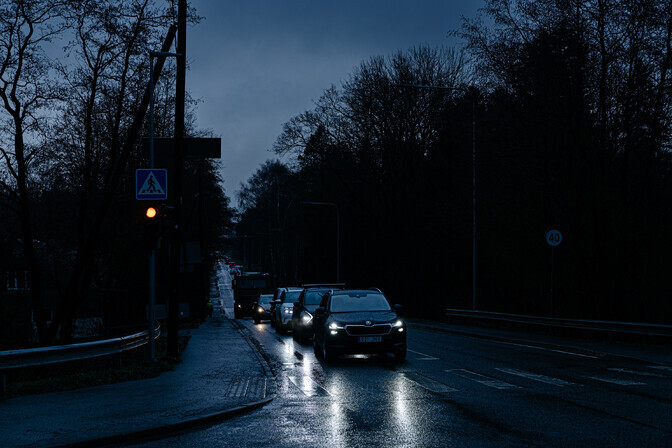
Police will focus primarily on motorists, who for obvious reasons pose the greatest physical danger to vulnerable road users. Officers will monitor whether drivers slow down near crossings and school routes, stop for red lights and yield at unsignalized crossings — including stopping when a vehicle in an adjacent or oncoming lane has already stopped ahead of a crossing.
"The speed limit may be too fast for conditions at this time of year. The poorer the visibility and the more slippery the road, the slower you should drive," Kirss said.
For pedestrians, cyclists and light electric vehicle users, who have their part to play too, officers will check whether they have made themselves visible in the dark. This would include by wearing a reflector, and whether they ensure it is safe before entering a road.
Kirss warned that even on well-lit streets, overhead streetlights can leave someone in dark clothing visible to a driver only as a faint outline.
"Pedestrians can also get a false sense of security as they can clearly see the car and its headlights, while the driver may struggle to see them," he said. "Especially on highways, a pedestrian without a reflector blends into the surroundings completely. A driver using low beams may see them only a split second before drawing level with them," he noted.
Even when pedestrians have the right of way, Kirss urged them not to insist on it if an approaching driver may not have seen them in time to stop.
Tartu resident Kristjan Karron told Eesti Ekspress he was struck twice on the exact same crosswalk on Narva maantee despite crossing in daylight and making eye contact with drivers who had already stopped. Karron was contribued a feature for the paper on pedestrian safety: he reported that in both incidents, drivers had all their attention on roundabout traffic near the crossing, and accelerated suddenly into the crossing itself without noticing him. He escaped injury, but in the first case the vehicle brushed Karron's leg, while in the second case he was forced on to the car's. The driver then departed the scene.
Always wear a reflector (Estonian: Helkur) when out and about at this time of year.
The PPA's traffic hazard map in Estonian is here. Members of the public can report hazards here too.
--
Follow ERR News on Facebook and Twitter and never miss an update!
Editor: Andrew Whyte, Aleksander Krjukov


