President: Closing Estonian-Russian border cannot be an emotional decision
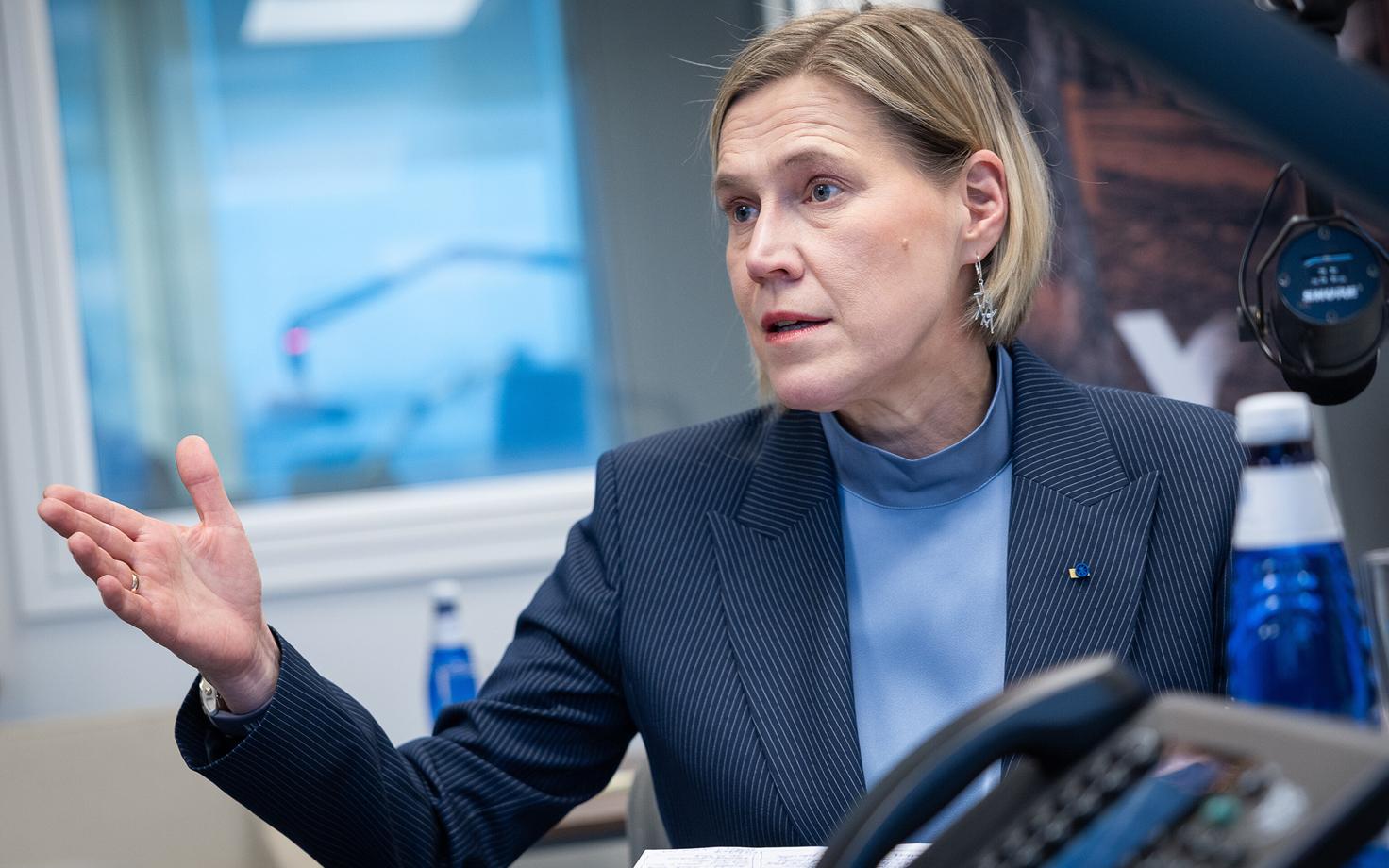
Decisions on whether to close the Estonian-Russian border must be made based on an analysis of the economic, humanitarian, diplomatic and security implications, President Ülle Madise said.
While all tourism and cross-border shopping for cheap goods must come to an end, Madise believes diplomatic and humanitarian travel must remain possible and Estonia must avoid taking steps that may be emotionally satisfying but ultimately harmful to the country.
Commenting on the government's discussions about closing road border crossings on Estonia's eastern border, Madise said public outrage over the enemy's actions is understandable, but responsible statesmanship requires sober consideration.
"I hope an analysis of the economic, humanitarian, diplomatic and security consequences of this decision will be completed, that I will also have an opportunity to read it and that the decision will be made on the basis of that analysis," Madise said.
"The emotion behind issuing such a message is entirely understandable. Who among us wouldn't want to take action when they've caused some kind of trouble yet again? By 'they,' I naturally mean our enemies. But is this the right response? Is it proportionate? Does it serve Estonia's interests internationally as well? Sometimes, in an emotional moment, those questions go unasked. But they need to be asked and answered with a clear head," Madise said.
The president said that even when public pressure is aimed at provoking decision-makers into making mistakes, the difficulty of being a decision-maker and the burden of statesmanship lie precisely in making decisions that benefit Estonia while resisting those that may be emotionally satisfying but ultimately harmful.
Attacks would have happened despite closed borders
Asked why Estonia had not closed its border earlier, as Finland had done, Madise explained that the circumstances were different and that keeping the border open had benefited Estonia.
Madise also said closing the border would not have prevented recent attacks targeting Estonian companies.
"Finland's situation when it made its decisions was entirely different. Keeping the border open has been very beneficial to Estonia," the president said.
"It is always worth considering whether any of the incidents that have occurred here — I mean, for example, the attack on Milrem or the recent attempted attacks on Threod — would have been prevented if the border had been closed. The answer is a definite no. There may be other considerations, but as I said, I believe an analysis of all conceivable consequences and impacts is being prepared. I hope the government will examine that analysis thoroughly," the president said.
Madise noted that the government must also consider information that is not fully known to the public, including the recruitment of individuals during border crossings and the ability of security agencies to address potential threats.
"It is entirely natural to consider such incidents, as well as matters that may not be fully known to the public. For example, how many people are recruited to engage in activities against Estonia while crossing the border or because crossing the border is relatively easy? The details of that may not be publicly known," Madise said.
"The government needs to bring all this information together and weigh the public's emotional expectations against the actual consequences, as well as the Estonian Internal Security Service's actual ability to deal with potential negative effects. I would also very much like to commend the Police and Border Guard Board, the Internal Security Service, the Prosecutor's Office and our Latvian partners because the incidents we have experienced here have been brought under control very quickly, in the sense that the perpetrators have been identified. I also want to thank all the companies that have implemented the necessary security measures," Madise said.
Madise added that while the situation required preparedness, she sees no reason to interfere in other countries' border policies or reinstate border controls along Estonia's southern border. Asked whether Madise had questioned the Latvian president about why Latvia had not closed its eastern border, the president replied: "Of course not."
Madise pointed out that Poland also keeps its border crossings open and that Estonia must take into account essential travel by diplomats and ordinary people alike.
"Poland also keeps these border crossings open and please don't forget that diplomats need to travel. People also need to travel for humanitarian reasons — people who have very elderly parents on the other side of the border and cannot bring them here or go there themselves or who have children there. There are also jobs to consider. Yes, this creates additional work for the Internal Security Service, but that work needs to be done. We all have to do our jobs," the president said.
At the same time, Madise stressed that ordinary tourism and shopping trips across the eastern border were unjustified and that the government could tighten restrictions based on its analysis.
"My message is also clear: All tourism and trips simply to buy cheap goods should have ended long ago and must be stopped. I wouldn't rule out the possibility that, after reviewing all the analyses, the government will decide to impose further restrictions on border crossings, specifically on travel that is not necessary for humanitarian or diplomatic reasons. But let's wait and see. Everyone has their own job to do and this decision is the government's responsibility. I strongly recommend approaching it with a clear head and setting emotions aside," Madise said.
Addressing concerns about Narva's future and economic situation, Madise urged calm and highlighted the international presence in the border city. According to Madise, Frontex Deputy Executive Director Uku Sarekanno has confirmed that 60 employees of the European Border and Coast Guard Agency, along with their families, are currently staying in Narva and Narva-Jõesuu to assess developments at the border.
"I wouldn't want to get carried away with overly gloomy thoughts," Madise said when discussing Narva's prospects.
"Let's remain calm. What is very important is that the message is clear: Estonia is worth investing in, it is worth building factories here and it is worth coming here to work. Those who already live here should feel that it is worth staying if they wish to do so. We must under no circumstances send a message that there are now extremely serious threats or that the situation is so difficult that people should avoid investing here at all costs. I think Narva is a really great city. It has tremendous potential. Right now, it simply takes a lot of courage to establish a home and a business there," Madise said.
--
Editor: Marcus Turovski, Mari Peegel


