Estonia's 9th graders increasingly need tutoring in mathematics before final exam
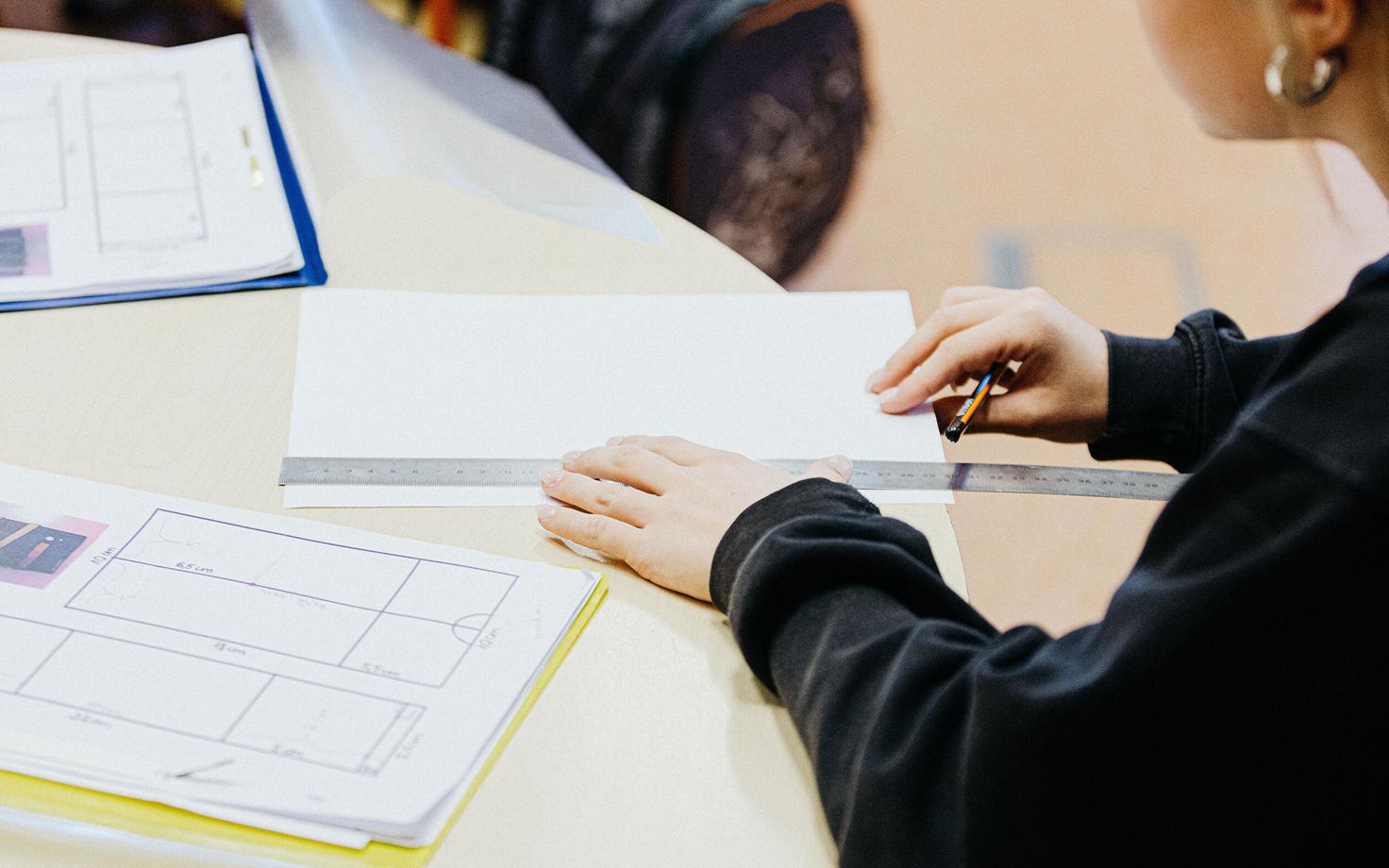
Growing anxiety over upper secondary school admissions is driving more Estonian ninth-graders to take paid exam preparation courses, raising concerns about unequal access to educational support.
At the end of the last school year, confusion erupted as many students finishing basic school struggled to find places at upper secondary schools, with some only learning where they would continue their education at the start of the new school year. As basic school final exam results play an important role in students' prospects, more and more are taking additional courses in mathematics, Estonian and other subjects.
Tallinn University of Technology's exam preparation school offers courses in Estonian, mathematics and physics for ninth-grade students preparing to finish basic school. Aet Karolin, head of the exam preparation school, told ERR that interest in courses for basic school graduates began increasing a couple of years ago when changes to the final exam schedule were introduced.
"We certainly have more ninth-grade students this fall, although the age groups are also larger at the moment due to demographic trends. There really are a lot of them," Karolin said, adding that while several factors are at play, there is a noticeable sense of anxiety and concern.
Karolin recalled a recent conversation with a worried parent whom she advised to try to remain calm as anxiety can also have a negative effect on the child.
Mathematics is the most popular of the courses offered to basic school graduates at Tallinn University of Technology and it is also the subject the university places the greatest emphasis on.
"Demand for Estonian language instruction has also been growing year after year, especially now with the transition to Estonian-language education. We would very much like to help everyone, but we simply don't have the capacity. Given our university's focus, mathematics is our main priority. We also teach physics, but since it isn't a final exam subject, fewer students take it," Karolin explained.
The Gustav Adolf Training Center also offers mathematics, Estonian, physics and English courses for students finishing basic school. According to the center's director, Irene Andresson, demand for mathematics courses has long been higher than for other subjects, but it has increased slightly further following this summer's confusion over admission to upper secondary schools.
Several reasons why students fall behind in school
Andresson believes schools themselves should be asked why students are unable to master the necessary material during regular lessons, although she suggested that teacher shortages and frequent staff turnover may be contributing factors.
"Some schools have no teachers for certain subjects at all, so teachers of other subjects have to step in, or teachers change so frequently that students can't keep up," Andresson said.
Karolin noted that, based on what she has heard from teachers, children's ability to concentrate has been declining year after year, even though concentration is particularly important in mathematics lessons.
"Another problem we have in Tallinn, and perhaps in Tartu as well, is large class sizes. Teachers simply don't have enough time to work with each student individually," the head of the university's exam preparation school said. "Then there's the issue that's been discussed so much: We have all kinds of students in the same classroom, both those who find mathematics easy and those who need to follow an individualized curriculum. There are also discipline problems in schools. It's the same familiar challenges."
According to Karolin, some students attending their courses undoubtedly have no difficulties with mathematics at all. However, the prevailing anxiety surrounding school admissions leaves them worried about whether they will get into their preferred schools, prompting them to take revision courses to boost their confidence.
Karolin said the exam preparation school's courses cover not only material taught in ninth grade but also the main topics from the entire basic school mathematics curriculum, including percentages, fractions, trigonometry and everything else that could appear on the exam. However, these are not remedial classes. Karolin acknowledged that the school lacks the resources to provide individual tutoring and instead offers group lessons.
Students attending the courses come from Tallinn and surrounding municipalities. The exam preparation school also runs courses in Tartu and offers online classes.
The Gustav Adolf Training Center likewise attracts students from across Tallinn and Harju County. According to Andresson, participants include both those who need additional help with their studies and those who simply want to feel more confident in their knowledge.
However, not all students can afford to attend these courses. In Tallinn, for example, courses lasting anywhere from a few months to half a year typically cost around €200, give or take, depending on the provider and duration.
Ministry: Schools should notice problems before students reach 9th grade
Hele Liiv-Tellmann, chief expert at the Ministry of Education's department of early childhood and basic education, said it is a cause for concern if students do not receive the support they need at school and have to seek paid alternatives. However, the ministry does not have sufficient data to conclude that students turn to paid exam preparation courses or private tutors because they have not adequately mastered the subjects taught at school.
"Nor can we conclude from the use of these services that additional instruction is necessarily what leads to better academic results," she said.
According to Liiv-Tellmann, if a student needs additional support in a particular subject, it is primarily the school's responsibility to identify that need and provide the necessary assistance, working together with the student and their parents.
"If parents feel that the support provided by the school is insufficient or if a family wants additional learning opportunities for their child, they may also seek help outside the school," the chief expert added.
She noted that because basic school final exam results can affect students' chances of continuing their education at their preferred schools, some may also enroll in courses to boost their confidence, review what they have learned or practice solving exam questions.
However, students have different needs and abilities, and Liiv-Tellmann emphasized that schools must take these differences into account when organizing instruction.
"Support for students should not begin only in ninth grade, when final exams are approaching. Nor should basic school education be reduced solely to exam preparation, as the goals of basic education are much broader than achieving the highest possible exam scores," she said.
The chief expert acknowledged that providing individualized support can be more challenging in classes with large numbers of students, while teacher shortages and heavy workloads can also affect schools' ability to provide assistance. However, she said the ministry has no basis for claiming that these factors are the main reasons students turn to paid supplementary courses.
Families have different financial circumstances and paid courses are not equally accessible to everyone. Liiv-Tellmann said this is an important issue in terms of educational equity. Nevertheless, the goal should not be to restrict families' ability to provide additional learning opportunities for their children.
"What matters is ensuring that a child's opportunity to receive a quality basic education and the support they need to learn does not depend on their family's financial circumstances," she added.
The ministry therefore considers it important for schools to create their own opportunities to support students, ensure they have sufficient qualified teachers and provide opportunities for teachers' professional development, while organizing instruction flexibly when necessary.
--
Editor: Marcus Turovski


