Estonia backs EU deportation center in Rwanda but won't join

Five European Union member states are planning to establish a deportation center in Rwanda where people without a legal basis to remain in Europe could be sent in the future. Estonia supports the concept behind the pilot project but is not currently participating in it.
Under the proposed plan, a deportation center would be established in Rwanda, located in central Africa. It would accommodate individuals who have exhausted all legal avenues to challenge their removal from Europe.
According to the initial plan, about 100 people could be transferred to the center as early as the beginning of next year. The project is being spearheaded by Germany, Austria, Greece, Denmark and the Netherlands, whose representatives met Monday in Vienna.
Austrian Chancellor Christian Stocker said the agreement with Rwanda opens new opportunities.
"In the European Union, asylum seekers whose applications have been definitively rejected will in future be directed to these return centers. We want to deprive migrant smugglers of their inhumane business model and thereby prevent deaths in the Mediterranean and on other dangerous migration routes. Third, we want to reduce the burden on our reception systems, which have been under enormous pressure from migration flows in recent years," Stocker said.
Migrants housed at the deportation center would then be able to decide whether to return to their home country, remain in Rwanda or move to a country where they have a legal right to reside. The idea of establishing such centers has been supported by more than half of EU member states, including Estonia, said Janek Mägi, head of the Border Guard and Migration Department at the Ministry of the Interior.
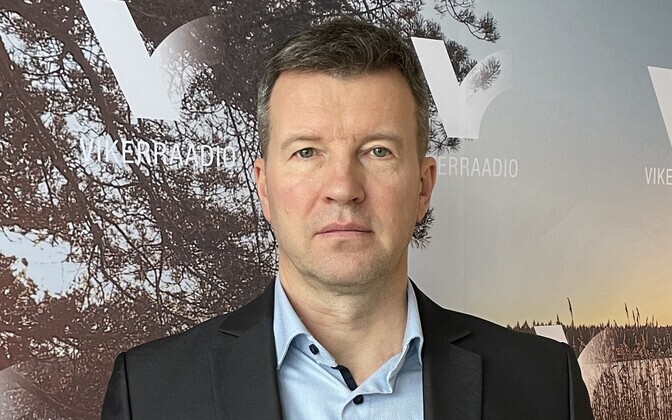
"The interior minister and foreign minister have repeatedly signed joint appeals asking the European Union to amend legislation and adopt measures that would make it possible to establish return centers. As a result, the new return regulation includes provisions allowing such centers to be created outside the EU. We cannot say there is extensive case law behind this yet, but it was done deliberately and the legal framework was adjusted accordingly," Mägi said.
Mägi added that Estonia has participated in the project's working group from the beginning. However, Estonia is not taking part in the Rwanda pilot at this stage because its deportation system is relatively successful compared with those of other European countries. In addition, most people deported from Estonia currently travel eastward.
"The number of people we deport each year remains below 100. Of those, we can say that we successfully deport almost all of them, with only a few problematic cases. Compared with the rest of Europe, our success rate is more than three times higher. But of course we see potential in this approach because the nationalities of those subject to deportation and the complexity of these cases are only increasing over time. This is one way to reduce pressure on Estonia and carry out deportations more successfully," Mägi explained.
Estonia could therefore join the pilot project at any time. For now, the five participating countries are funding it. The eventual cost of the project remains unclear.
Danish Prime Minister Mette Frederiksen expressed hope that the creation of such a center would also send a deterrent message.
"The message we are sending is that people can no longer enter the European Union illegally and assume they can simply stay. I believe this message will discourage many people and cause thousands to think carefully before beginning the journey to Europe," Frederiksen said.
According to Mägi, the long-term goal is to make it possible to finance such centers through EU funds.
The initiative has been criticized by human rights organizations and some politicians.
The United Kingdom abandoned its own plan to send asylum seekers to Rwanda after the country's Supreme Court ruled it unlawful in 2023.
--
Editor: Mirjam Mäekivi, Argo Ideon


