€2 million tender seeks developer of schools AI learning platform
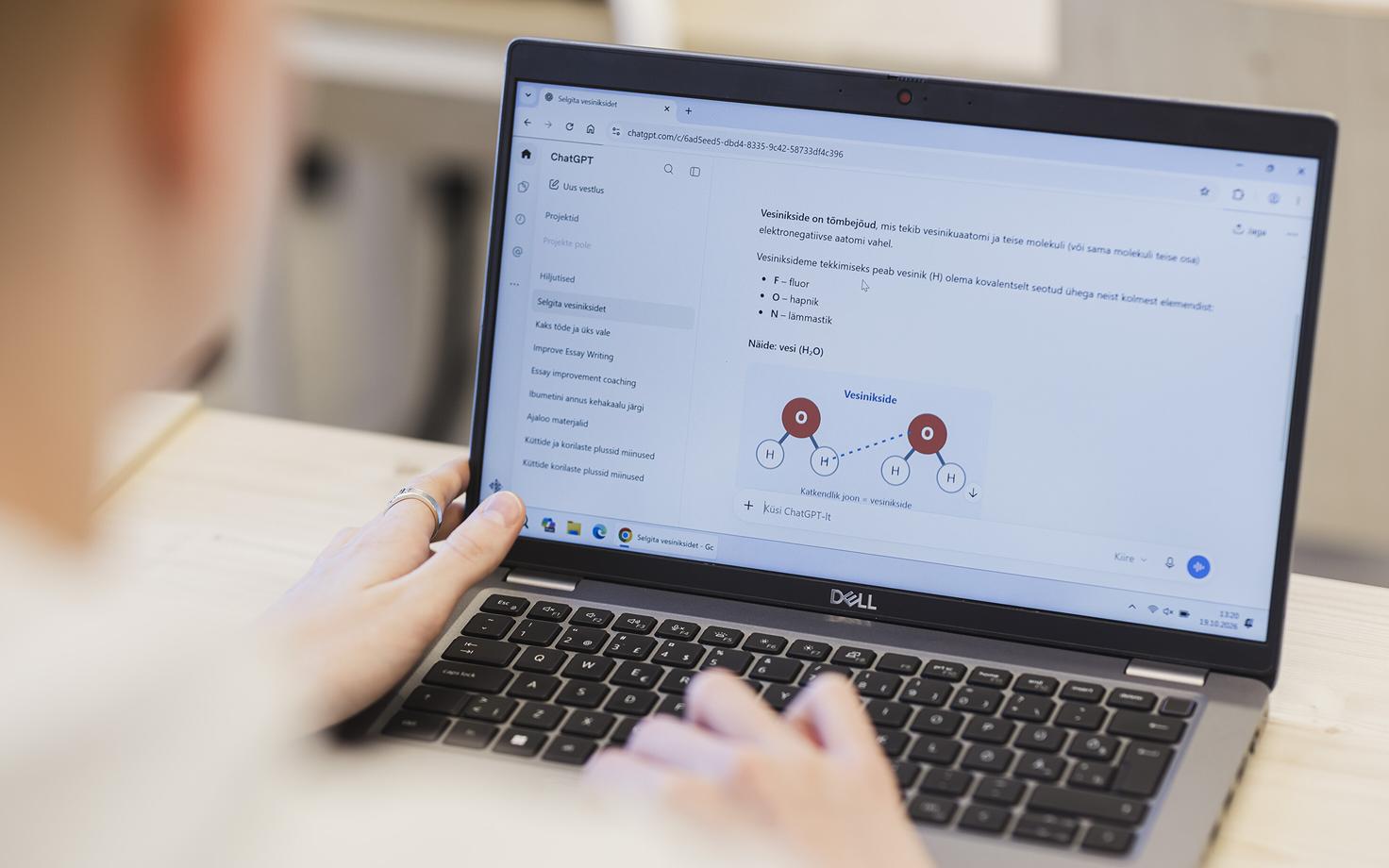
The AI-Leap Foundation is seeking a new developer for its ITI learning platform for Estonian students and teachers as its agreement with OpenAI nears expiration. The foundation has launched a tender worth up to €2 million for the platform's continued development through August 2028.
Last year, the AI-Leap (TI-Hüppe SA) signed a cooperation agreement with OpenAI to develop an AI-based learning platform for students. Distribution of the platform to 10th- and 11th-grade high school students began in January. This academic year, the program expanded to all high school grades, as well as vocational school students and teachers and lower secondary school teachers.
The agreement with OpenAI expires in February next year, prompting AI-Leap to seek a new technology provider whose platform will support the continued development of ITI for Estonian students.
"With the partner selected through the procurement process, we will continue the work we began during the first academic year in cooperation with OpenAI and Google. We are not procuring only user licenses but also educational adaptations, support and cooperation. The new service provider will be selected through the tender process," said AI-Leap communications manager Armas Riives.
The learning platform must meet the needs of Estonia's schools, be suitable for the Estonian language and cultural environment, and support learning. Teachers will receive an AI application designed to support classroom instruction.
According to Riives, large language models can be used across all subjects, both in class and for independent study.
"For example, to better understand the steps involved in solving a math problem, practice languages, explain a complex topic or receive feedback on one's work," Riives said. "Teachers can use AI to prepare lessons and create learning materials and assignments, among other things. How and how often it is used will remain up to teachers and students."
He added that ITI's goal is not to think on behalf of students but to help them think and learn independently. It must function in Estonian, account for the local context and, when necessary, direct users to local support and counseling services.
For students, the platform resembles ChatGPT, but behaves differently. It can offer tasks tailored to a student's level, help identify mistakes, support learning strategies and guide students to find answers in learning materials and formulate conclusions themselves.
"We will continue developing its connections to Estonian curricula and educational materials. Our long-term goal is to improve students' thinking and learning skills," Riives said, adding that a University of Tartu research team led by Jaan Aru, in cooperation with Stanford University, is studying whether and how the platform contributes to that goal.
The technology provider must initially provide user accounts for at least 20,000 students and 10,000 teachers, while being able to scale up if necessary to 42,000 students and 19,000 teachers.
The target audience includes high school and vocational school students, teachers, lower secondary school teachers for grades five through nine, and master's students in teacher training programs. The procurement does not include licenses for lower secondary school students.
The service provider may not use user data to train AI models, and educational institutions, teachers and system administrators may not have access to the content of users' conversations.
The maximum value of the procurement is €2 million, excluding value-added tax. The service period runs from March next year through the end of August 2028.
Delfi reported Friday that about 3,200 students actively use the AI-Leap learning platform each week, roughly one in six of those who have received licenses. Because the platform is still in its trial phase, the foundation considers that a solid result.
Students told the news portal that they prefer standard ChatGPT to the school's platform because it provides answers more quickly. The learning platform asks additional questions to guide students, but many students simply want an immediate answer or explanation and often return to familiar tools.
The tender is funded by the Ministry of Education together with private-sector support for the AI-Leap educational program.
--
Editor: Karin Koppel, Argo Ideon


