Scholars: Language of Southeast Estonia's Poluverniki more unique than previously thought
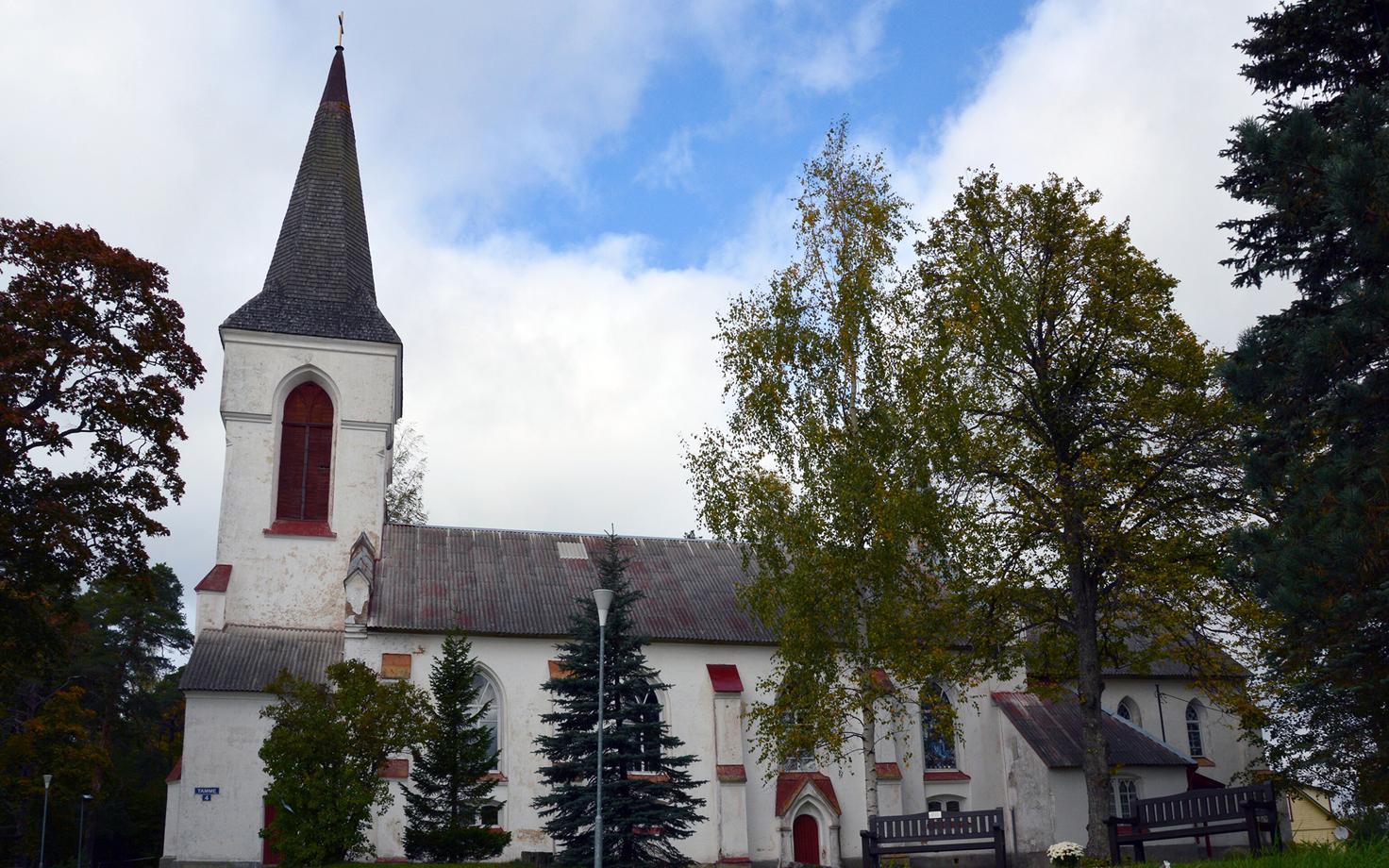
The so-called Poluverniki, who lived near Iisaku on the northern shore of Lake Peipus, were not Russified Votes but may have descended from a distinct Finnic tribe.
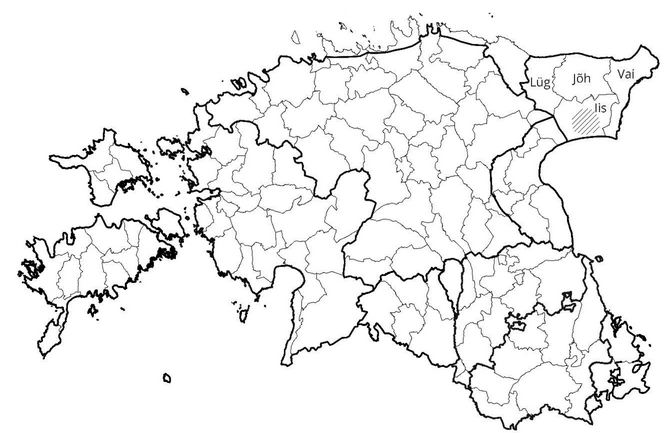
At the end of the 19th century, more than 5,000 Poluverniki lived in the Iisaku area on the northern shore of Lake Peipus. Their ancestors have long been thought to be Votes, whose language, like Estonian, belongs to the Southern Finnic branch. A new study by linguists at the University of Tartu shows, however, that the Poluverniki's language also had features similar to those of the Northern Finnic languages.
The origins of the Poluverniki have long been a mystery. Estonian, Votic and Russian influences mixed in their language and customs, and they were regarded as outsiders among both Estonians and Russians. According to the study, their more distant ancestors spoke a language that was close to the coastal dialect of northeastern Estonia and also had a number of unique features.
The study's authors, Petar Kehayov, professor of Finnic languages at the university of Tartu, and Karl Pajusalu, professor of the history and dialects of the Estonian language at the University of Tartu and a member of the Estonian Academy of Sciences, published their findings in Linguistica Uralica, a journal of Estonian Academy Publishers.
"The interest of the people of the Alutaguse area themselves has certainly been important, as has the significance of the topic for research into the history of the Finnic languages more broadly," Kehayov and Pajusalu said, explaining why they set out to study the origins of the Poluverniki's language. "Many people have ties to this attractive Alutaguse region, whether through family or summer travels. The northern shore of Lake Peipus is one of the most beautiful places in Estonia. More broadly, northeastern Estonia has throughout history been a meeting place of several Finnic languages and cultures."
A multilingual community on the northern shore of Lake Peipus
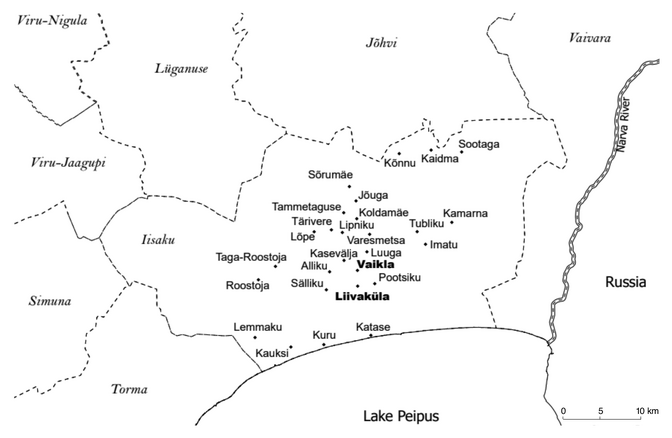
Poluverniki was the name given to Lutherans who lived on and near the northern shore of Lake Peipus in the parish of Iisaku and who, in recent centuries, spoke distinctive Russian and Estonian dialects. The villages of Vaikla and Liivaküla, about five kilometers from Iisaku, were regarded as the heart of the community and Vaikla was even dubbed "the capital of the Poluverniki."
The settlement history of the area is complex. According to the prevailing view, the region was inhabited in the Iron Age by a Votic-like people and in the 12th and 13th centuries further "Slavicized" Votes migrated across the River Narva. From the 1560s until the Great Northern War, Alutaguse was under Swedish rule and people migrated there from Russia, especially from Ingria and the Gdov area. Migration was encouraged by a law passed in Russia in 1597 that restricted the freedoms of peasants. In the 17th century, the Swedish authorities restricted Orthodox worship and encouraged the local peasants to convert to Lutheranism. This gave rise to the name poluverniki, 'half-believers': alongside the new faith, Orthodox customs were also preserved. In the 1690s, Old Believers settled along Lake Peipus and became the Poluverniki's closest Russian-speaking neighbous. After Russian rule began in 1704, another wave of settlers, which subsided by the 1730s, arrived from Russia.
The figure of more than 5,000 comes from the ethnographer Jüri Truusmann, who was probably counting members of the local Lutheran congregation. At the same time, the Poluverniki began to assimilate into the Estonian population. By the 1930s, the area they inhabited had shrunk to a handful of villages, which the Estonian press called the "Poluvernik Republic." The community nevertheless remained bilingual until the last decade of the 20th century: its members spoke a distinctive Russian dialect with both archaic features and Estonian influences and a northeastern Estonian dialect with a Russian accent. Today the Poluverniki no longer exist as a distinct ethnic group and their heritage is preserved above all by the Iisaku Museum.
The view that the Poluverniki were of Votic descent rests mainly on their folk culture rather than on linguistic research, and it is also the story told at the local museum.
The missing õ
Kehayov and Pajusalu analyzed language material collected by Mari Must and Helle Heiter between 1962 and 1965, as well as word lists of Poluverniki Russian compiled by Jüri Truusmann in 1895.
The most striking feature of the Poluverniki's language is the absence of the vowel õ, which is typical of Estonian and Votic. It was entirely missing from the speech of older residents of Vaikla and Liivaküla, even though frequent use of õ is characteristic both of the neighboring Alutaguse dialect and of Votic. They did not pronounce õ in Russian either and the sound was likewise absent from the Finnic loanwords in their Russian. It was replaced by various vowels, such as o: soobrat 'friends' (Estonian sõbrad), sona 'word' (Estonian sõna), u: nuges 'nettle' (Estonian nõges) and, in their Russian, i: pirguša 'hell' (Estonian põrgu). Their speech also lacked the three quantity degrees typical of Estonian, and, somewhat as in Finnish, they said menema 'to go' (Estonian minema), nena 'nose' (Estonian nina), laiv 'ship' (Estonian laev), and kaiv 'well' (Estonian kaev).
These features are either archaic or more typical of the Northern Finnic languages, which also included the coastal dialect of the Gulf of Finland, rather than of Votic, which together with Estonian belongs to the Southern Finnic languages. The authors conclude that the ancestors of the Poluverniki spoke a language close to the coastal dialect of northeastern Estonia and the Central Vaivara subdialect. As Vaikla lies 42 kilometers from the coast of the Gulf of Finland, a Northern Finnic population probably reached further inland than previously thought.
Russian points to the northeast
The Russian spoken by the Poluverniki did not fully match that of their closest neighbors either, the Russian dialects of the northern shore of Lake Peipus and the Gdov area. Older speakers often pronounced a clear o in unstressed syllables, where neighboring dialects had merged it with a. At times, l was replaced by an u-like sound, as in vouk instead of volk 'wolf'. The closest parallels to these features are found in the Northern Russian dialects of the Novgorod and Lake Ladoga regions, hundreds of kilometers to the northeast.
The authors offer two possible explanations. According to the first, speakers of Northern Russian dialects arrived in the area later. According to the second, Slavic settlers had already arrived here in the early Middle Ages, before several innovations began to spread in Russian dialects in the 14th century, and their language preserved old Northern Russian features because forests, the River Narva and the surrounding Finnic population served as barriers to the spread of these innovations. According to the researchers, the two explanations do not rule each other out.
A small community, a rich heritage
Put simply, the ancestors of the Poluverniki were a Finnic-speaking people who shifted to Russian and, in recent centuries, adopted the local Estonian dialect, in which features of their earlier language also survived. The Poluverniki of Iisaku did not regard themselves as Russians: according to Truusmann, they took offence when referred to as such.
For the authors, it was surprising how much there is still to discover about this small community. "How rich the linguistic and cultural heritage of such a small group of people can be and that something new can still be found in it. And how difficult it is to trace the historical relationships of a language that has emerged through multiple assimilations," Kehayov and Pajusalu noted.
The authors end their article with an appeal to archaeologists and geneticists. As early as 1975, the local historian Meeme Kask urged scientists to investigate the old burial sites around Iisaku and such work has begun in recent decades. In Kehayov and Pajusalu's view, archaeological data combined with DNA analysis would shed much more light on the ancestry of the Poluverniki. "The Estonian Roots Center of Excellence, which brings together researchers from many disciplines, has set out to study the formation of the population and culture of northeastern Estonia in more depth. This also requires a closer look at the Poluverniki's neighbours," they said.
"Neither one nor the other"
The Poluverniki's faith retained Orthodox features even after their conversion to Lutheranism: the Lutheran church in Iisaku is said to have even held an icon before which candles could be lit. In 1930, the linguist Paul Ariste wrote: "And indeed, the Poluvertsik is neither. He is, so to speak, someone who has ceased to be Russian, but has not yet become Estonian." Over the 20th century, the Poluverniki assimilated linguistically and culturally into the Estonian population.
The study "Where did the language of the northeastern Estonian Poluverniki come from?" appears in issue 2 of the 2026 volume of Linguistica Uralica (LXII(2), 155–179). It was supported by the Estonian Roots Center of Excellence (TK215) and the Estonian Research Council grant PRG2184.
The article was originally published in Linguistica Uralica.
--
Editor: Jaan-Juhan Oidermaa, Marcus Turovski


