Education ministry wants schools to teach more local dialects
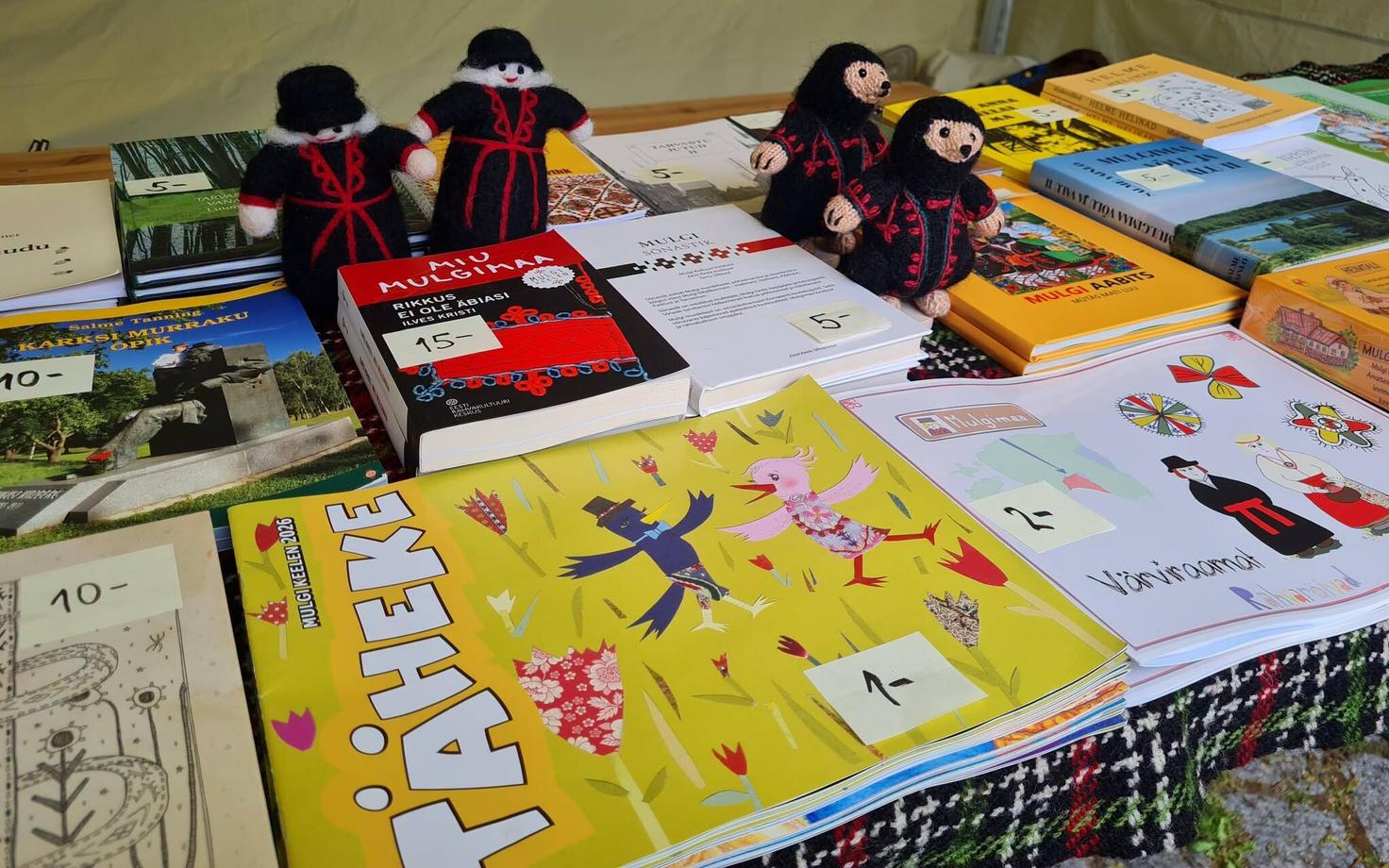
The Ministry of Education wants to make it easier to study regional varieties of Estonian in schools. Students would be able to replace their second foreign language classes with lessons in a regional variety of Estonian.
According to the Ministry of Education, regional varieties of Estonian are currently taught in around 15 to 20 general education schools in Estonia, most of them small rural schools, with just a couple of lessons a week.
However, a draft regulation has now been completed that would significantly expand opportunities to study regional varieties of Estonian starting next school year. Under the proposal, parents would have the right to request such instruction from a school if at least 10 children want to learn their local language variety. Parents at schools that already offer such instruction would not need to submit new requests.
Under the proposal, local language and culture could be studied as an elective. It would also give regional varieties of Estonian equal status with foreign languages in the curriculum, allowing students to study them more extensively as their second foreign language. The specific conditions would be established after the legislation is adopted.
Minister of Education Kristina Kallas told ERR that the change is necessary because children whose native language is Russian or Ukrainian, for example, already have the right to request two hours of instruction a week in their native language, while children who speak Võru, Setu or Mulgi at home do not have the same right.
"In the interests of children's linguistic development and the development of Estonian culture, we need to ensure equal rights so that Setu, Võru and other regional language varieties have similar rights within the education system," Kallas said.
The explanatory memorandum accompanying the draft legislation states that the change was initiated primarily by speakers of South Estonian regional varieties as the protection afforded to regional varieties of Estonian under the Language Act has proved insufficient. The proposed legislation would send a clear message to society that teaching regional varieties of Estonian and local culture is valued and protected through education.
The ministry also noted that demographic changes have led to a decline in the number of small schools, with children increasingly attending larger schools in regional centers. At these schools, instruction in regional language varieties tends to get lost among other interests and activities, making it difficult for those who want to study them to have their needs recognized.
The change would therefore give parents the right to request instruction in a regional variety of Estonian without having to reach agreements that take into account the interests of all parents at the school.
Principal supports the initiative
Jaak Israel, principal of August Kitzberg High School in Viljandi County, said the initiative is worthwhile.
"Everything helps enrich our understanding of language. After all, people need to learn the basics somewhere, including where the Estonian language originated and how it developed," he said.
The school offers an elective course in Mulgi language and culture at the upper secondary level and has also applied for funding under a support program launched by the Ministry of Education this year to help schools teach local language varieties. The application round is still underway, but Israel said the school hopes to use the funding to introduce Mulgi language instruction in the lower grades, replacing one Estonian language lesson a week.
Regarding the Mulgi language elective offered at the upper secondary level, Israel said three students are currently enrolled, although enrollment has been higher in the past. In one year, however, the school ran the course with just a single student.
Kaare Lill, principal of Võru City Center School, said Võru language instruction has only a very limited presence at her school. It is offered as part of extracurricular activities for younger students, with parents able to choose one activity lesson per week from a wide range of options. A child might therefore study Võru for one trimester, robotics for another and something related to art for the third.
Regarding families' interest, Lill noted that if grandparents have not spoken Võru at home and parents themselves have not grown up in a Võru-speaking environment, they may question the point of learning it. More aware parents, however, want their children to have the opportunity. Enrollment in the Võru language club tends to be modest rather than filling up quickly.
Lill therefore believes the proposed change is both necessary and positive in helping keep the Võru language alive, although exactly how it will be implemented remains unclear.
"We may run into some difficulties because we don't have enough teachers who feel confident and have the skills to pass on the Võru language and use it in their lessons. Teachers often come to schools from all over Estonia and they don't have that background," she said.
The principal of August Kitzberg High School in Viljandi County, however, believes finding teachers will not be a problem at his school. Israel said they have an Estonian language teacher who has completed relevant courses and he welcomed the idea of offering Mulgi as a second foreign language.
Israel believes that greater coverage of the issue could also increase parental interest, adding that there is certainly already a group of families interested in the opportunity. However, the change would also need to be accompanied by adequate funding.
Schools to receive support for teaching dialects
According to Kristina Kallas, the change concerns the possibility of teaching regional varieties of Estonian in basic schools. Although upper secondary schools would not be subject to the same requirement, they would still have the option of offering such instruction, as they do with other foreign languages.
"We know that Setomaa High School, for example, already offers Setu language instruction. But this is limited to regions where these language varieties are spoken. Foreign language instruction can be offered uniformly across Estonia, while the teaching of regional language varieties is limited to the areas where they are used," Kallas explained.
To help ensure there are enough teachers, a support program for teaching regional varieties of Estonian is available to fund the publication of textbooks and the development of teaching materials.
Under the draft legislation, responsibility for coordinating the teaching of regional varieties of Estonian and supporting schools would be transferred to the Institute of the Estonian Language, so that individual schools would not have to deal separately with issues such as teaching materials and teacher training.
Instruction in regional varieties of Estonian should not increase students' workloads. However, if a school has no room in its existing timetable, it would be allowed to increase the maximum permitted weekly workload for students by one lesson.
The change would primarily affect schools in the historical areas where the Võru, Setu, Mulgi, Tartu, Saare, Kihnu, Muhu, Hiiu, Kodavere, Kuusalu, Lüganuse and Jõhvi varieties of Estonian are spoken. There are approximately 155 basic schools in these regions.
The requirement would apply only to schools located in areas where distinct regional varieties of Estonian have historically developed.
According to the latest census, 23 percent of people aged 65 and older speak a regional variety of Estonian, compared with just 3 percent of children aged 14 and younger. In total, approximately 160,000 people in Estonia speak a regional variety of the language.
The Ministry of Education has sent the draft amendments to the Basic Schools and Upper Secondary Schools Act to stakeholders for feedback. Under the current plan, the changes would take effect as early as next school year.
--
Editor: Marcus Turovski