Former Icelandic prime minister: Small states must redefine the AI race
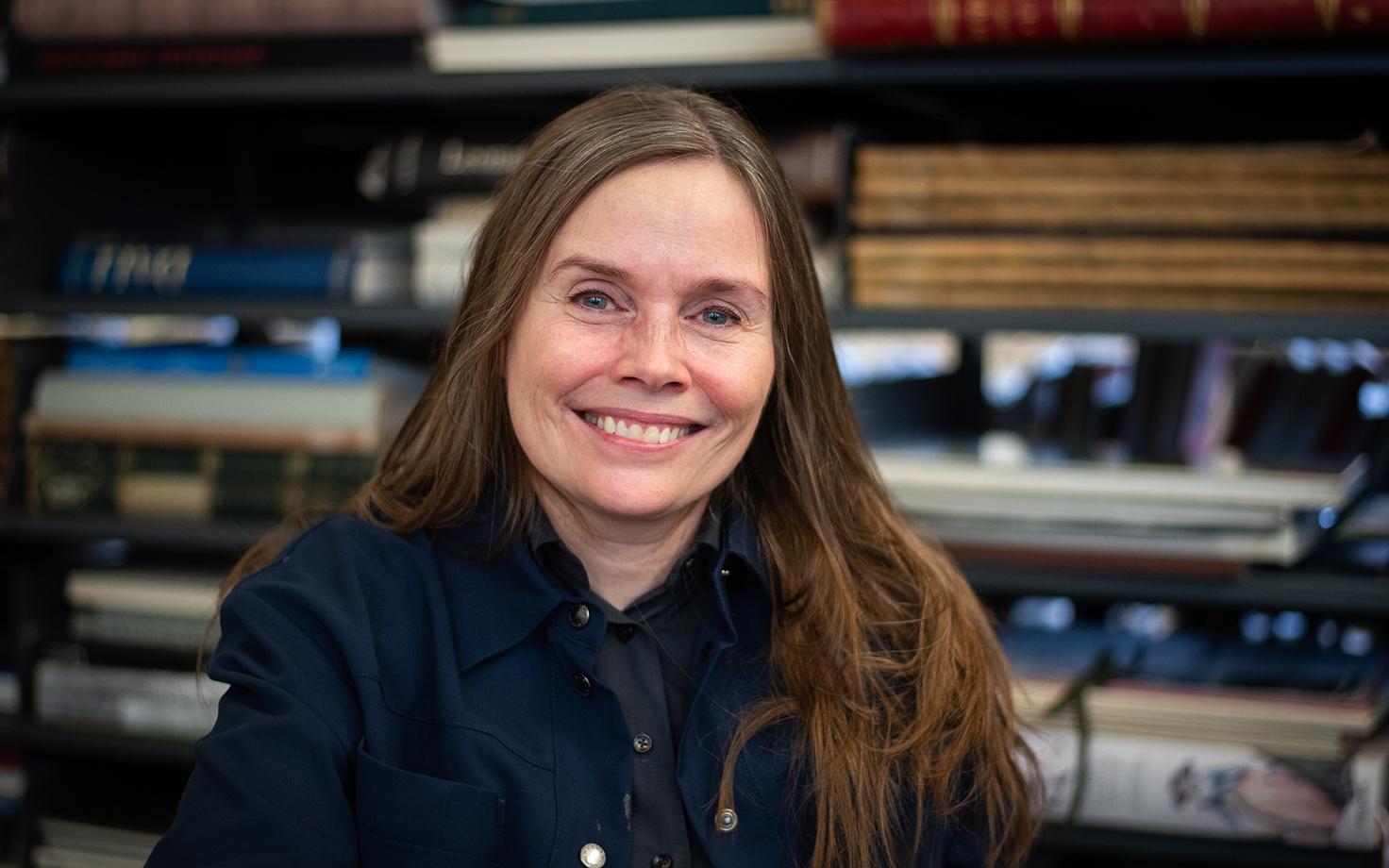
The U.S.-China AI race and the two powers' transactional approach threaten the global order, former Icelandic Prime Minister Katrín Jakobsdóttir said during a visit to Estonia, urging smaller nations to champion human rights and ethics in AI debates.
On Wednesday, you gave a lecture at the Estonian Academy of Arts on values-based governance. Could you briefly explain how we can govern based on shared values at a time when our societies — even small ones like Estonia — are increasingly divided and have relatively few values in common? What is your recipe for success?
It's difficult to have one recipe because societies are so different. I think we've seen a drastic change in the last decade. When I formed a coalition government in Iceland in 2017, we'd had several snap elections and a lot of turmoil in Icelandic politics, really ever since the economic crisis in 2008. There was quite a strong demand from voters that people be ready to make compromises and create a functional government.
What we've seen in the last few years, however, is that compromise has become a dirty word. People and parties are very locked in their own internet bubbles, where you mainly meet people who agree with you. A real connection between people with different opinions is more difficult than before.
I'm out of professional politics now, but I think we need to demand that our leaders explain their red lines when it comes to collaboration and what compromises they're ready to make and be honest and frank about it. In the end, for a democracy, it's very important that you can make compromises and create political stability.
So, in your view, is compromise-based politics the direction we should be moving in?
No, not just that. Of course, you also want to achieve some results. I'm a politician, so obviously I have my ideas about how society should work. What I'm saying is that sometimes you can't do that in one step. You sometimes have to take many steps to reach your goal.
You are an advocate of the well-being economy. Have we become too fixated on GDP and should we be paying more attention to other indicators as well?
A well-being economy has been part of my political agenda since I began in politics. I come from the environmental movement. What we criticized in Iceland was that everything was focused on economic growth and GDP, without taking into account the environmental damage that was needed to maintain that growth.
You need to measure more than just the economic factors. You need to measure societal and environmental factors. You need to go beyond GDP, as many countries are finally agreeing within the UN.
We could just talk about climate. What are we doing when it comes to climate change? We're still subsidizing fossil fuels more than renewables at the same time as we say we want to achieve our climate goals. We're using taxpayers' money to subsidize fossil fuels and we're using taxpayers' money to fund the health effects of climate change. You have to look at things more holistically than we've been doing.
In Estonia, too, there are many politicians who view environmental protection as a luxury that stands in the way of economic growth.
You can say climate is a luxury issue, but the facts are very clear. Just look at last summer here in Europe. The heat waves had severe health effects and are also very serious for our productivity as a region. Look at the droughts and the wildfires. I live in the sub-Arctic and we're watching the ice melt in the Arctic, which is detrimental to the ecosystem and to the Indigenous communities living around the Arctic.
Some would call climate a luxury problem, but the data shows otherwise. The sad fact is that even though it's gone down on the political agenda, the climate crisis hasn't gone anywhere.
You also lead New Nordics AI, a Nordic-Baltic artificial intelligence cooperation platform. How can we use and develop AI responsibly, both in terms of the climate and humanity's survival, when the power to shape these issues lies largely in the hands of major powers?
I was listening to the news this morning. The U.S. president was saying he was absolutely against global regulation of AI. The U.S. and China, which define themselves as great powers, are in this race on AI. It's a race they define. They're competing on their own terms.
I think we, the small countries, Europe, need to redefine that race. How do we actually want to use AI? When do we want to use it and when do we not want to use it? I don't want us just to be the recipients of the technology. We need to build our technological capacities, but we also need to talk about the policies. In my opinion, it's not enough just to regulate. This is such a huge cultural change that we need a more open dialogue within our societies and between them on how we really want to work on it.
Estonia, with Latvia and Lithuania, is joining a platform I chair, New Nordics AI. I truly believe the Nordics and the Baltics can decide how to use AI for the common good while maintaining values like democracy and human rights and addressing ethical concerns. I found it interesting yesterday here in Estonia, but also when I meet with young people in particular, that they have deep ethical concerns about AI.
Is Iceland prepared to make land available for the construction of data centers?
We have some data centers. We have some renewable energy. We're sparsely populated, so we don't have the data centers within the urban areas. But in Iceland, questions are arising. How many data centers should we have? How much of our energy do we want to use on that? Even though we have renewable energy, using it means we're spoiling unspoiled nature and wilderness. It's not an easy decision.
We're having that discussion. It's specifically Icelandic, but it's still partly the same as what we saw in the U.S. before the midterms.
You mentioned the AI race between China and the United States, but there is another race underway in the Arctic region and the Arctic Ocean. How do you see that playing out?
That's a very good question. I've been in politics for so long. Iceland hosted a meeting of the Arctic Council where we had all eight Arctic countries — the Nordics, the U.S., Canada and Russia. This was before the invasion. Everybody agreed it was to be a peaceful area and that we should focus on climate and the environment because of the fragile ecosystem. This was only a few years ago, I believe in 2020 or 2021. We agreed on a ten-year vision.
Then Russia invaded Ukraine. It was an illegal, brutal and senseless invasion, which has had a huge effect on Arctic collaboration. Later we saw the U.S. interest in Greenland. As the Greenlandic foreign minister put it at the Arctic Circle Assembly in Iceland this October, a friend does not show disrespect in this way. It was a very powerful statement because this has really disrupted the alignment on the Arctic.
What would be the best solution for Greenland?
The best solution for Greenland is the one the Greenlanders themselves decide on, in my opinion. They need to decide their own destiny.
How is Iceland contributing to the defense of the region?
We've been a founding member of NATO since 1949. As you probably know, we don't have a military of our own. We provide technical support. We have a center that monitors the North Atlantic Ocean. We try to provide the assistance that's needed on the civilian side. We also have a defense agreement with the U.S.
Is the U.S. a reliable partner for Iceland right now?
Iceland has maintained good collaboration with the U.S. But the multilateral system, including NATO, the UN and more, has been quite undermined in the last few years. We're seeing the emergence of the discourse of great powers, as we see today with this meeting between Russia, China and the U.S. Three guys talking about the rest of the world.
Instead of putting the emphasis on international law, territorial sovereignty and negotiations at a multilateral level, we're seeing a more transactional kind of discourse. Small countries like Estonia and Iceland should be very clear that this is not the discourse we want. It's not the system we want.
I underline that Iceland and the U.S. have enjoyed very good collaboration. We also need to be clear that the multilateral system is important for all the countries that don't define themselves as superpowers. That's the great majority.
Why should the superpowers listen to us small fish?
If you only think about the world in terms of power, you don't have to listen to anyone. You just have to gain as much power as possible. But is that the world you really want? So why should they listen to us? I think those who lead the superpowers also have an obligation to think about the rest of the world and the common good. If you only think about it in terms of power, that's another thing.
Iceland has been a pioneer in inclusive policymaking that takes minorities into account. Is every political decision you make also considered from the perspectives of gender, disability and other minority groups?
I wouldn't go so far as to say that every decision is made that way. But we've done a lot when it comes to evaluating legislation and the budget from the perspective of gender. We've tried to address multisectoral discrimination, for example, when you look at gender, age or racial background. I think we've done many good things, but we're definitely not perfect when it comes to that.
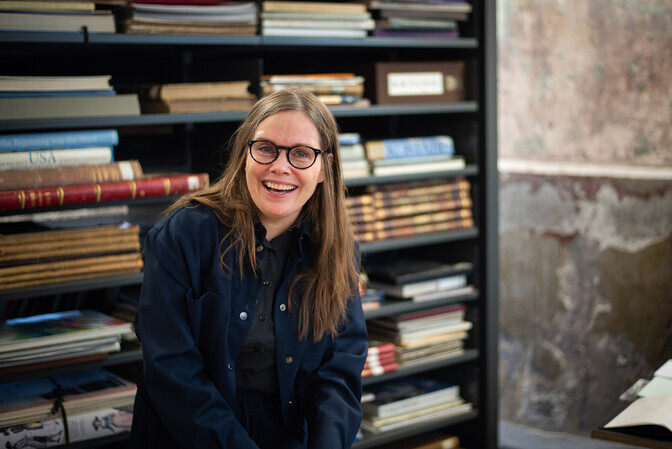
Katrín Jakobsdóttir (50)
Katrín Jakobsdóttir is an Icelandic politician who served as prime minister of Iceland from 2017 to 2024, leading a broad coalition government comprising the Left-Green Movement, the Independence Party and the Progressive Party. She was a longtime member of Iceland's parliament (Alþingi) and served as minister of education, science and culture from 2009 to 2013.
In spring 2024, Jakobsdóttir resigned as prime minister to run for president of Iceland. She now gives public talks and lectures.
She currently heads New Nordics AI, a Nordic-Baltic cooperation platform focused on artificial intelligence.
Beyond politics, Katrín Jakobsdóttir has strong ties to literature. She studied Icelandic language and literature as well as French at the University of Iceland, earning a master's degree in Icelandic literature in 2004. Before entering politics, she worked as a language editor at Iceland's national public broadcaster (RÚV) and taught literature, among other roles.
Jakobsdóttir gained international recognition as an author in 2022 with the publication of "Reykjavík," a thriller she co-wrote with bestselling Icelandic crime novelist Ragnar Jónasson. The book has also been published in Estonian. She also has a new crime novel forthcoming.
--
Editor: Marcus Turovski


