Hackers obtain personal data of thousands in cyberattack on TLT website
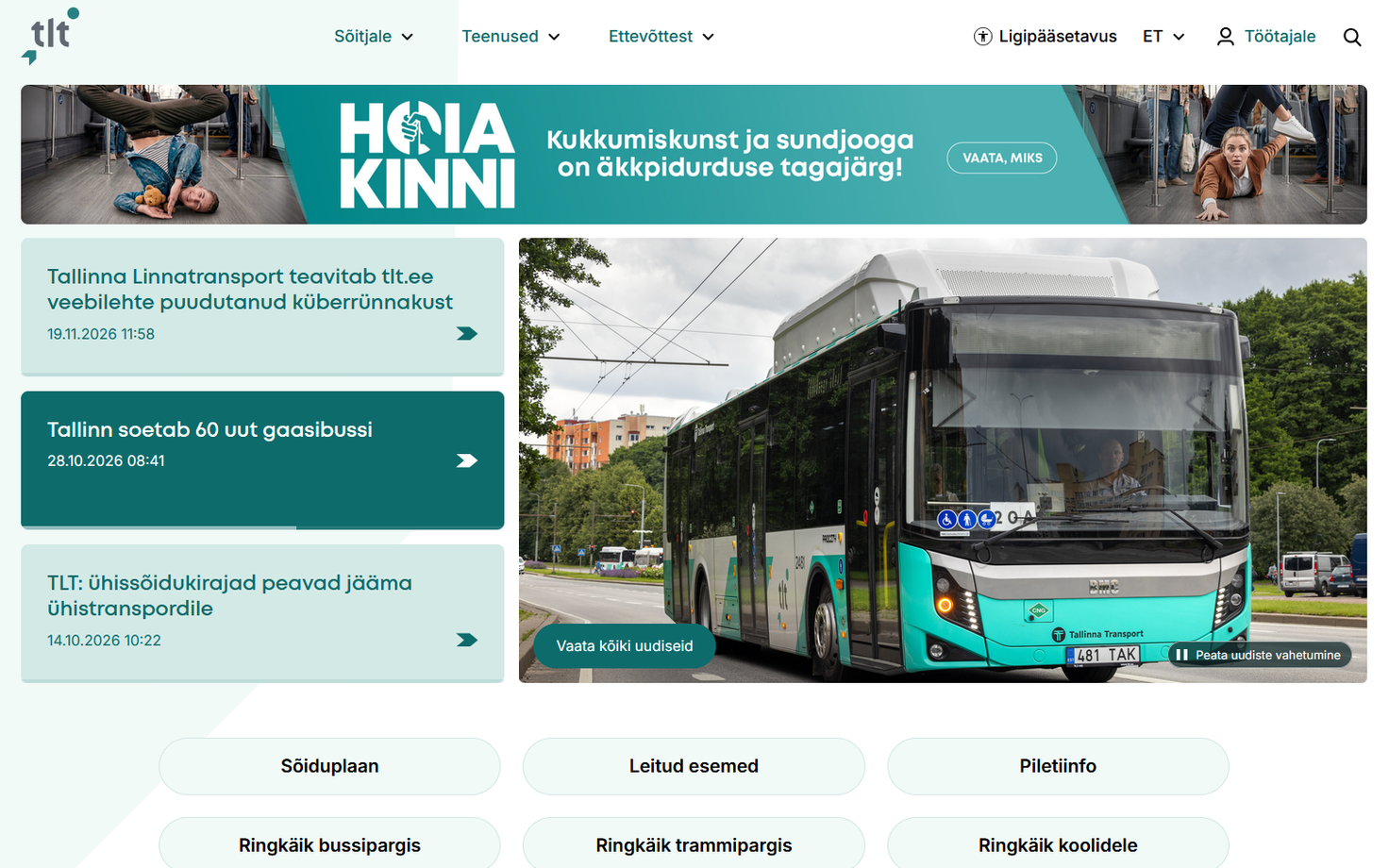
A cyberattack targeting the public website of municipal transport company Tallinna Linnatransport (TLT) on Monday compromised the personal data of several thousand people, the company said.
The attack exploited a security vulnerability in software used on the website after a plugin update had not been installed. The attacker downloaded a copy of the website's database.
The incident affects 2,440 TLT employees. The leaked data included employees' names, job titles and personal identification numbers.
An initial investigation has also found that an additional 2,370 people who had submitted their information through forms on the tlt.ee website may have been affected. The exposed information may include names and email addresses entered into those forms.
"We take this incident very seriously. Our first priority was to close the access route used in the attack, determine the scope of the data leak and notify affected individuals and the relevant authorities. At the same time, we are strengthening the website's security measures and reviewing our personal data retention policies to reduce the risk of a similar incident occurring again. TLT has not suffered any financial losses as a result of the attack, and the leak does not affect data related to public transport ticket validation or ticket purchases," said TLT management board member Kaido Padar.
TLT immediately blocked the access route used in the attack and removed the threat from its website. The company brought in cybersecurity experts to analyze the incident and has notified the Data Protection Inspectorate, the Information System Authority (RIA) and the police.
The company said it had also checked its other IT systems and, based on current information, they have not been affected by the incident.
TLT has informed both its employees and people who submitted information via the tlt.ee website about the breach.
The company is urging affected individuals to remain alert to possible scam calls and phishing emails. Particular caution should be exercised with any requests for passwords or PIN codes.
For additional information, TLT advises people to visit its website, tlt.ee.
--
Editor: Marko Tooming, Argo Ideon


