Ancient proteins confirm gender-specific grave goods in Estonian child burials
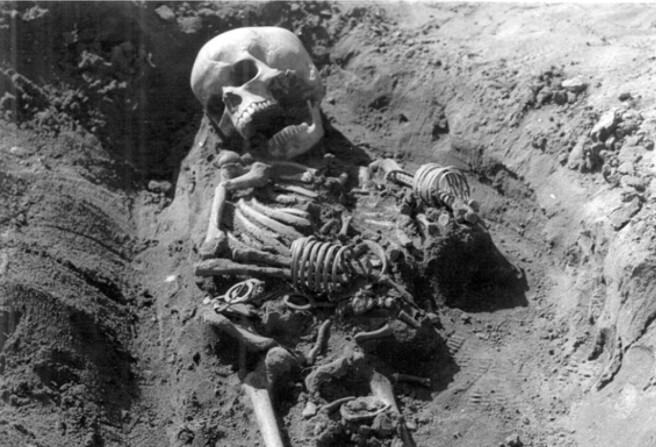
Grave goods left with late Iron Age and early Medieval Estonian boys and girls around the age of 10 showed greater levels of complexity and gender-differentiation than those of infants, research for a doctoral thesis at the University of Tartu has indicated.
Whereas the sex of interred children has previously been inferred solely from objects found in graves, ancient proteins reflecting biological sex can now provide definitive answers.
Ancient DNA and protein analysis have been transforming archaeological understanding of prehistoric childhood by testing out long-held assumptions about how youth were integrated into early society.
"Generally, children have been in the background when it comes to archaeology. Since child burials are somewhat scarcer and do not leave a large trace in the archaeological material, it has been thought that children were of little importance," said Karin Rannaäär, a junior researcher in archaeology at the University of Tartu.
"From my initial results, it seems that around the age of 10 is a turning point, where the quantity and complexity of grave goods changes," Rannaäär noted.
Rannaäär is testing hypotheses from a 2012 bachelor's thesis from Keiti Randoja, which analyzed child burials at the Pada and Kukruse archaeological sites in Lääne-Viru County (see images), using artifact typologies alone. By extracting ancient proteins from dental enamel to identify XX or XY chromosomes, Rannaäär is able to determine biological sex and cross-reference whether traditional artifact assumptions held true.
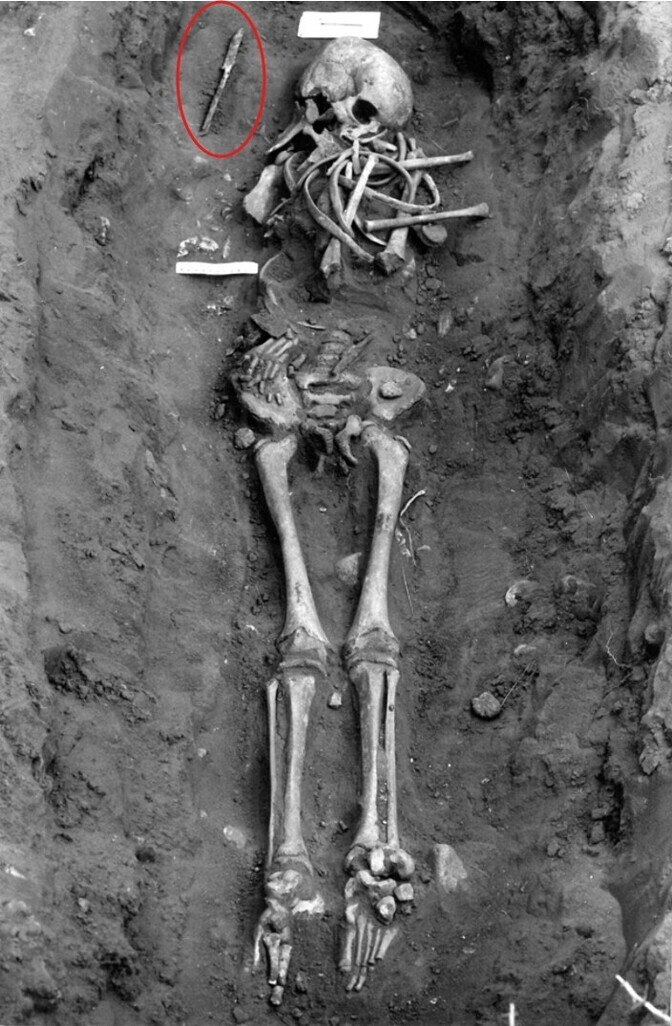
"The assumption has been that boys have more weapons and tools, and girls more jewelry," Rannaäär added.
Her research aims to test this assumption using paleoproteomics, meaning ancient proteins. Samples are taken from dental enamel to determine whether a child had an XY or XX chromosome, in this way establishing sex. This comparison of protein and artifact material can reveal whether boys were sometimes buried with girls' items and vice versa.
Items placed in the graves of smaller children are relatively simple and uniform across both sexes. "The main grave goods are still jewelry and items related to clothing. The clothing was decorated with bronze studs and spirals. There are also many necklaces, bracelets, and beads," Rannaäär lists.
The older the child, the more diverse the accoutrements they were buried with. For example, the abundance of jewelry surged in interred girls starting around age 10, to the extent of them coming to resemble the grave goods seen for adult women.
Starting around the same age, boys were interred with tools and spearheads as were the men. Rannaäär suggests one possibility here is that boys were already practicing combat with weapons, given a warrior's life awaited them. "The second option is simply that a spearhead was placed in the grave with the thought that had the boy grown up, he could have become a warrior," she added as another interpretation.
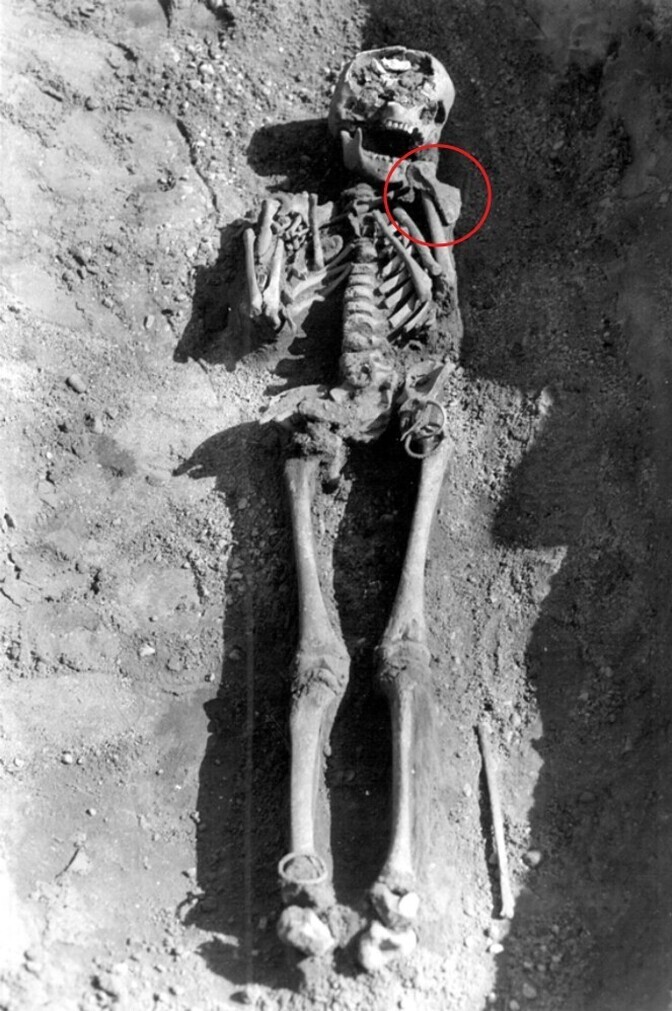
The material from both excavation sites is in any case generally similar. 171 graves were excavated in Pada, while only 46 were excavated in Kukruse. The two sites date mainly to the late 12th/early 13th centuries. "Kukruse is actually very rich in burials. Simply because their number is so much smaller, the mistaken impression can prevail that there was less diversity compared with Pada," Rannaäär pointed out.
Minors generally make up a relatively small number of burials in cemeteries, while other locations they were buried in merits its own separate research, according to the junior researcher. In both cemeteries mentioned here, they were interred together with adults, without any separate burial customs or dedicated burial zones.
According to Rannaäär, this demonstrates that while earlier understanding viewed children as an unimportant part of society, in reality they were seen essentially as little adults. "Certainly we must bear in mind that we cannot see from the burials how children saw the world. We see how those how buried them saw the children," she acknowledged.
Karin Rannaäär presented her lecture titled "Children's Grave Goods and Biological Sex in Late Iron Age Estonia: A Case Study of Pada and Kukruse" at the doctoral presentation day at the University of Tartu's center of excellence in Estonian roots ( Eesti juurte tippkeskus). The completion of the doctoral thesis was supported by the European Commission-funded Food ID project.
--
Follow ERR News on Facebook and Twitter and never miss an update!
Editor: Andrew Whyte


