New research method promises to shed light on Estonia's oldest steel finds
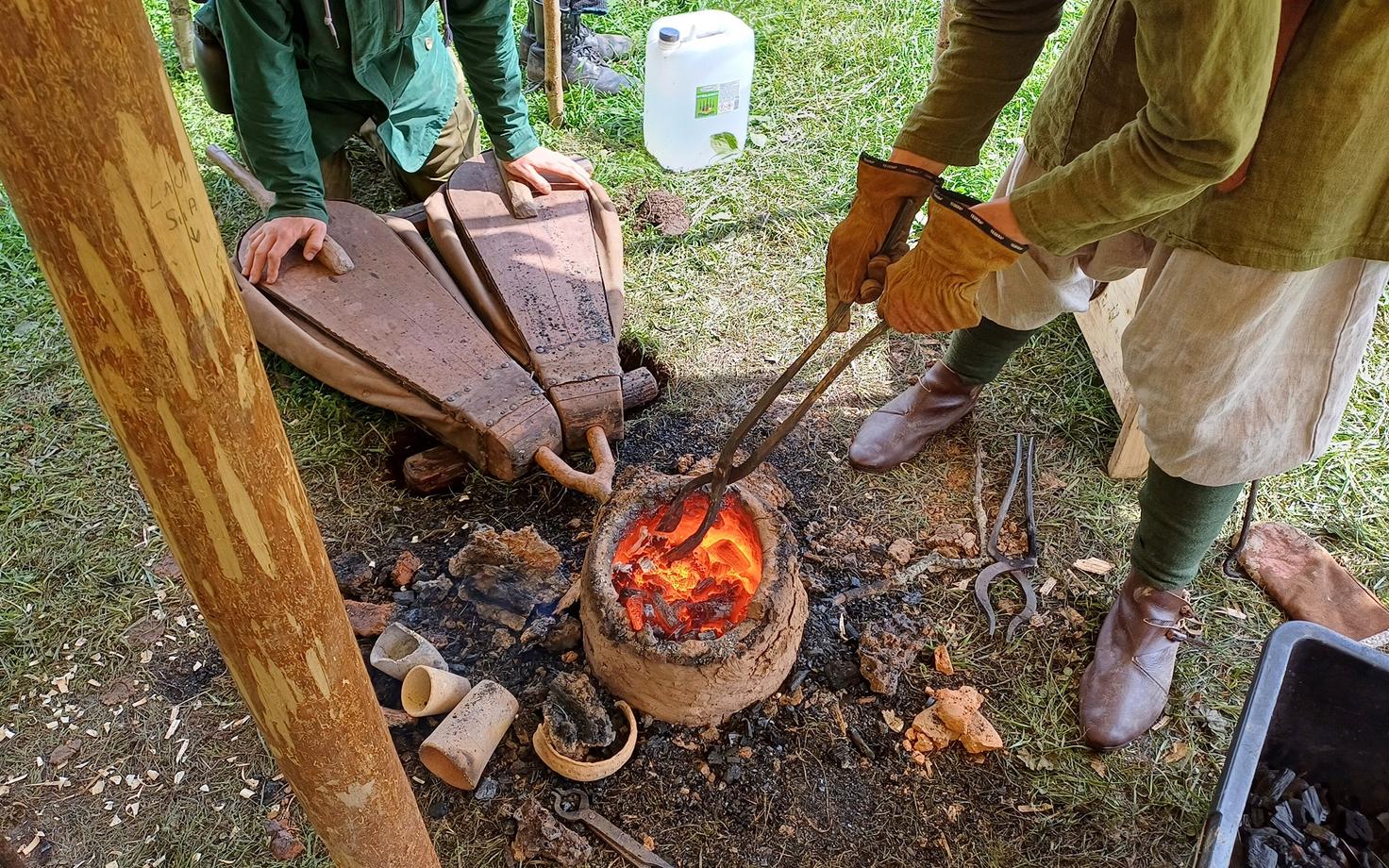
New archaeological evidence suggests iron production in Estonia may have begun several centuries earlier than previously thought. University of Tartu researcher Kristo Oks is using modern chemical analysis and experimental archaeology to investigate the origins of Estonia's earliest iron and steel artifacts.
"The current understanding is that iron smelting began in Estonia about 2,000 years ago. However, certain finds suggest that this timeline could be pushed back considerably," says Kristo Oks, a junior research fellow in archaeology at the University of Tartu. Archaeological finds dating to the beginning of the first millennium A.D. at the latest also provide evidence of steel, which is stronger than iron.
In archaeology, the likely origins of artifacts are usually determined by their shape and appearance. However, in his doctoral dissertation, which is nearing completion, Oks is using new chemical analysis methods that make it possible to ask new questions and provide more precise answers.
As the junior research fellow explained in a recent presentation, his research focuses on local iron and steel production in Estonia between 500 B.C. and A.D. 1500. Using laser ablation, he hopes to determine where Estonia's oldest iron and steel artifacts originated. He is also producing steel himself using experimental archaeology methods to better understand how the artifacts found in Estonia were made.
As a case study, Oks is examining iron consumption among rural inhabitants and centers of power in the ancient county of Ugandi during the 12th to 14th centuries. "Did locally produced iron reach the centers of power or did the foreign ruling elite prefer to import iron from elsewhere?" he asks.
Slag that speaks volumes
Estonia's earliest known iron-smelting sites have been dated to the first century B.C. Examples include sites in Rae and Jüri near Tallinn, Tindimurru in Tartu County and Mäetaguse-Metsküla in Ida-Viru County. "Our earliest iron artifacts come from burial sites where the oldest burials have been dated to the eighth century B.C., which is technically still the Bronze Age," Kristo Oks says. The first iron objects included decorative pins, awls, knives and axes, followed soon after by sickles and scythes.
"Iron was smelted from bog ore here. Estonians generally call it sooraud, or bog iron, but that's a colloquial term," Oks points out. Smelting bog iron ore produces iron as the primary product. The sand and clay particles contained in the ore also melt together, forming a glassy mass known as slag.
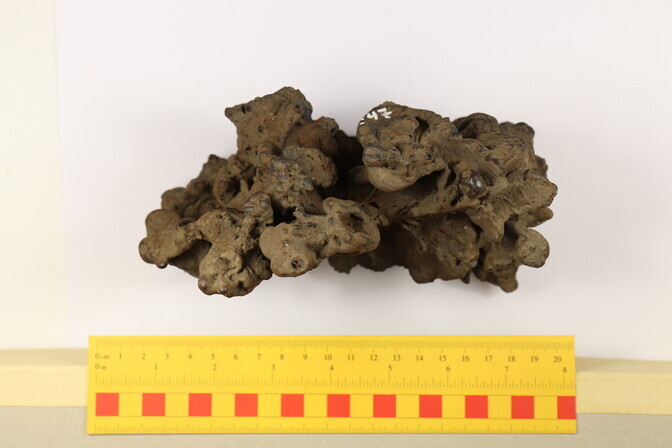
In recent years, new slag finds have emerged that suggest iron production in Estonia began earlier than the previously assumed first century B.C. "When iron has just been smelted and removed from the furnace, some of the slag inside it is still in a somewhat liquid state. When the iron is hammered, the slag flies out in droplets," Oks explains. These droplets cool and solidify rapidly, leaving behind tiny spherical pieces of slag, typically no more than about five millimeters in diameter, at archaeological sites.
The oldest known slag spheres were discovered in 2019 at Pärnu maantee 41 in Tallinn. Archaeologists found a triple burial at the site, which radiocarbon dating placed between 405 and 360 B.C., several centuries earlier than previously thought.
Every bog has its own ore
In his doctoral dissertation, Kristo Oks is also analyzing slag finds, using a relatively new technique called laser ablation (LA-ICP-MS). The method makes it possible to analyze the chemical composition of metal or slag left over from its production.
Comparing the chemical composition of slag can help link iron artifacts to local production sites. "We want to establish whether our earliest iron artifacts found in burial sites were imported, just as raw materials were obtained from elsewhere during the Bronze and Stone Ages. Or whether the knowledge of how to produce iron from local raw materials had already reached Estonia by the eighth century B.C.," the junior research fellow explains.
To determine the origin of a sample, a small piece must first be cut from a fragment of slag. It is then mounted in a thermoplastic sample holder and polished before being examined under a microscope or placed in a laser ablation instrument.
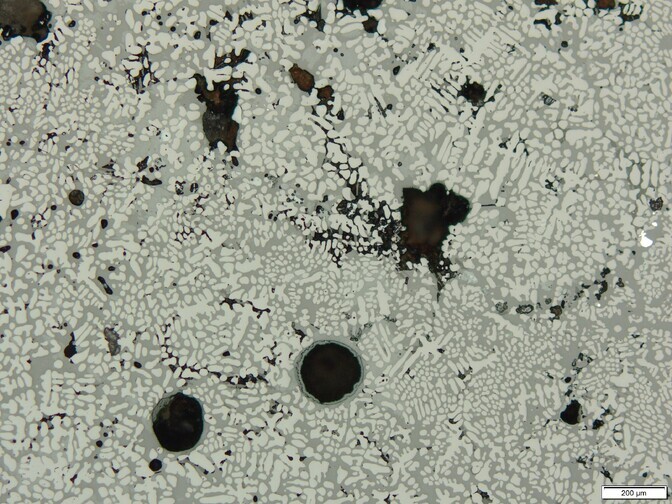
An important factor is that Estonia's geological bedrock varies by region. Southern Estonia, for example, is dominated by Devonian formations, while Silurian and Ordovician formations are found farther north, along with Cambrian formations along the coast. "The geological bedrock has influenced the chemical signatures of bog iron ores found in different locations," Oks notes.
"We can also use laser ablation to examine the slag trapped inside our oldest iron artifacts during the smelting process," the junior research fellow points out. The groundwork for this has already been laid: his colleague Sander Jegorov studied the chemical composition of slag from local iron-smelting sites in Estonia and sought to establish links to the underlying geology. This research makes it possible to compare slag found in Estonia's oldest iron artifacts with slag from known smelting sites.
"However, analyzing the oldest finds using this method raises ethical issues because these artifacts are so rare. Museum collection managers are understandably reluctant to allow pieces to be cut from them," Oks acknowledges. As a result, researchers must make do with less well-preserved and less readily identifiable artifact fragments recovered from the same archaeological contexts.
New method enables new questions
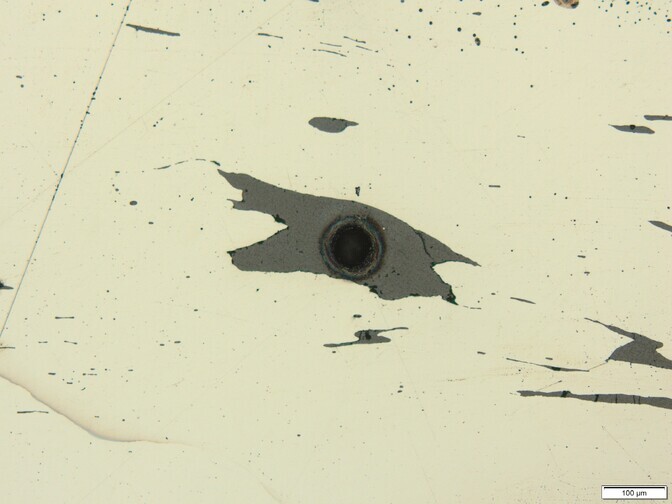
Kristo Oks is even more interested in local steel production than in iron. Steel has previously been studied in Estonia by archaeologist Jüri Peets, who conducted metallographic analyses of edged tools dating to the first century A.D., examining their cross sections. "A knife can be forged from three or more layers, for example. Imagine a sandwich: on the outside, you have soft iron, like soft bread, and in the middle, you have sausage, representing the steel," the junior research fellow explains.
Once again, Oks is interested in the origins of steel and the methods used to forge it. Compared with iron, steel contains more carbon, making it harder and allowing cutting tools to retain their sharp edges longer. "Was steel imported into Estonia at some point? Or did iron-smelting technology arrive together with broader knowledge of steelmaking, including how to increase the carbon content of iron?" Oks wonders.
Experimental archaeology may help reveal how carbon was introduced into iron. Numerous iron-smelting experiments have been conducted in Estonia in the past, but Oks is now testing different steelmaking methods himself for the first time. "Every summer, the Rõuge Ancient Farm hosts the Rõuge Ancient Days event. Over the past two years, my supervisor Ragnar Saage and I have conducted steelmaking experiments there," he explains.
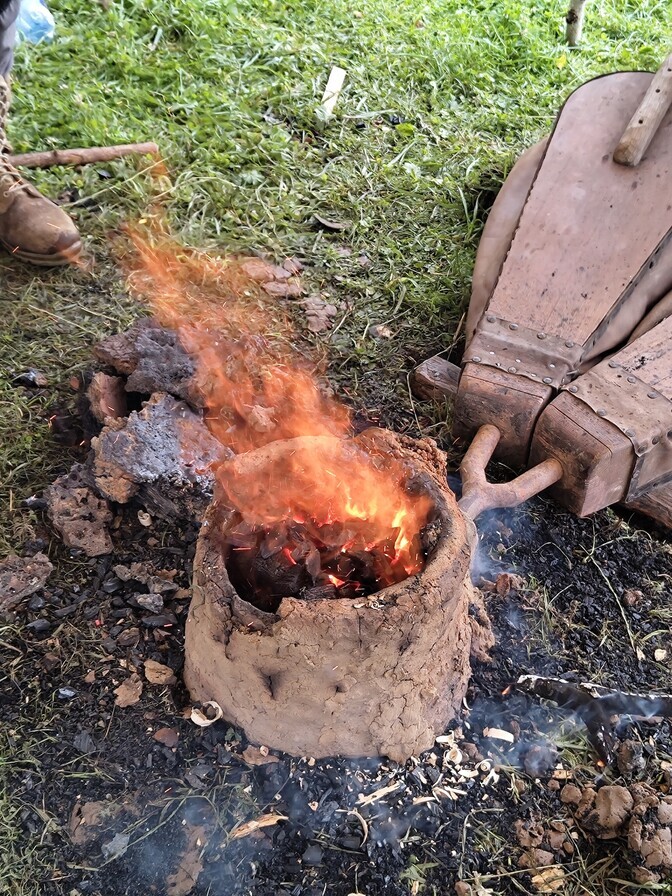
During each experiment, the junior research fellow documents the production method used. Afterward, he cuts a piece from the iron, grinds and polishes it and examines it under a microscope to see how carbon was incorporated into the metal. Optical microscopy then allows him to compare the resulting material with archaeological finds.
Finally, Oks is conducting a comparative analysis of iron consumption among rural inhabitants and the elites who lived in centers of power in the ancient southern Estonian county of Ugandi during the 12th to 14th centuries. "One possibility is to base the case study on Otepää Bishop's Castle, as Jüri Peets has already analyzed at least 50 knives from the site," he says. Once again, there is no need to take new samples from the artifacts, as they can now be reexamined using new methods.
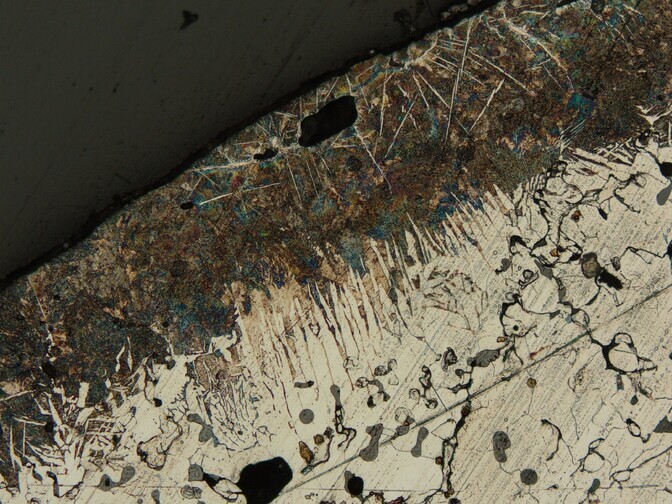
"The same research questions may have existed in the past, but suitable methods either didn't exist or weren't available to researchers at the time," Oks acknowledges. As research methods advance, he also hopes to investigate what factors determined the locations of iron-smelting sites. Was access to bog iron ore more important or was it the availability of suitable clay for building furnaces?
Kristo Oks delivered a presentation titled "From Iron to Steel: The Spread and Use of Iron and Steelmaking Technologies in Estonia 500 BC–1500 AD" at the Estonian Roots Center of Excellence's doctoral student presentation day.
--
Editor: Marcus Turovski


