Center Party head: Government should alleviate local impact of closing the Russian border
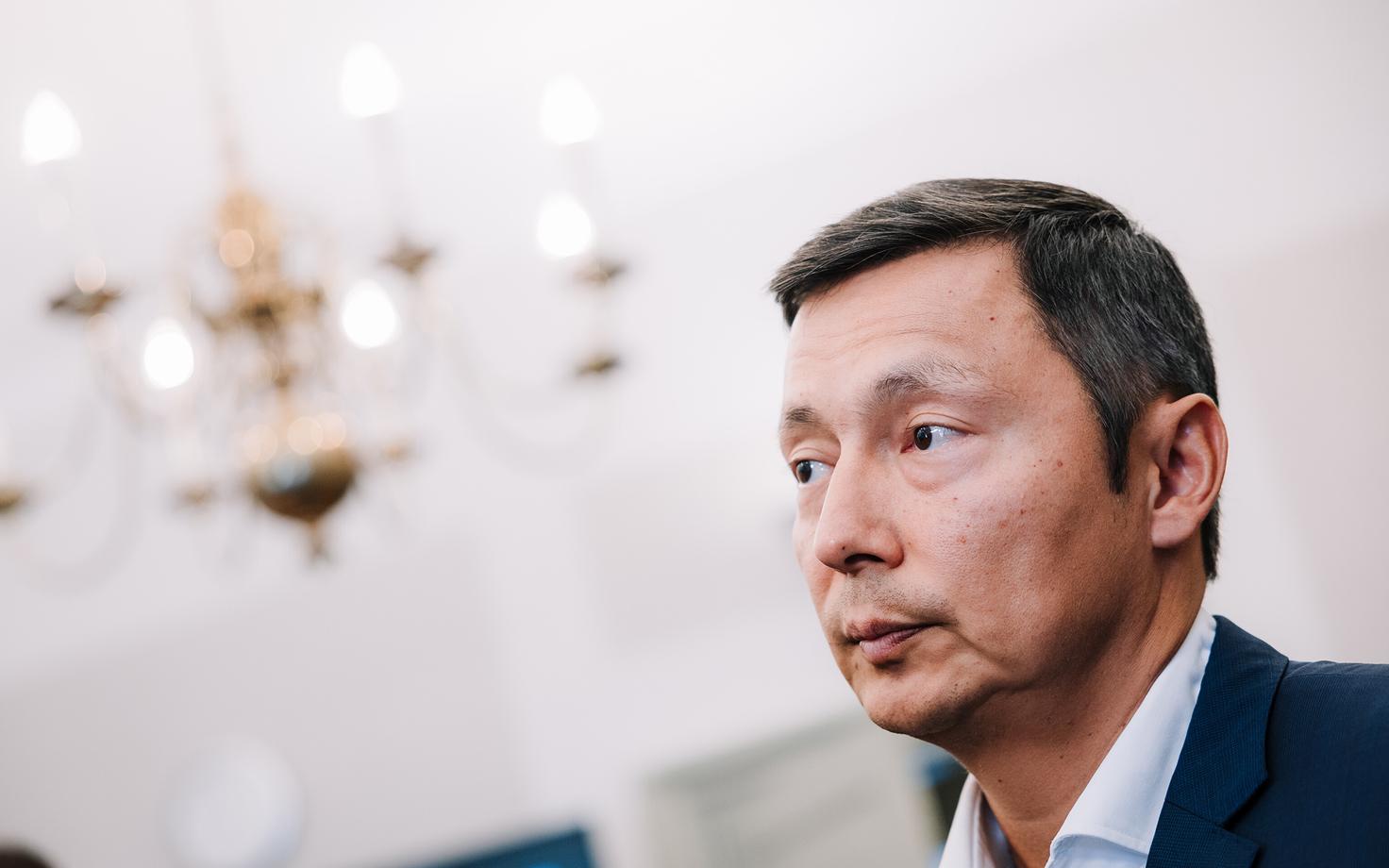
Center Party Chairman Mihhail Kõlvart believes that closing Estonia's eastern border would need to be accompanied by support measures for businesses, as well as humanitarian corridors for local residents.
Estonia plans to completely close its land border with Russia in the near future. Center Party Chairman Mihhail Kõlvart said this is a necessary step.
"If we are attacked, we have no choice — we must respond. But I would very much like our country to be not only brave and strong, but also effective. In other words, the measures we implement should be as beneficial as possible to us and, when necessary, as harmful as possible to our potential enemies. When we talk about security, we need an expert assessment. If we can strengthen security or mitigate risks in this way, then it is a necessary decision. Of course, I would also like to see an actual expert assessment from our security agencies," Kõlvart said, adding that there is an expectation in the Riigikogu that the Estonian Internal Security Service (ISS/KAPO) provide a more detailed security assessment.
However, Kõlvart believes consideration should also be given to how such a measure would affect life within Estonia.
"This is not just about the residents of Ida-Viru County. It is also an issue for southeastern Estonia. There are at least two aspects here. One is the humanitarian aspect — people have relatives, sick parents they visit and cemeteries they go to. That must be taken into account. The second aspect is local business. If such a decision is made, we also need to think about how to address these problems, whether through support measures similar to those introduced during the COVID-19 pandemic or humanitarian corridors for local residents. This is a separate set of issues that needs to be addressed," Kõlvart said.
According to the chairman, if the Center Party were in government today, it would develop a comprehensive solution.
"The border would be closed primarily to those who use it for transit or tourism, and they already account for the majority of border traffic. If we want to send a signal that our border must not be used for those purposes, then this would be a way to send that signal," Kõlvart emphasized.
"It seems to me that the biggest difference between totalitarian states and democratic societies is that, even when pursuing broader goals, we do not forget that people exist and that every individual, with their concerns and needs, has value. Therefore, a Center Party-led government would certainly introduce support measures and solutions for those people for whom crossing the border is essential," Kõlvart added.
Although the war in Ukraine has been going on for four and a half years, some people in Narva have still been unable to wind down their businesses on the other side of the border. Kõlvart said support measures would not be intended for those who are simply becoming wealthier through cross-border business activities.
"The economic aspect is not about someone being rich or living a comfortable life. If local businesses start cutting jobs, that becomes a social problem for the entire country, especially in a situation where, for example, 330 people have already been laid off in Ida-Viru County as a result of a decision by Eesti Energia," Kõlvart said.
According to the Center Party politician, however, a systematic solution is needed to help people in Ida-Viru County and southeastern Estonia who would lose their jobs as a result of the border closure.
"This is not simply about handing out subsidies, although that need may arise, as it did during the COVID-19 pandemic. If this is a crisis, then financial support is the first measure. But what is actually needed is systematic investment. One simple example is the so-called Just Transition Fund — where did that money go? It was a substantial amount of money, but it has not actually created the jobs that were promised," Kõlvart said.
Kõlvart did not directly answer a question about whether closing the border could affect the attitudes of Narva residents toward the Estonian state.
"Once again, it seems to me that we are trying to build an assumption into the question itself — that there is a security risk, that there could be a security crisis, that people are not sufficiently loyal. But why don't we ask the question this way: How does someone feel when they cannot visit their sick mother or when they lose their job and, just a couple of weeks later, receive a heating bill that is among the highest in Estonia, as is the case in Ida-Viru County or Narva? Why don't we put the question that way?" Kõlvart said, adding that such questions cast doubt on the loyalty of Ida-Viru County residents.
"We must do what we can for our own people rather than think about what Russia is doing. That is our duty. This is our country, these are our people and we are responsible for them. That is how the necessary bond between the government, those in power and the people is actually created. Ultimately, that is the goal," the Center Party politician emphasized.
Kõlvart also supports the idea of reinstating border checks with Latvia, as the perpetrators of attacks on two defense industry companies, Milrem Robotics and Threod, entered Estonia from its southern neighbor.
"If we see that there are threats along the eastern border, but at the same time we know that the attacks physically came through the southern border, then we should do everything possible to prevent such attacks," Kõlvart said.
However, the Ministry of the Interior says there is no security threat coming through the Latvian border. Kõlvart disagrees.
"How can there be no threat when illegal migrants are entering through the southern border every week? That is the reality today — every week there are reports of migrants, people who have entered illegally, being found after crossing the Latvian border. We have now literally been attacked through the Latvian border for the second time and we say it is not a problem. This is not about closing the border but about restoring border checks, which could also be random checks. But to say that we do not need to pay attention to that border is, in my opinion, illogical," the Center Party politician said.
--
Editor: Marcus Turovski, Johanna Alvin


