K-pop's global success boosts South Korea's soft power and tourism
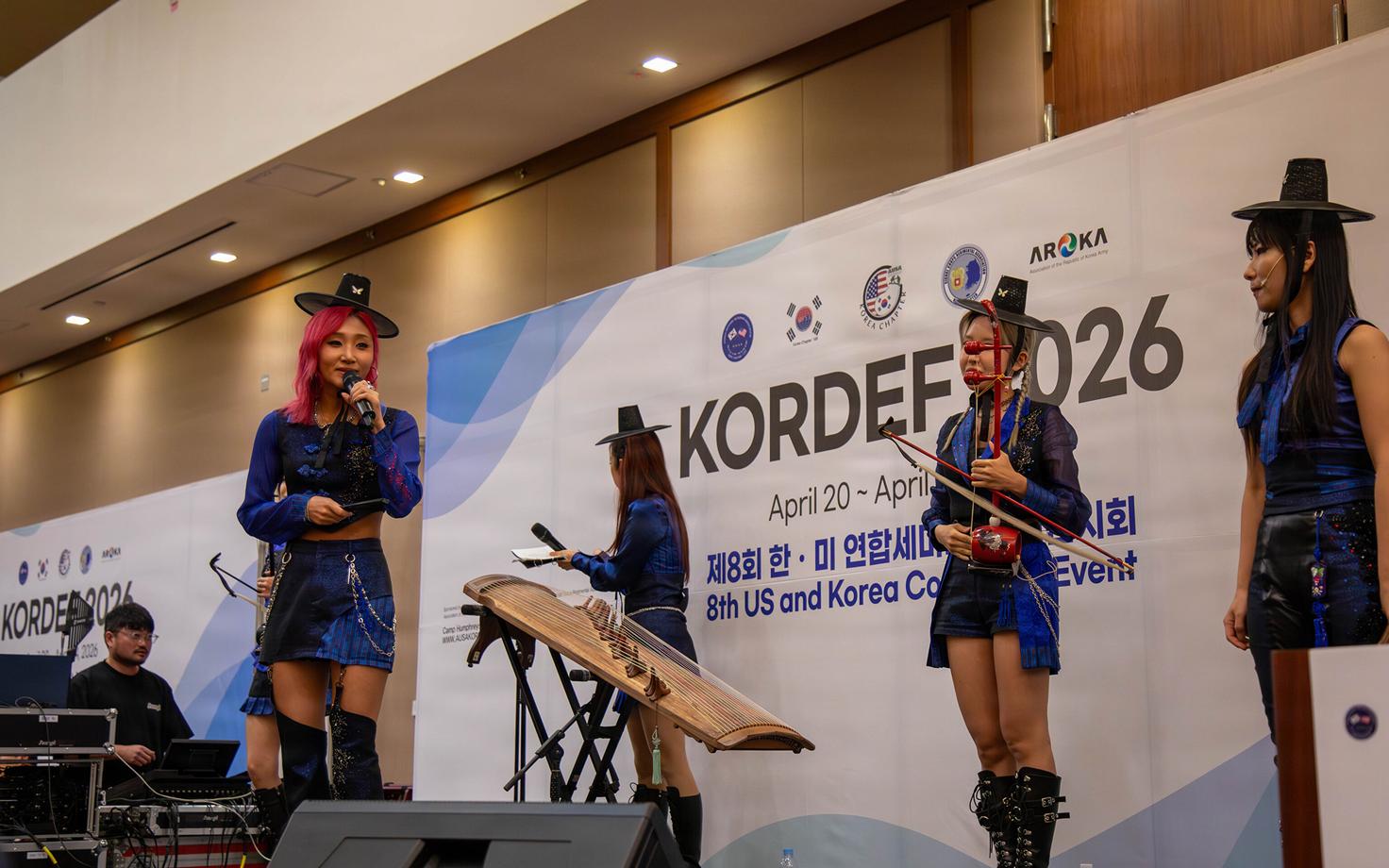
Eleni Alexandri, who recently defended her doctoral dissertation at the University of Tartu, studied how the Korean pop music industry, known as K-pop, creates its own reality and how meanings and identities are formed within it.
K-pop has become one of the defining symbols of South Korea's international image. The music phenomenon, which attracts millions of fans worldwide, promotes Korean culture, boosts tourism and strengthens the country's soft power. At the same time, the glamour of the music industry can obscure the true diversity of Korean society and shape how both artists and fans perceive themselves.
Alexandri has been a K-pop fan since her teenage years, when the first generation of idols was active. By the time Psy's "Gangnam Style" conquered the world and BTS reached a global audience, she had already witnessed K-pop's international rise and the evolution of its content and aesthetics.
"I was fascinated by the genre's uniqueness and visual style, which felt both fresh and strangely familiar at the same time, especially compared with the pop culture shaped by the American entertainment industry. The blending of genres, striking fashion, creative choreography and the impeccable synchronization of the artists created a captivating whole," she said.
After moving to Estonia, Alexandri studied semiotics at the University of Tartu. She chose K-pop as her research topic because she knew the subject well and had a personal interest in it.
"I wanted to analyze something I genuinely enjoy, something I have something to say about and something that would not become tedious. At the University of Tartu, I did not encounter the stigma surrounding the study of popular culture that unfortunately remains widespread in academia," she said.
K-pop as a meeting point of reality and fiction
The central question of Alexandri's dissertation was how K-pop produces, organizes and mediates culture. She also examined how people shape and experience identities within the K-pop environment, ranging from personal and social self-images to South Korean national identity itself.
One of the dissertation's key concepts is "place," which Alexandri clearly distinguishes from "space." Space refers to a broader structural and cultural dimension, while place is a space imbued with social meanings. She illustrates the distinction through the comparison between a house and a home: a house is a physical space, while a home is a place rich in meaning.
Another important concept is the spectacle, introduced by French philosopher Guy Debord in 1967. Alexandri does not use the term merely to mean extravagant images or entertainment, but rather a system in which reality reaches people through mediation. Eventually, that mediated world begins to shape people's understanding of what is real.
According to Debord's theory, the spectacle is a pseudo-world assembled from fragments of reality. People can observe it but may never experience it directly. This is where the danger lies: instead of living authentically, people begin observing life from a distance and become separated from one another.
In K-pop, the main actors of the spectacle are stars and idols. They offer audiences ideals of perfection and role models to aspire to. Yet they also become victims of the system, as the entertainment industry molds and transforms their personalities to serve commercial interests.
This phenomenon is not unique to K-pop. Similar mechanisms operate on social media, where algorithms feed users content based on their previous preferences. The result is filter bubbles and digital echo chambers in which people encounter only information that confirms their existing beliefs.
"When we experience life and understand culture through media, we should recognize that our understanding is based on selected and curated images that may be limited or even distorted," she emphasized.
A window into Korean culture and an eraser of nuance
K-pop's success has profoundly shaped South Korea's international image. According to Alexandri, the so-called Korean Wave, or cultural export strategy, initially emerged out of economic necessity following the Asian financial crisis of the 1990s. Over time, what began as an economic recovery plan evolved into a strategy for national rebranding and soft power.
While the K-pop industry originally borrowed expertise from Japan's idol system and the American entertainment industry, it has now become a model for others. Its training and production systems are being exported around the world.
The music industry has enhanced South Korea's global visibility, stimulated economic growth and increased tourism. Artists effectively serve as unofficial ambassadors for the country in international campaigns. Fans, meanwhile, plan trips based on locations featured in music videos and Korean television dramas.
The shiny coin has a darker side as well.
"One Korean professor pointed out that South Korea, with its long history and rich culture, is far more than just K-pop. Although the 'K' in K-pop refers to Korea, many people feel that the music actually distorts, simplifies and overshadows the country's real culture and identity," Alexandri explained.
Although K-pop introduces people to Korean culture, that does not necessarily mean Western audiences gain a deeper understanding of the country's history and society.
"South Korea is also the country of the 'Miracle on the Han River,' a nation that rose from devastation and whose past is marked by occupations, invasions and a devastating civil war. The problem is that the glamour of the music industry can conceal the true face of South Korean society," the dissertation author said.
When Korean culture is experienced primarily through K-pop, a complex society can be reduced to a romanticized and limited image. Alexandri also notes that the popularity of K-pop and Korean dramas influences fans' expectations of real life. Some tourists travel to South Korea hoping to encounter locals who look like K-pop idols or to experience romance similar to what they have seen in television dramas. In popular culture, this phenomenon has been dubbed the "Netflix effect." Global attention has further amplified South Korea's already strict beauty standards, making them effectively unattainable for ordinary people.
Industry-shaped idols and fans
One of the dissertation's central themes is the effect of the K-pop industry on personal identity. According to Alexandri, the industry deliberately creates emotional closeness between idols and audiences in order to generate longing and attachment among fans.
The refinement of future stars begins at a young age. Agencies shape idols' personalities, behavior and public image according to the preferences of their target audiences. Even the composition of music groups is strategically planned: members are selected to represent different personality types so that every fan can find someone to identify with or admire.
"Through media, agencies foster a sense of closeness that helps create artificial, or parasocial, relationships," the researcher explained. This carefully curated interaction creates the impression that a celebrity is directly involved in a fan's everyday life.
The emotional connection also influences fans' spending habits. They follow every move their favorite artists make, buy products they endorse and participate in promotional campaigns organized by agencies.
"Stars create pseudo-needs and encourage overconsumption by showing fans a lifestyle that appears attainable. Yet they themselves are victims of the spectacle because the machinery has drained their individuality and subordinated them to the system's goals," Alexandri noted.
Fans, however, are not merely passive consumers. They are active drivers of K-pop's spread. They share content and create new material, effectively working for entertainment agencies. In academic terminology, this is known as "love labor," meaning fans contribute their time and attention to the industry free of charge.
Alexandri sees this as a symbiosis between producers and consumers, in which audiences actively participate in content creation. In this way, fans become an essential gear in the machinery that keeps the entire entertainment industry running.
Artistic freedom in the iron grip of the industry
One of the central contradictions of the K-pop industry is that artists are expected to display creativity and natural talent, while their careers and public image are at the same time tightly controlled.
Most aspiring stars begin training in their early teens. They leave home for agency dormitories, where they must balance schooling, childhood and a relentless training schedule. In addition to dance, vocal and language lessons, they undergo media training that teaches them how to behave in front of cameras and on stage. Contracts can be extremely restrictive. In the recent past, they even prohibited artists from entering romantic relationships.
"Great emphasis is placed on physical appearance. Idols are expected to follow extreme diets and undergo cosmetic procedures. The intensity of this lifestyle, combined with enormous competition and the constant direction of every move, inevitably has a strong impact on identity formation," Alexandri explained.
Although artists may have a clear creative vision, agencies always retain the final say. "It is very difficult for us to assess how much singers themselves contribute to the creative process or whether their ideas make it into the final product at all," Alexandri said.
Pressure comes not only from the commercial interests of record labels. Artists are also expected to represent the nation's culture. Alexandri refers to literary scholar Jineang Choi, who describes the heavy responsibility placed on K-pop stars' shoulders: the public expects them to distill everything Korean into a single perfect work of art.
Yet idols are not merely puppets. Alexandri cites a BTS documentary in which members openly criticize choices made by the production team and share their own artistic doubts. This demonstrates that even within a tightly regulated system, artists retain their own creative voice.
As part of her dissertation, Alexandri developed a three-level "triptych of influences." The model is intended to analyze the impact of the K-pop industry on the broader cultural landscape, Korean society and individual people.
All three levels are closely connected. Cultural phenomena influence society, society shapes individuals and individuals in turn reshape the cultural environment. For that reason, the influence of the music industry cannot be studied in isolation but must be viewed as a whole.
The model developed by the researcher can also be applied to other popular culture phenomena. Understanding the anatomy of K-pop helps explain more broadly how modern entertainment industries produce content, shape people's desires and influence our perception of reality.
Alexandri emphasized the importance of critical thinking and media literacy throughout.
"We should critically examine the mediated images and messages we encounter every day, from products promoted by influencers and imposed beauty standards to the normalization of the sexualization of artists," she said. People should learn to ask who selects the content presented to them, for what purpose and how it influences their expectations, values and identity.
"To genuinely experience life, we must maintain a direct and immediate relationship with society and participate actively in it. The best way to understand our world and ourselves is to study culture, engage in open discussion and exchange ideas," Alexandri said.
According to her, the study of culture should not remain the exclusive domain of academia. Culture should be lived, enjoyed, interpreted and challenged. Popular culture, in her view, deserves serious academic attention because its influence extends far beyond music and entertainment.
Eleni Alexandri defended her doctoral dissertation in semiotics and cultural theory titled "The Phenomenon of K-Pop: A Place of Reality and Fiction."
Editor: Argo Ideon


