Estonian PM: We need to get used to and be prepared for drone strikes over the Baltic
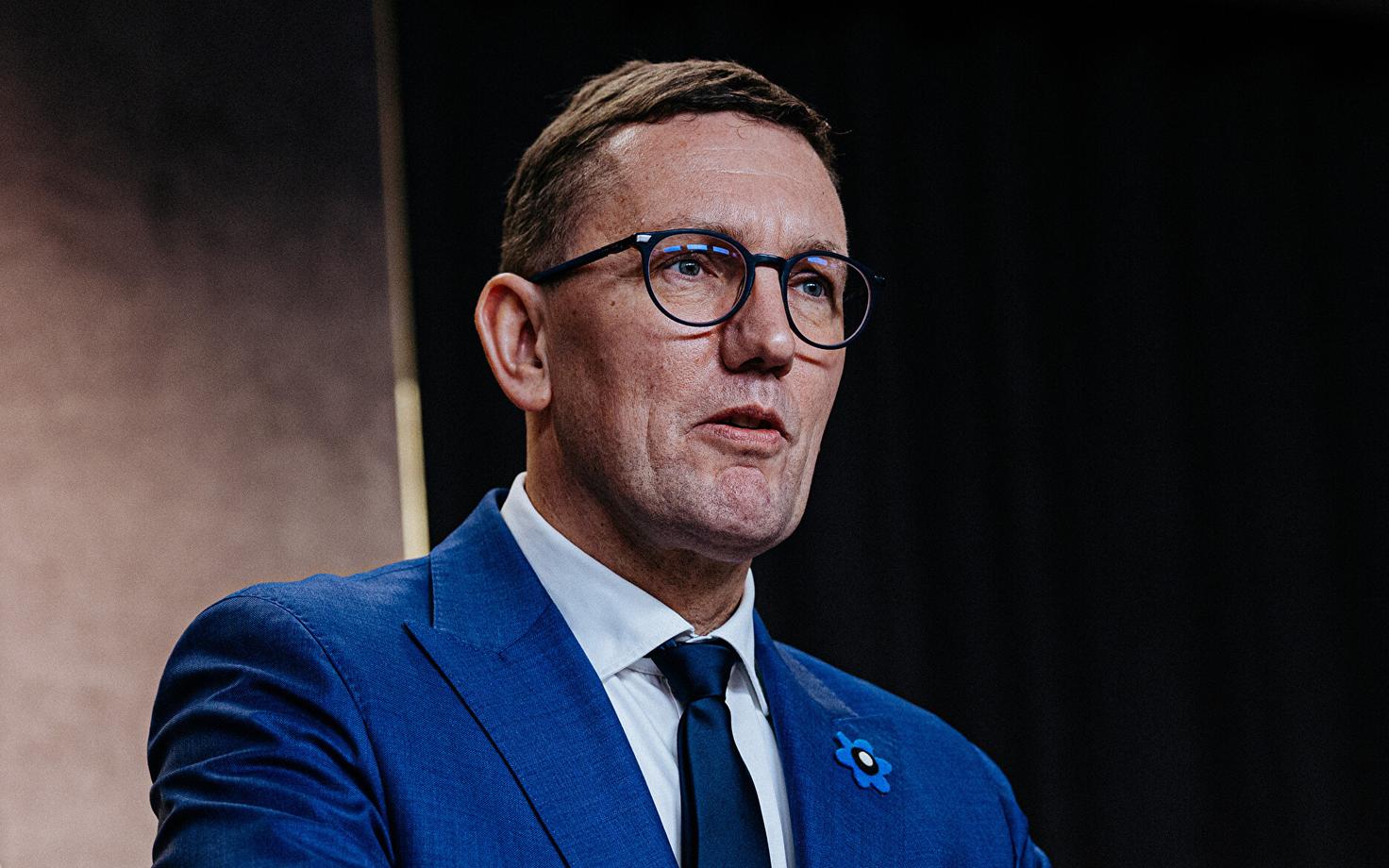
According to Prime Minister Kristen Michal, Estonia must be prepared for Ukraine to continue attacking Russian ships in the Baltic Sea.
You attended a meeting of the coalition of the willing supporting Ukraine in Berlin this week. What tangible benefits for Ukraine came out of it?
The coalition of the willing was established to have Ukraine's back. It brings together 37 countries, so it extends beyond just European Union member states. It also includes countries such as Turkey, Japan and Canada. This time, U.S. representatives Steve Witkoff and Jared Kushner were also there, while Donald Trump called in to present his perspective.
The coalition of the willing started out as a political message, but it has now become something very practical. Thirteen countries and 2,800 troops have just conducted military exercises in Poland, with Estonia contributing 130 personnel. That shows we are capable of taking concrete steps.
There was also discussion of the European Commission's proposal to provide Ukraine with €45 billion next year. In addition, countries outside the European Union were invited to contribute further funding on top of that amount. Another topic was Ukraine's specific needs for the winter: air defense, various types of aircraft and other equipment to help it get through the winter.
Donald Trump called into the meeting and reportedly suggested that Europeans should reduce their support for Ukraine. What do you make of that?
I have to correct that. Something may have been lost in translation. Trump's message was the same one he has repeated before. First, the loss of life is enormous. Second, he believes it is difficult when large amounts of money have to be taken out of the economy and redirected toward war or defense.
At no point did he suggest that Europe should stop helping Ukraine, much less imply that Europe should stop buying weapons from the United States.
How should we interpret the other messages coming from the United States, including suggestions that peace could come before January and the optimism that Russia is now genuinely prepared to engage in peace talks?
That was Trump's assessment. He gave an overview of the meeting held in China and said he was now more optimistic about Putin moving toward peace. Trump's representatives were also at the table and seemed to confirm that they shared that impression.
What that will mean in practice is very difficult to assess. I expressed a healthy degree of skepticism. Putin has long been a "yes, but" man. He has said that peace is of the utmost importance, only to follow that up with a long list of conditions.
In recent weeks, it has once again turned into a game of psychological maneuvering, with Putin saying: Of course we'll discuss peace, but first we need to discuss Europe's security architecture.
As though Europe posed a threat to Russia. When has Europe ever threatened anyone? Our conventional forces and capabilities are very strong, but Europe is not a threat to Russia.
What is happening now is that Putin is once again playing for time. The Americans are pushing for something to happen before the results of the midterm elections take effect in both chambers of Congress.
I would be very happy if a ceasefire were reached, but that requires concrete steps, not simply saying "yes" and then adding all those "buts" again.
The presidents of three countries — the United States, China and Russia — met this week. What impression did the meeting leave on you and who benefited the most?
There were both fears and hopes surrounding the meeting. I think it sent a message that two of the countries are bigger players — the United States and China — while Russia is somewhat smaller.
At the same time, we should not assume that what we want to see is necessarily what is actually happening. Russia received a message that it was on an equal footing with the major powers.
Although I would say that, from China's perspective, the major world leaders came to them. China treats the United States as an equal and Russia as somewhat less important.
Since those major leaders were there, I think China came out ahead and Putin gained something as well. Although there were also some signals that the international media interpreted as suggesting that Russia is no longer regarded as a country of the same stature as the United States and China.
A document described as a peace declaration was also adopted at the meeting and it has proved quite controversial. What do you think of it?
There are many different nuances to it. I would much rather have seen Putin appearing before a court in The Hague than attending that meeting.
From our perspective, it sent a message we would rather not have seen, because a rules-based international order should not apply only to small and medium-sized countries. It should apply equally to major powers.
Another issue is certainly the endorsement of fossil fuels — the message that we should continue using fossil fuels and divide up the market among ourselves.
That reflects what we are seeing in Estonia as well, with price increases linked to the Strait of Hormuz. Presumably, efforts are being made to counter that, because the initial impact of the Hormuz-related price spike was probably absorbed by China's oil reserves, but the effects have now spread more widely around the world.
We also know and understand that Ukraine was discussed at the meeting, but the wording that eventually made it into the declaration did not receive everyone's approval.
On the other hand, that is probably a good thing, because European affairs must be discussed with Europe and Ukrainian affairs with Ukraine. So perhaps it is positive that the feared agreements, which might have involved dividing the world into spheres of influence, did not materialize.
Could the meeting lead to lasting cooperation?
It is more than likely that major powers will seek to find some common ground. It depends on exactly what that common ground involves.
I would venture to say that, for different reasons, they are currently quite sincere in sharing a similar view of the International Criminal Court.
I think they also have similar views on diesel and fossil fuels, albeit for different reasons. But more generally, there is the issue of the cost of living, which is putting pressure on every country and economy.
Nuclear agreements also make sense from a broader global perspective, particularly when it comes to reducing nuclear arsenals. From our point of view, that is certainly a sensible principle.
Europe has decided who will represent us in potential talks. Are there not too many people involved — five countries and two institutions at present — and is the exclusion of EU foreign policy chief Kaja Kallas a bad sign? Was the rug pulled out from under Kallas?
I said at the European Council that we may not be friends with everyone at the moment, but we will become friends again. In my view, Kallas should definitely be at that table, precisely because that is her role.
When the European Commission was appointed — I was not yet prime minister at the time, but Kaja was — agreements were reached on the respective roles of the European Commission president, the European Council president and the EU high representative for foreign affairs.
The whole idea was to have Kallas in that role, someone who, like most people in Estonia, takes a critical view of Putin's Russia.
I said at the meeting that if you want to send someone who suits Putin, we might as well send Gerhard Schröder; he'd probably be suitable. But if we want someone to represent us, it should be a person who is also willing to take a critical stance. I think Kallas is very good at that.
What the big countries and the Commission countered with was saying that we have two institutions, the European Council and the European Commission. On the institutional side, there is António Costa, who could, in a sense, provide overall political coordination, and Ursula von der Leyen, who manages the division of responsibilities within the Commission.
The other side of it was that from our perspective, it is actually a good thing that the five countries involved are the major powers — Germany, France and the United Kingdom — plus Italy and Poland.
That means Poland is also included and I can say with complete confidence that we can count on Donald Tusk, just as we can count on the others when it comes to issues concerning Ukraine.
On Saturday, the war reached right to our doorstep in the Gulf of Finland. What does it mean that Ukrainian drones struck a Russian ship, which has now been burning for a second day as efforts continue to extinguish the fire? Does this signal a change in our region and do we need to get used to the idea that ships may occasionally be on fire here?
I think we do need to get used to it and be prepared for it. This kind of activity is not unprecedented.
We have discussed it repeatedly in the government, in various formats and at different levels of detail. The fact that Ukraine is targeting Russian vessels in the Baltic Sea is neither surprising nor the first time it has happened.
I think we need to be prepared for this. From our perspective, there are several positive aspects.
First, Finland is capable of responding calmly. There are no hysterical calls to sink the ship. The Finns are able to act calmly and I think that sets a certain standard.
Second, our cooperation with Finland is very good. Our vessel Kindral Kurvits went to assist and our rescue vessels are ready to head there if necessary. So we have the readiness to act together, because there may well be more incidents like this.
Our shared concern will probably be dealing with these vessels and any potential environmental pollution.
That is why we had already placed the Estonian State Fleet on standby, so all our systems were ready to go again.
We have practiced responding to such situations in Estonia, but we will certainly have to deal with them in real life again.
--
Editor: Marcus Turovski, Merilin Leetna


