Estonia developing Ukraine-inspired air alert app
The Estonian government wants to develop a new air threat notification solution within six months that would allow people to track drone movements themselves. The cost of the application has not yet been determined, but the Ministry of Defense says funding is available.
Defense Minister Martin Herem said on the ERR television morning program Thursday that the new public warning system should be developed within six months.
"We should be able to provide every resident with a more detailed picture. Not just a siren and some kind of message, but the ability to see visually whether a threat is heading toward Krabi or Võru, Kohila or Rapla. Based on that information, people can make their own decisions. It also helps reduce a great deal of anxiety," Herem said.
The model is Ukraine, where people must regularly seek shelter from drones and missiles. Ukrainian authorities recently began sharing certain airspace information with the public, giving residents greater freedom to make their own decisions. Since then, applications compiling that information have appeared in large numbers.
"When a drone enters a region's airspace, an air raid alert is declared there. Today, alerts are already issued by district, and work is underway to make it possible to issue alerts for even smaller territorial units depending on the movement of aerial targets," explained Dmytro Zhmailo, head of the Ukrainian Security and Cooperation Center.
"On the one hand, we are trying to protect civilian lives. On the other, we want to prevent the Russians from achieving their goal of disrupting Ukraine's work and normal daily life," he added.
Estonia is currently considering several options. According to defense minister's adviser Mati Tikerpuu, funding is available, but the final cost will depend on the cooperation partner selected. The solution is not expected to be particularly expensive because it is a relatively simple software application.
"Today we are not yet at the stage where we can say exactly what the technical solution will look like. Ideally, I would not rule out making certain information publicly available so developers could also build their own solutions. Initially, however, we will definitely move in the direction of creating our own application," Tikerpuu said.
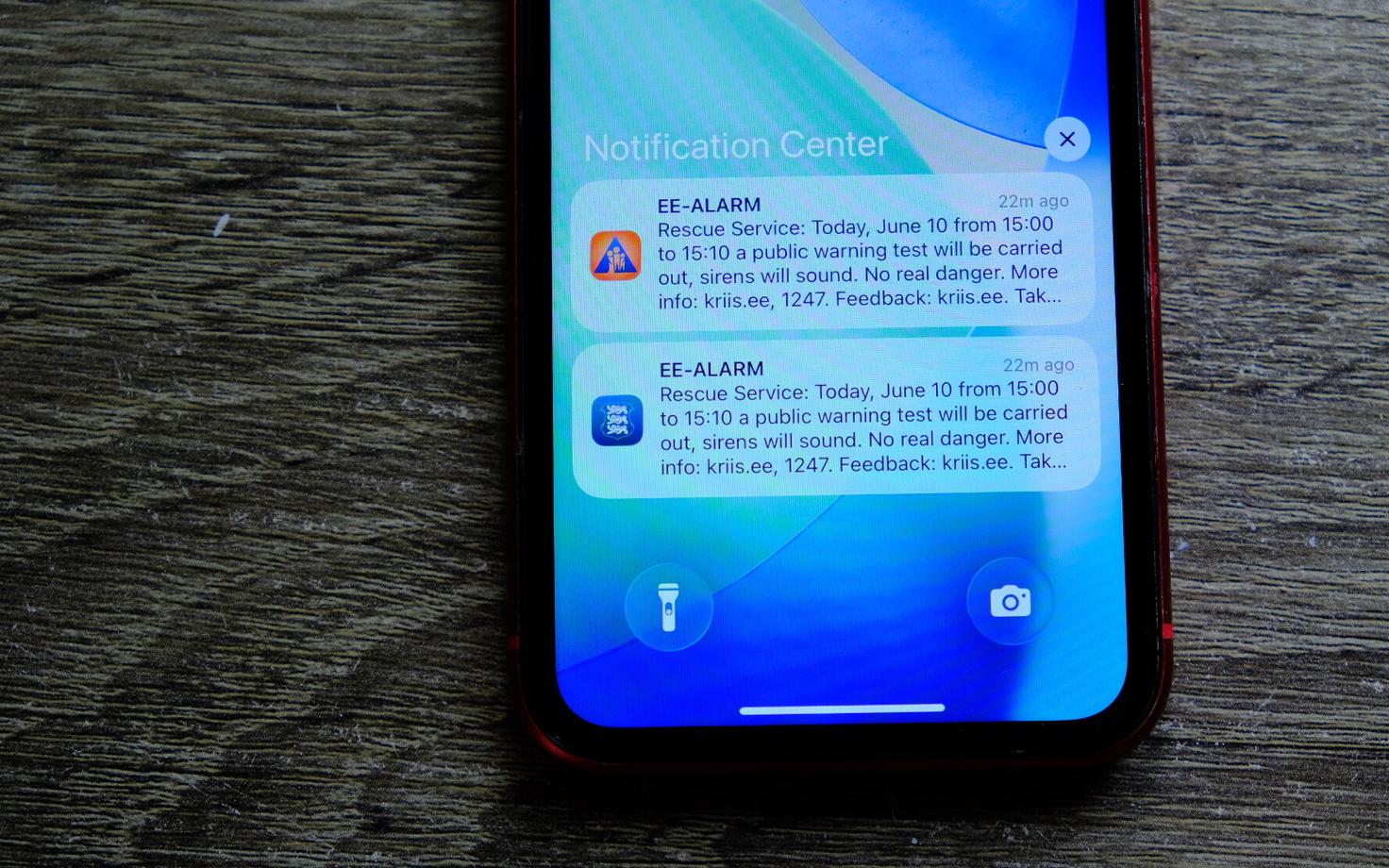
Estonia's cell broadcast emergency alert system, which is currently being actively tested, is also expected to go into operation at the start of next year. The technology can reach large numbers of people within seconds and, depending on the nature of the threat, can override phone sound settings.
"With this system, we can select the geographic area where the alert will be sent. People connected to cell towers within that area will receive the notification," said Argo Kerb, head of public warning systems at the Rescue Board.
According to Kerb, the launch of the cell broadcast system has taken some time because the software must also be incorporated into updates for Google's and Apple's operating systems.
--
Editor: Valner Väino, Argo Ideon


