Defense minister: Drones entered Estonian airspace from northeast and southeast
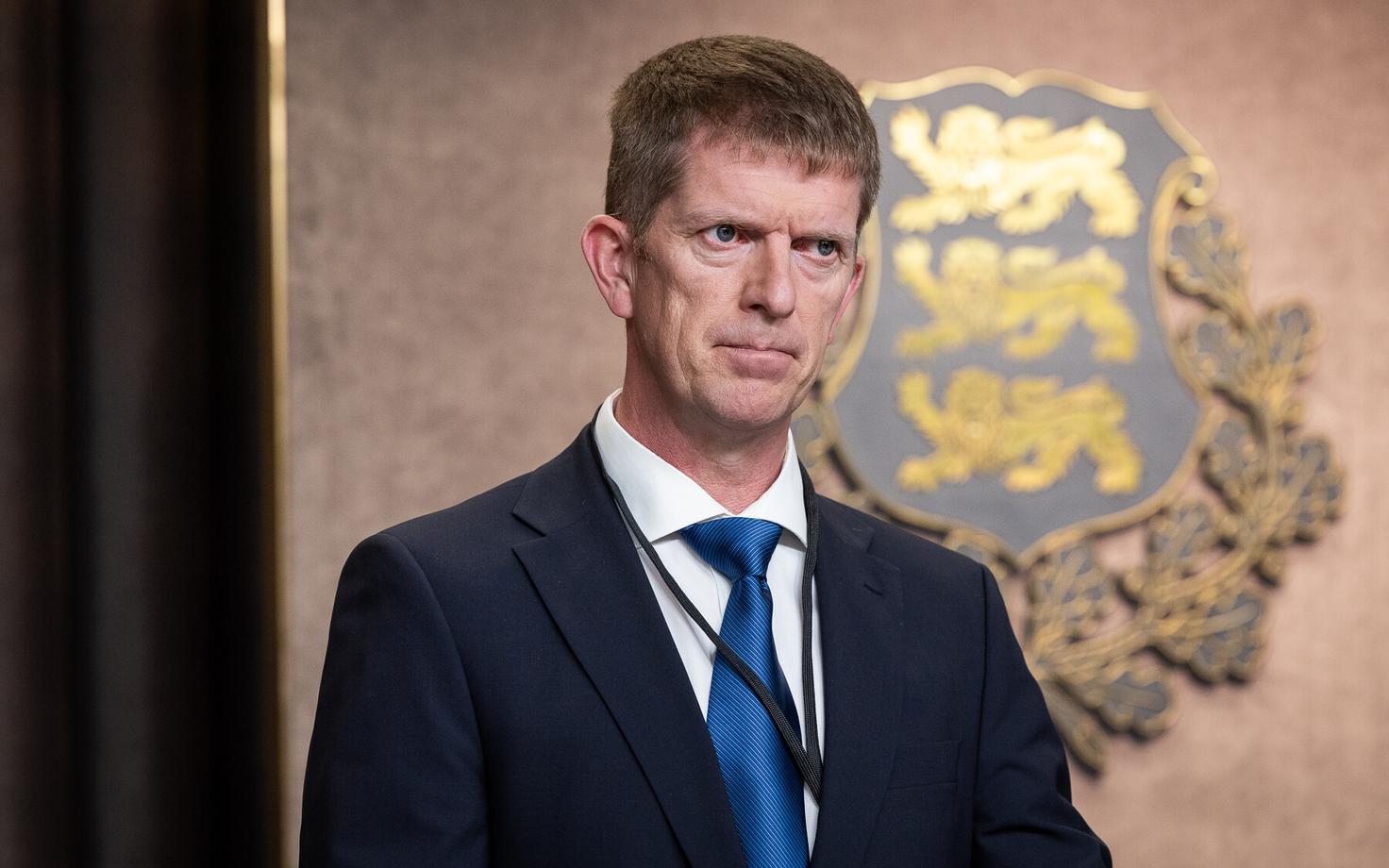
Defense Minister Martin Herem said that NATO aircraft were monitoring the situation and Estonia had not authorized the use of its airspace during Ukraine's Wednesday attack on Ust-Luga in Russia.
Minister of Defense Martin Herem said Ukraine's attack on Ust-Luga began around midnight and continued until approximately 6 a.m. Wednesday. Most of the drones flew close to Estonia's border but remained in Russian airspace.
At around 3:30 a.m., one drone briefly entered Estonian airspace from the direction of Latvia before continuing toward Russia. Several drones that reached Ust-Luga subsequently turned west and circled over the Gulf of Finland in Russian airspace. Some briefly crossed into Estonian airspace over the gulf.
At approximately 5:30 a.m., an explosion occurred aboard a Russian Baltic Fleet vessel in the Gulf of Finland. Smoke was subsequently observed rising from the ship, which then headed back toward St. Petersburg.
"All we know beyond that is that the Ukrainians have said they attacked the ship," the minister said.
Herem said Russian air defenses had been heavily engaged during the attack. Publicly available information indicated that Russia had suffered losses, although he noted that such losses were not unusual during major air defense operations.
"I wouldn't characterize Russia's losses as a failure. Rather, this was a very large-scale and well-organized Ukrainian attack in this war," he said.
Herem reiterated that Estonia had not authorized Ukraine or any other country to use its airspace for military operations. Ukraine had never requested such permission.
Estonia has contacted Ukraine for an explanation of the airspace violations and Herem said the two countries would coordinate their response. To his knowledge, Russia had not approached Estonia about the incident.
NATO air policing aircraft operating from Lithuania, Latvia and Estonia were already airborne before drones entered the Baltic states' airspace. Turkish fighter jets stationed in Estonia were among the aircraft involved.
However, Herem stressed that detecting a drone does not necessarily mean it can be safely intercepted.
"If a drone is flying very low, the aircraft is higher up and there are civilians or other objects in the background, you simply don't shoot it down," he explained.
"If it's very close to the border and Russia is on the other side, shooting it down isn't sensible either. Incidentally, Russia does exactly the same thing: Near its own border, it only engages drones when it can fire toward its own territory."
He added that sleet and drones' small heat signatures could further complicate interception.
Herem said the Estonian Defense Forces has maintained heightened readiness against drones since the spring, with sensors and, where necessary, weapons deployed on the ground. Information sharing with Finland, Latvia and Lithuania was also working well.
He saw no immediate need to change Estonia's air defense procedures.
"We have to assess whether destroying a drone poses a greater danger than allowing it to continue and intercepting it somewhere safer. But we certainly won't enter Russian airspace to shoot down these drones," Herem said.
More detailed air threat warnings needed
On civil protection, Herem acknowledged that relatively little could be done to protect the public from isolated stray drones. However, several Estonian ministries are working on a more detailed air threat warning system that would allow residents to track potential threats visually.
"It shouldn't just be a siren and some message. People should be able to see whether something is heading toward Krabi, Võru, Kohila or Rapla and make their own decisions based on that information," he said.
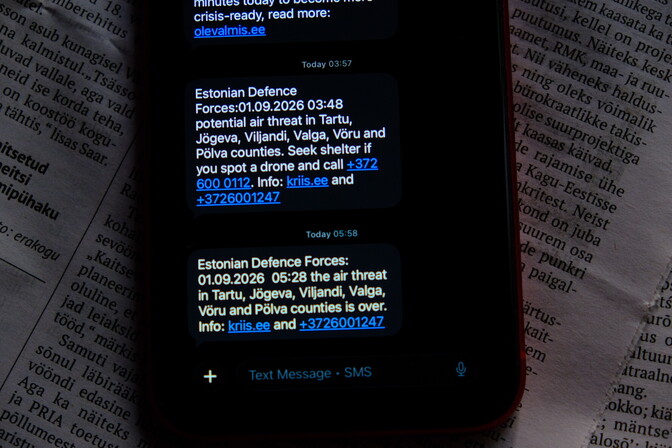
Such a system would also help reduce public anxiety, Herem added, expressing hope that progress could be made within the next six months.
He cited Ukraine as an example, where mobile applications allow residents to monitor drones in the air, identify their types, see their direction of travel and, in some cases, view predicted flight paths and estimated arrival times.
"That's the direction we're aiming for," Herem said.
--
Editor: Marcus Turovski, Johanna Alvin, Mirjam Mäekivi


