Study: Modern classrooms must teach reasoning and background behind facts
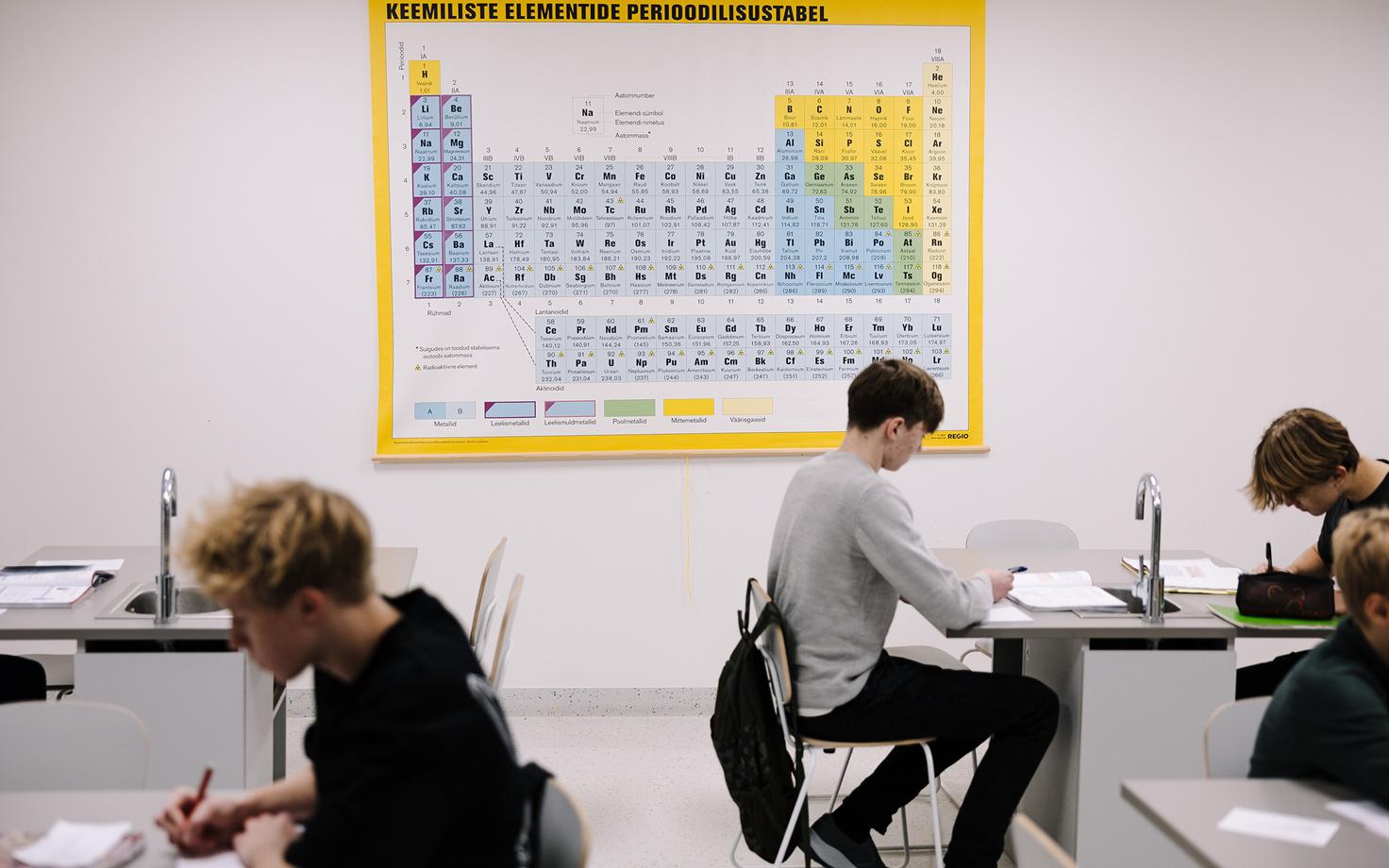
As misinformation and alternative narratives increasingly compete with scientific facts, science education must do more than teach established knowledge, a recent analysis by Estonian researchers concludes.
"In the past, when teaching scientific knowledge, we did not have to think about also convincing students that this knowledge was valid and supported by evidence," says Katrin Vaino, a science education researcher at the University of Tartu. Nor was there previously any need to explain the epistemology of scientific knowledge or the full process by which it is acquired.
Now, however, Vaino notes that scientific, or mainstream, knowledge is competing with alternative ideas on what is, figuratively speaking, a level playing field. Moreover, these alternative ideas may seem far more interesting than scientific facts and explanations. "We need to be able to convince students that scientific knowledge is valid," Vaino says.
Together with colleagues from Umeå University and the University of Cyprus, Vaino examined how science education should evolve to better prepare young people for life in a post-truth era. To this end, the researchers analyzed scientific literature published since 2020 and identified four key areas that science education should focus on more closely. They also examined the EVIDENCE learning model, which is already in use in Estonia, as one possible solution. "Science classes can be used to simulate the process of evidence-based decision-making," Vaino explains.
How science works
Based on their analysis of scientific literature published over the past six years, the researchers identified four key areas that should receive greater attention in science education in the post-truth era. The first is media literacy. Although this is already included as a science-related competency in Estonia's national curriculum, Katrin Vaino says students need to be more specifically "inoculated" against misinformation. "We expose students to moderate amounts of misinformation and the strategies used to spread it. When they encounter such information later, they have already been, so to speak, vaccinated against it," she explains.
Vaino also recommends placing greater emphasis on teaching students to recognize human biases as part of media literacy. "There is no such thing as a person who is completely free of bias. However, a critical thinker is aware of their own biases and tries to correct for them from time to time," she says.
The second key task is to help students understand science as a social practice. They need to understand how scientific knowledge is produced: how research is peer-reviewed and how new findings confirm or refute previous ones. "Science is not simply another ideology, although some people in society are trying to promote that idea as well," Vaino adds. Rather than relying on simplistic labels used in the media, such as "science believers" and "flat-earthers," Vaino says people need to understand what science can and cannot do.
"The third area of development is the most exciting to me personally, even though it is an old topic: we should pay more attention to certain intellectual attitudes," she continues. Ideally, students should be open to new ideas, curious and objective, honest and thorough in their assessment of evidence.
The quality Vaino is most interested in developing in students is intellectual humility. "In other words, it means recognizing my own limitations and the gaps in my knowledge, which also creates an opportunity for growth. I acknowledge that I cannot make strong claims because my knowledge is limited," she explains.
Teachers can foster the development of these intellectual qualities by setting a personal example. However, Vaino says it is also important to define them as specific learning objectives, create opportunities to develop them during the learning process and encourage students to consciously assess their own progress.
Fourth, science education should place greater emphasis on developing students' ability to make evidence-based decisions on societal issues, taking into account different values, interests and perspectives while engaging in constructive discussion. "Science does not make decisions. Science is only one component of political and societal decision-making and, at best, informs those decisions," Vaino explains.
Alongside science, political decisions are influenced by values and various economic and social considerations. There is also an inherent tension within the system: Science needs time to arrive at reliable answers, but political decisions often have to be made quickly, even when scientific knowledge remains incomplete.
According to Vaino, it is important to help students understand that researchers from different disciplines may approach the same problem from different perspectives and reach different conclusions. "For example, a social scientist may emphasize one aspect while a natural scientist emphasizes another. When making political decisions, these different perspectives need to be weighed together and ultimately a compromise must be reached," Vaino explains.
These four areas are not necessarily problems that teachers are already conscious of in their daily work. Rather, they represent broader priorities that will require greater attention in science education going forward. "However, teachers' initiatives alone will not be enough. These objectives should also be reflected more clearly in national curricula and teacher education," the researcher emphasizes.
Natural sciences goals need repointing
After identifying the four key challenges of the post-truth era, Katrin Vaino and her colleagues analyzed how well existing approaches to the goals of science education are equipped to address them. To do so, they drew on three visions of scientific literacy identified in the research literature, each representing a different understanding of why and how science should be taught.
The first vision focuses on acquiring scientific knowledge and research methods and preparing future scientists. "The second vision is more pragmatic: Scientific knowledge should help people make better decisions both in everyday life and on societal issues," Vaino explains. The third vision aims to develop critically and independently thinking citizens who actively participate in society and can contribute to creating a more ecologically and socially just world. This approach places greater emphasis on ethics, power relations and the inclusion of different groups in society.
The researchers' analysis showed that each vision has its own strengths and limitations when it comes to addressing the challenges of the post-truth era. The third vision, however, presents a fundamental contradiction. "The autonomous thinker is actually under threat. Because knowledge has become so complex in today's world, we are increasingly dependent on experts and that is where the contradiction arises," Vaino explains. She adds that emphasizing a diversity of voices also carries the risk of presenting science as just one ideology among many, undermining its credibility.
"I would very much like our analysis to contribute to the development of science curricula in Estonia as well," Vaino says. According to her, it is important to carefully consider what knowledge, skills and attitudes young people need in the post-truth era and how education can support their development.
Mind games in school
But how should all these challenges be addressed in the classroom? As one possible solution, Katrin Vaino and her colleagues propose the EVIDENCE model, which has been in use in Estonia for several years. "The main focus is on six major modules covering socially sensitive topics such as climate change and radiation, viruses and vaccination, medicines and drugs such as cannabis and MMS, and evolution," she explains.
In each module, students begin by watching an educational video. "The videos present humorous everyday situations in which different values and interesting ideas collide," Vaino says. This is followed by a brief reflection exercise in which students consider how the video resonated with them and how they currently understand the issues it raises.
In the next stage, known as "myth-busting," students choose a claim to investigate. They can use digital tools to gather evidence and distinguish reliable information from unreliable sources and may also conduct experiments to test the validity of certain claims. "They may discover that some parts of a myth are actually supported by evidence, others are not and some are completely false," the researcher notes. Students must then present their findings to their classmates in the form of a video or poster, giving them an opportunity to try their hand at science communication.
The final stage involves simulating how decisions are made in society. "For example, the topic of cannabis presents a moral dilemma: How do you act when you have to choose between very bad options?" Vaino says. Students are presented with different possible responses to the dilemma. Their task is to weigh the pros and cons of each option, as well as its short- and long-term consequences. "At this stage, students have to apply scientific knowledge to a real-life situation in which decisions must also take different values and interests into account. These may not always be compatible," the researcher explains.
The EVIDENCE project ended several years ago and produced a handbook for teachers. The project's materials were also incorporated into bachelor's and master's degree programs for science teachers. "We are now working on a project funded by the Ministry of Education and Research that focuses on systems thinking and scientific thinking, including how to develop a scientific mindset," Vaino says, outlining future plans.
Katrin Vaino and her colleagues describe their research in the journal Science & Education.
--
Editor: Marcus Turovski