Museum Association warns against politicization of Estonian National Museum

Museums and other institutions in the sector support transforming the Estonian National Museum (ERM) into a public-law institution but warn against the governance model proposed by the Ministry of Culture.
The transformation of the Estonian National Museum (ERM) into a public-law institution has received strong support within the sector. However, a draft bill prepared by the Ministry of Culture has raised concerns among organizations representing museums and other memory institutions. Of particular concern is that the proposed procedure for appointing the museum's supervisory board would not guarantee its independence in practice, while the funding model for ERM would not provide sufficient long-term stability.
Under the draft bill, the culture minister would be able to appoint a majority of the supervisory board's members unilaterally and without a public selection process.
"We would like to see broad representation and transparency on the supervisory board. If the executive branch can appoint a majority of its members on its own, that does not inspire much confidence that the governance of such a prestigious institution would remain free from day-to-day politics — of course, it can never be entirely free from politics — but there is a real risk that its governance would be heavily influenced by political currents. We firmly believe that the museum must be genuinely independent and autonomous to fulfill its responsibilities. That is our biggest concern," said Anu Viltrop, head of the Estonian Museum Association.
Asked why there were such strong fears of politicization and whether there were specific examples of political pressure behind those concerns, Viltrop said the aim was primarily to take a preventive approach with an eye to the future.
"We would rather look ahead and take preventive measures. Of course, in a liberal democratic environment, agreements and political norms should work, but we are seeing very different developments across Europe, including democratic backsliding. Legislation should take a longer-term view than just the situation we have today. We currently have an opportunity to protect the Estonian National Museum against possible illiberal developments in the future," Viltrop said.
To ensure the museum's independence and broad representation in its governance, three organizations representing the sector proposed two alternative models to the ministry.
The first would establish a seven-member supervisory board consisting of two representatives of the museum sector, one representative of the Estonian Academy of Sciences, one representative of the University of Tartu, two members appointed by the culture minister and one member selected by the supervisory board itself through an open, merit-based process.
The second option would establish a five-member supervisory board consisting of two representatives of the museum sector, one representative of the Estonian Academy of Sciences and two members appointed by the culture minister.
According to Viltrop, both models would ensure the ministry's representation and oversight while preventing control of the museum's governance from being concentrated solely in the hands of the executive branch.
New tasks require long-term funding
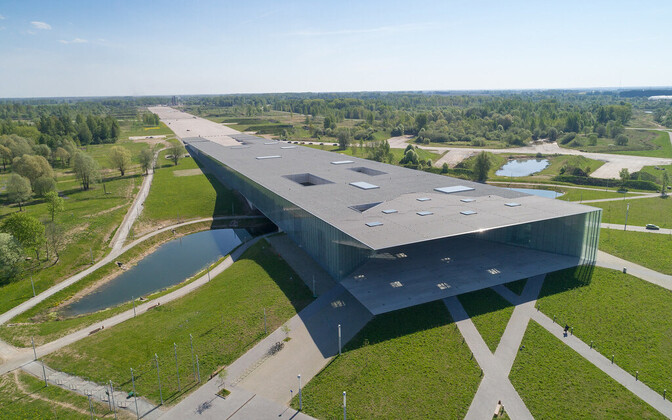
In the future, ERM is expected to become the central organization for Estonia's museum sector, taking on responsibility for conservation work across the sector (together with Kanut) and promoting research. However, the ministry does not plan to allocate additional funding to ERM.
"If ERM receives no additional funding overall, the question arises of how it is supposed to balance its many existing responsibilities with its new sector-wide duties. How would that work? It would be worth considering whether ERM should receive enough financial support to fulfill this role. In the case of ERR, we have seen discussions about extending funding commitments beyond a single year. We encourage consideration of the same approach for ERM because museum activities operate on much longer timelines than annual cycles. Research and conservation work often takes more than a year," Viltrop said.
According to Viltrop, transforming ERM into a public-law institution cannot be merely a formal change.
"It must come with responsibilities across the sector and the organization must be given the means to fulfill those responsibilities," he said.
The feedback and joint positions submitted by the Estonian Museum Association, the Estonian Museums Union and the Estonian National Committee of ICOM will be discussed at a meeting of the Museum Council next week where the organizations hope to discuss the issues directly with the culture minister.
"We have submitted our feedback and the three museum sector organizations have jointly formulated their positions. The next step is a meeting of the Museum Council next week, where all these organizations are represented, and we hope to discuss these issues in greater detail with the minister. Presumably, we will also receive a written response to our proposals," Viltrop said.
"For now, we hope to have an opportunity to explain why our proposals are important. If they are not taken into account, we will have to consider our next steps," Viltrop said.
The Ministry of Culture told ERR that the deadline for submitting feedback on the draft Museums Act is Wednesday and that the ministry will discuss the feedback in the coming weeks.
Under the current timetable, the law would take effect on April 1 next year when ERM would become a legal entity governed by public law. The entire transition process, including the transfer of activities and responsibilities, is expected to be completed by 2028.
--
Editor: Marcus Turovski