Estonian scientists discover dangerous water oscillations between Lake Varna and Black Sea
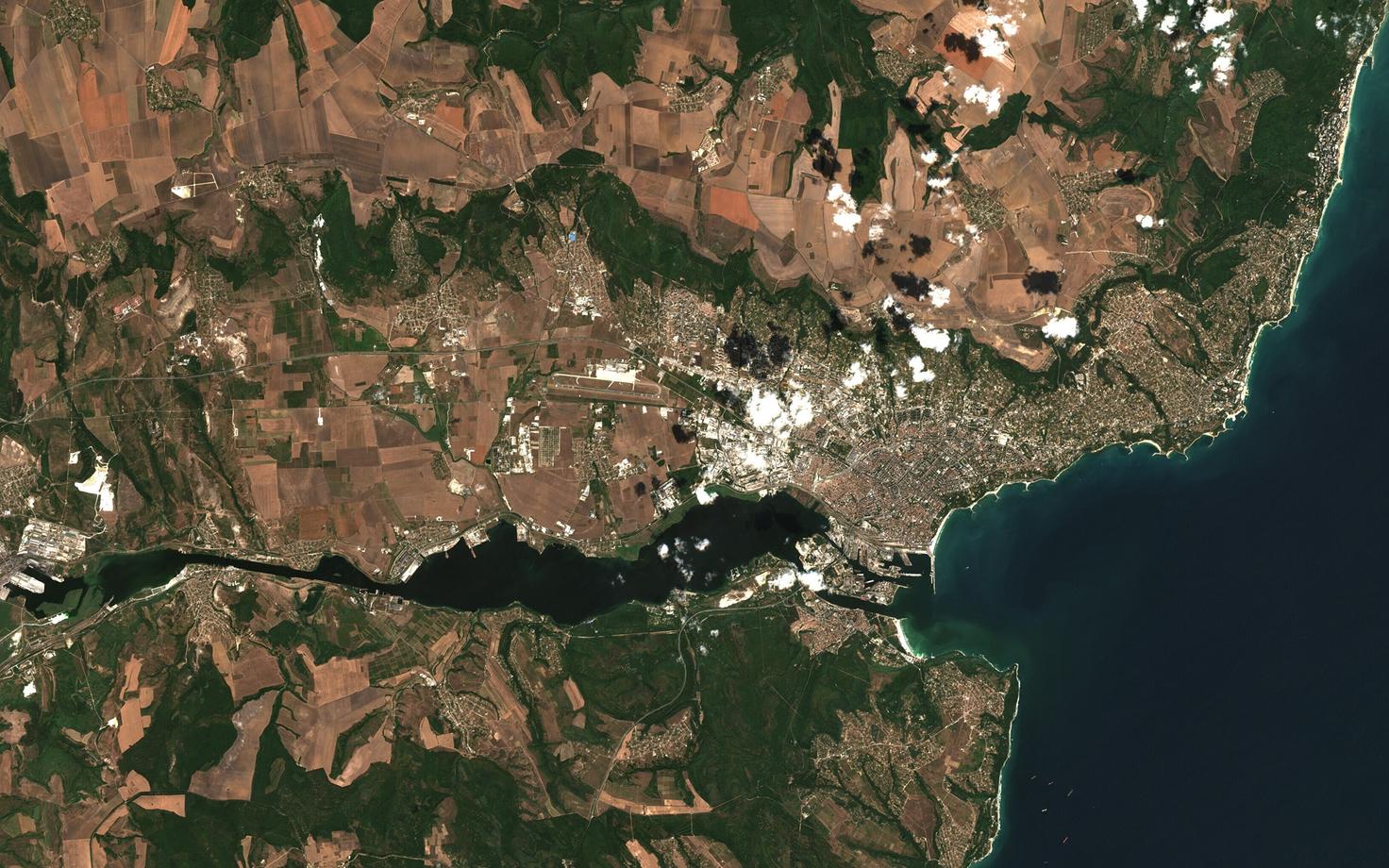
Unexpectedly strong currents and water-level fluctuations can occur in the narrow port canal connecting the Black Sea with Lake Varna, posing a risk to shipping and disrupting port operations. Researchers at TalTech helped determine what causes the phenomenon in the canal.
For years, pilots have observed strong and unusual currents in the 2.4-kilometer-long, 300-meter-wide canal connecting Lake Varna with the Black Sea. Maarja Kruusmaa, an academician and professor at Tallinn University of Technology, and researcher Laura Piho, working with the Port of Varna, undertook detailed measurements to determine the causes of the phenomenon.
"For this, we used Hydromast measuring stations developed at Tallinn University of Technology's Center for Biorobotics. Three of the stations recorded the speed and direction of water movement as well as water levels at one-minute intervals," Piho explained.
Jüri Elken, professor emeritus of oceanography, joined them to help explain the unusual water movements. The broader aim of the Estonian researchers' measurements is to gain a better understanding of flow dynamics in canals. Such knowledge can also help other regions facing similar problems respond effectively, including by improving vessel navigation, forecasting the development of strong currents and providing rapid warnings about changing currents.
Dangerous oscillations
The measurements confirmed that, in addition to normal moderate water movement, strong oscillations with periods of several dozen minutes can occur in the canal connecting Lake Varna, on the western coast of the Black Sea, to the sea. "Oscillations with periods of 37 and 19 minutes were particularly pronounced," Elken emphasized. According to the Estonian researchers, these are linked to resonance in the canal-Lake Varna system, which can significantly amplify water movement under certain atmospheric conditions.
Two exceptionally strong events were recorded during the study. In the first, water oscillations began abruptly and lasted for a couple of cycles. They were caused by a meteorological tsunami, which can occur when a weather front moves over shallow coastal waters at what is known as resonance speed.
According to the researchers, the second significant event occurred more than five hours after a storm when offshore winds reached 20 meters per second. Over a 10-minute period, the largest changes in current velocity reached 0.8 meters per second, while water levels changed by as much as 0.8 meters. The authors noted that fluctuations this strong make passage through the canal highly dangerous for vessels, disrupt port operations and make coastal management more difficult overall.
Bigger picture
The study's results provide an opportunity to advance knowledge of water movement patterns, which could support port management and navigational safety as well as contribute to environmental impact assessments. The researchers therefore say it is important to study events in which strong currents and resonant sea-level fluctuations lasting less than an hour occur in marine bays and in channels connecting them with upstream lakes and rivers.
Elken, Piho and Kruusmaa emphasized that while their study also proposes specific steps for developing coastal monitoring and forecasting systems, the scientific paper primarily demonstrates how high-temporal-resolution measurements combined with mathematical modeling can help identify and predict hazardous water oscillations that might otherwise go undetected.
Jüri Elken, Laura Piho and Maarja Kruusmaa describe their findings in the journal Ocean Science.
--
Editor: Jaan-Juhan Oidermaa, Marcus Turovski



