Estonia expands police right to confiscate illegal electric scooters
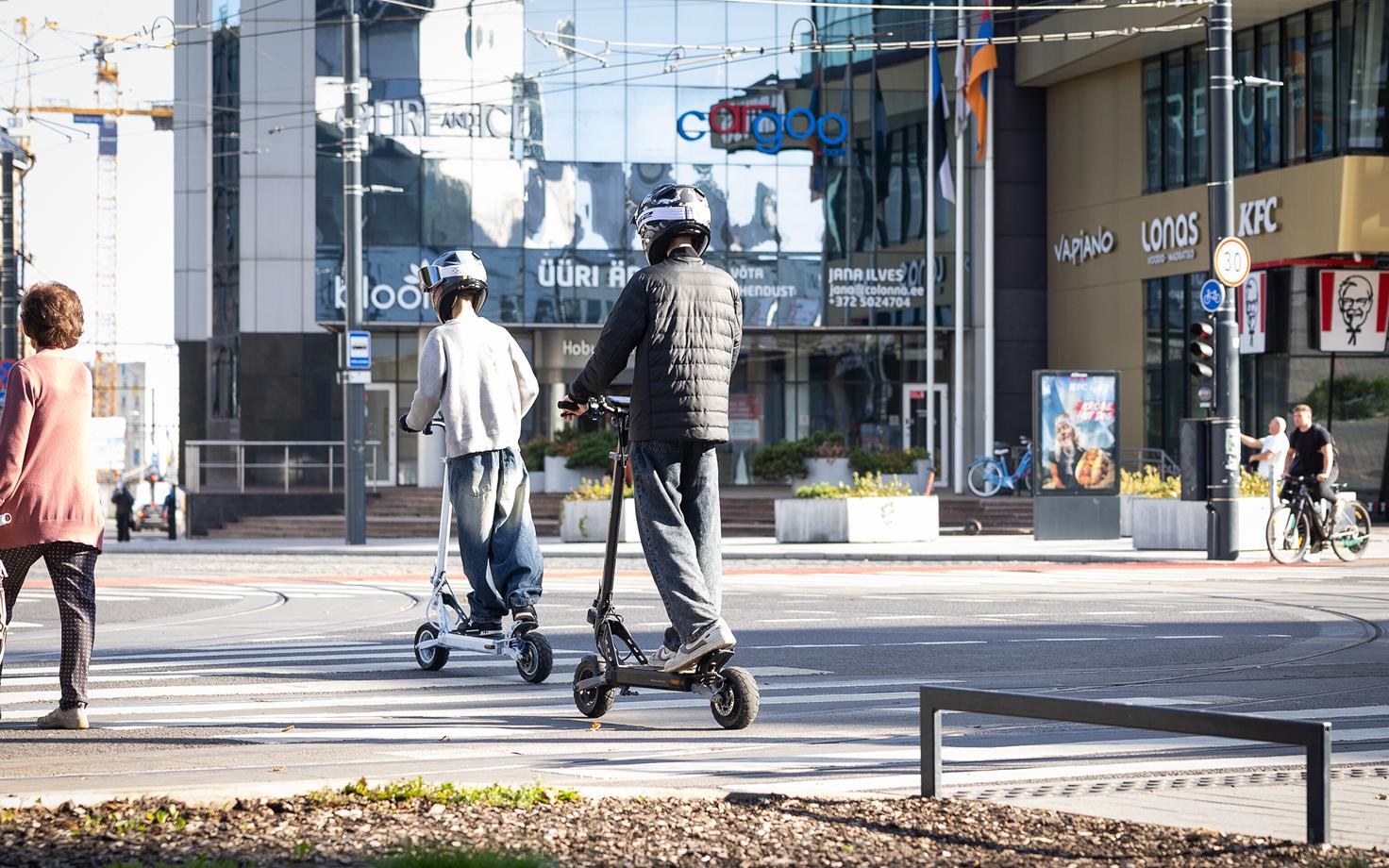
Proposed amendments to Estonia's Traffic Act would expand police powers to confiscate noncompliant electric scooters and allow drivers with category B licenses to operate heavier electric vans.
"The current bill would allow police, as a last resort, to confiscate electric scooters that exceed the permitted speed or power limits according to the manufacturer's specifications. Under the amendments now proposed, police would also be able to confiscate vehicles equipped with a hidden higher-speed mode installed by the manufacturer or modified by the user to exceed the permitted speed. The amendment would also apply to light mopeds and bicycles converted into motor vehicles," Ministry of Climate communications adviser Martin-Erich Torjus told ERR.
According to the ministry, the bill also currently fails to specify what happens to confiscated vehicles. As a result, they would be sold under the general rules governing state property and could end up back on the roads.
"Without the proposed amendments, the provision would therefore fail to achieve its objective. The amendments aim to ensure that the power to confiscate vehicles covers all situations encountered in practice and that confiscated vehicles do not return to the roads," the ministry said in its document outlining the proposed amendments.
"We emphasize that confiscation is not an automatic consequence of a violation. The provision gives the authority conducting extrajudicial proceedings the right, but not the obligation, to confiscate a vehicle. According to Supreme Court case law, the possibility of confiscation does not mean that a vehicle must always be confiscated. Confiscation is justified only when there are sufficient grounds to believe that the person will commit similar violations in the future and that less severe measures have failed to have an effect," the ministry noted.
In Estonia, electric scooters are permitted on public roads if their maximum design speed does not exceed 25 kilometers per hour and their motor power does not exceed 1 kilowatt.
The corresponding amendments to the Traffic Act, which would also give police the authority to confiscate noncompliant electric scooters without court authorization, are currently awaiting their second reading in the Riigikogu.
B category license enough to drive vans weighing up top 4.25 metric tons
Under another proposal from the Ministry of Climate, the Traffic Act would also be amended to allow holders of category B driver's licenses to operate heavier vans powered by electricity and other alternative fuels. The change would reduce the need for an additional category C1 driver's license.
"Until now, the rule has been that a category B driver's license allows you to drive vehicles weighing up to 3.5 metric tons. But because of the weight of their batteries, electric vans exceeded that 3.5-ton limit, meaning drivers would have needed a category C1 license. We're changing that. The amendment is heading for its second reading and will hopefully be adopted, allowing electric vans weighing up to 4.25 metric tons to be driven with a category B license," Minister of Infrastructure Kuldar Leis said at a government press conference.
--
Editor: Aleksander Krjukov, Marcus Turovski


