Estonia switches to lower winter speed limits Friday
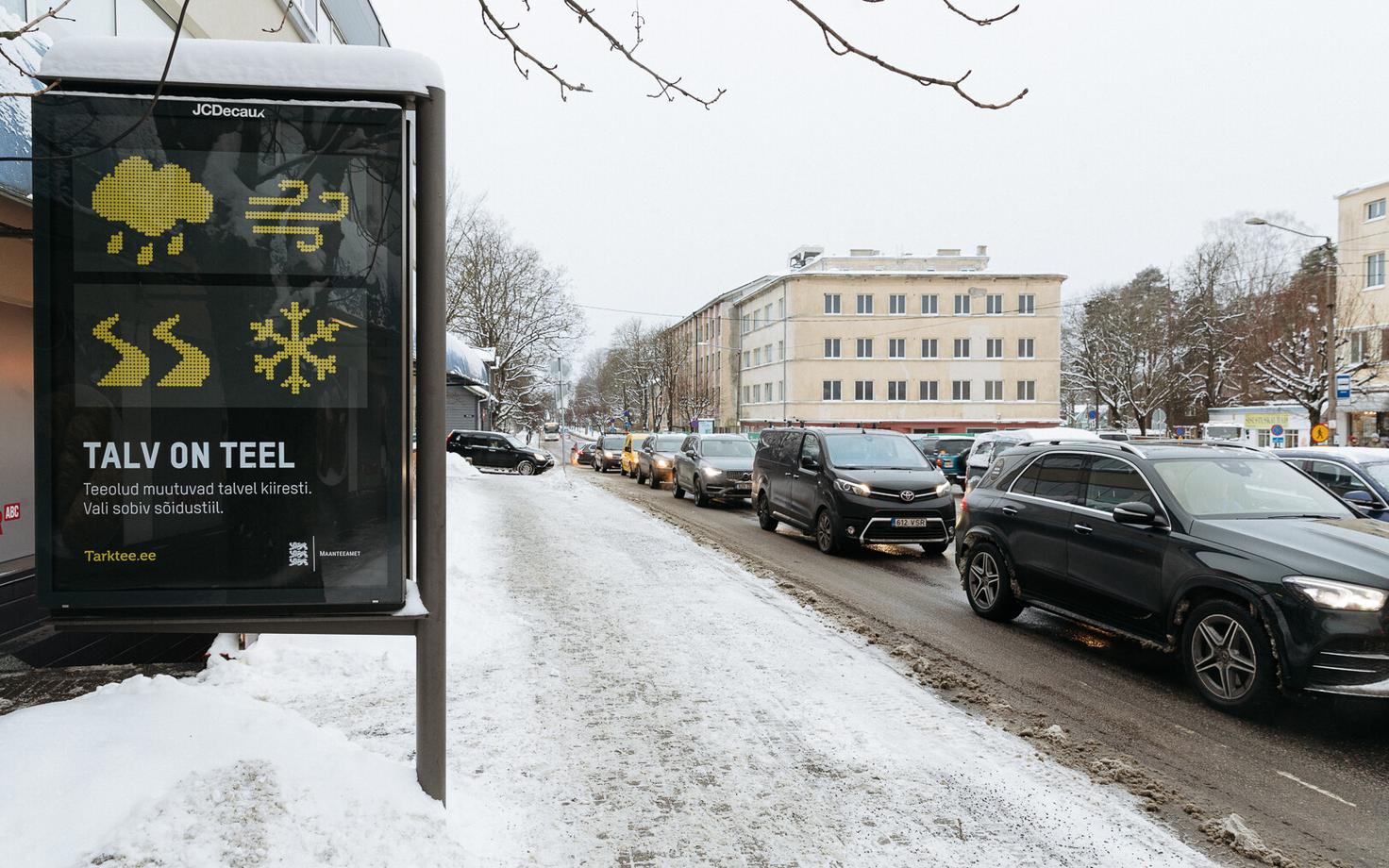
On Friday, the Transport Administration will begin removing signs allowing a maximum speed of 110 kilometers per hour on Estonia's main highways, with lower winter speed limits taking effect.
On road sections equipped with variable speed limit signs, the maximum permitted speed will be up to 110 kilometers per hour during daylight hours when driving conditions are good. The speed limit will remain at 100 kilometers per hour on 2+1 roads and certain sections of 2+2 roads.
Higher speed limits will be introduced in areas where road conditions are suitable, the Transport Administration said.
On the Maardu–Haljala section of the Tallinn–Narva highway, a 2+2 road with numerous left-turn and U-turn locations and a higher risk of accidents involving wildlife and pedestrians, the speed limit will remain at 90 kilometers per hour for the winter.
"Drivers should remember that the maximum permitted speed is not always safe. They must pay attention to road and driving conditions and adjust their speed accordingly," said Siim Vaikmaa, head of the Transport Administration's Traffic Management Center.
On the Laagri–Ääsmäe section of the Tallinn–Pärnu–Ikla highway, the Peetri–Mäo section of the Tallinn–Tartu–Võru–Luhamaa highway and the Väo–Kanama section of the Tallinn Ring Road, the Transport Administration's Traffic Management Center may set speed limits of up to 110 kilometers per hour during daylight hours when driving conditions are good and up to 100 kilometers per hour after dark, using variable speed limit signs.
Driving conditions are assessed based on measurements from roadside weather stations in the area.
This winter, speed limits of up to 110 kilometers per hour will remain in effect on a total of 249 kilometers of roads, while limits of 100 kilometers per hour will apply to another 107 kilometers.
Starting December 1, all passenger cars must be equipped with winter tires.
--
Editor: Mirjam Mäekivi, Marcus Turovski


