Warnings before mobile traffic cameras reduced fines by 90 percent
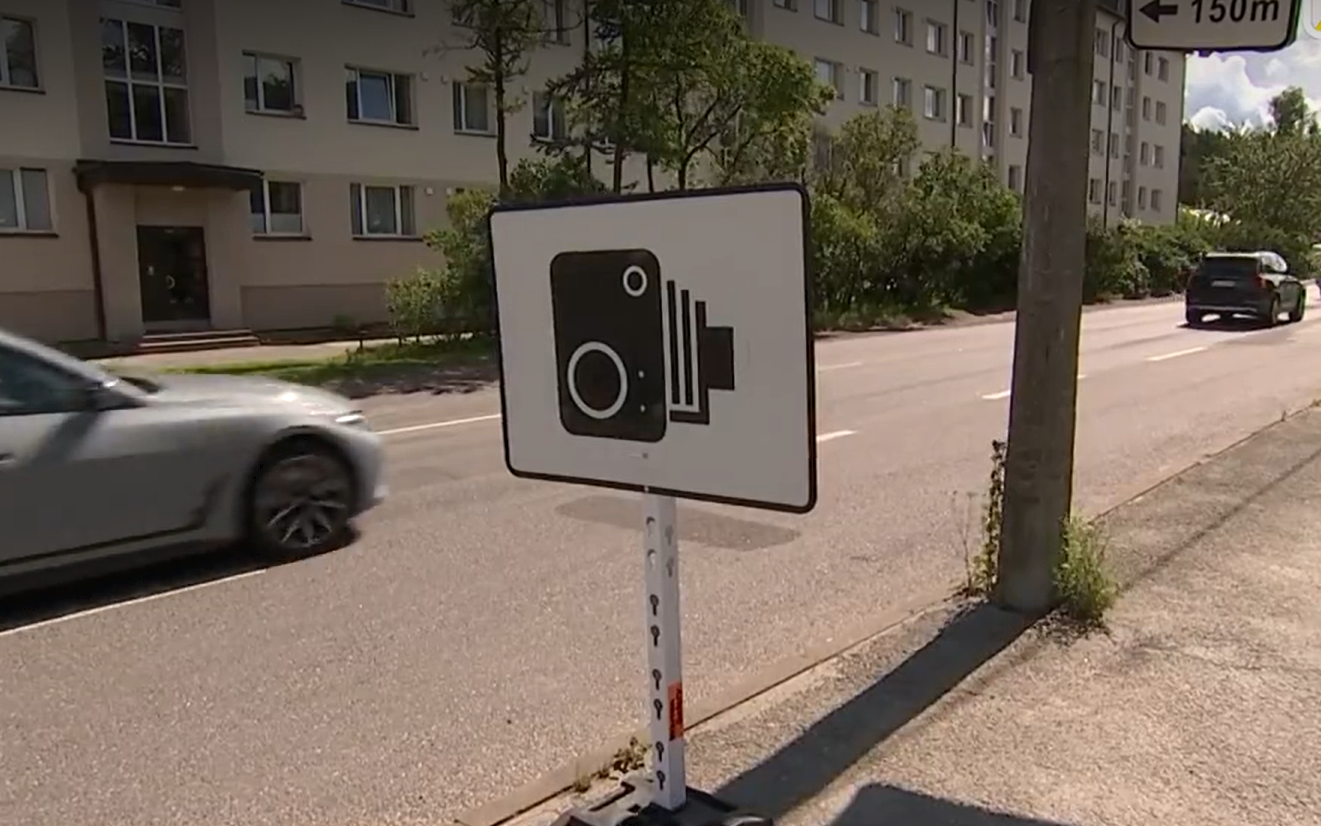
Speeding fines have dropped nearly 90% since July's higher intervention threshold and the August rollout of warning signs before mobile speed cameras. But the police says safer road design, not enforcement, is the real key to improving traffic safety.
The higher intervention threshold for speeding, which took effect in July, brought a drop of more than half in speeding violations. The impact of the warning signs introduced in August in front of mobile speed cameras has been even more noticeable — according to data from the first full month of use, the detection of violations has decreased by approximately 90 percent.
If in September of last year mobile speed cameras issued 26,228 fines, then in September of this year mobile cameras across Estonia issued a total of 2,939 fines, according to police statistics.
"This September there were two fewer cameras operating compared to last year, and part of the working time was spent installing warning signs, but this does not change the overall picture — the number of fines today is very small," said the Police and Border Guard Board (PPA) spokesperson Uku Tampere.
Most drivers comply with speed limits
PPA traffic‑supervision chief Taavi Kirss explained that placing warning signs before mobile cameras has made their effect similar to stationary speed cameras.
"At the specific location where there is a speed camera with a warning sign, speeds are correctly reduced, and it is safer there, and violations generally do not occur," Kirss said. At the same time, he noted that once drivers leave the camera's area of influence, they often accelerate back to their usual speed. "If traffic supervision is not visible, there is no risk of being caught," he said.

According to the Transport Administration's latest survey, 77 percent of drivers comply with the speed limit, but for the rest, speeding remains a problem, Kirss noted.
According to Kirss, installing warning signs has not been without practical issues. Problems have been identified with placing signs in the landscape, and there have been situations where large trucks passing by have knocked the signs over.
The reduction in fines — and thus fine revenue — does not concern the police. "We have not looked at it, and fine revenue is not important from the police perspective. Our goal is directed at safety and reducing traffic accidents," Kirss emphasized.
Asked whether the police, having lost one effective method of catching speeders, plan to bring more patrols onto the roads or use alternative measures, Kirss answered no.
"The number of patrols will not increase; it remains the same as it has always been," he confirmed. Traffic will continue to be calmed with existing tools: mobile and stationary speed cameras and daily police patrols.

Safe infrastructure replaces supervision
The police's main expectation for lawmakers is to make the traffic environment and infrastructure safer. According to Kirss, logical and safe infrastructure reduces the direct need for police supervision, because movement in such an environment is inherently safer and more understandable for drivers.
As a successful example, he pointed to Tallinn, where speed limits in the city center were lowered in 2024.
"Initially, this reduced pedestrian‑related traffic accidents by about 50 percent. Today it has remained around 30 percent, and I think that is a very good number," Kirss said.
On highways, the police consider most important the construction of roads where lanes are separated and the risk of head‑on collisions is minimized.
"Places where different road users can move in their own lanes are significantly safer than those where speeds differ and the risk of collision is high," he added.
Since 1 July, the PPA raised the intervention threshold for mobile speed cameras. Mobile cameras now issue fines only starting from 6 km/h over the limit (previously 3 km/h), to avoid penalizing momentary carelessness. The change applies only to PPA‑operated mobile speed cameras, of which there are eight across Estonia. Stationary cameras still intervene starting at 3 km/h over the limit.
In May, three MPs — Valdo Randpere, Madis Timpson, and Marek Reinaas — initiated a law amendment requiring the police to use a warning sign before a mobile speed camera. The amendment was adopted despite police objections and entered into force on 1 August.
--
Editor: Mari Peegel, Argo Ideon


