Transport Administration to install thermal cameras to count road users
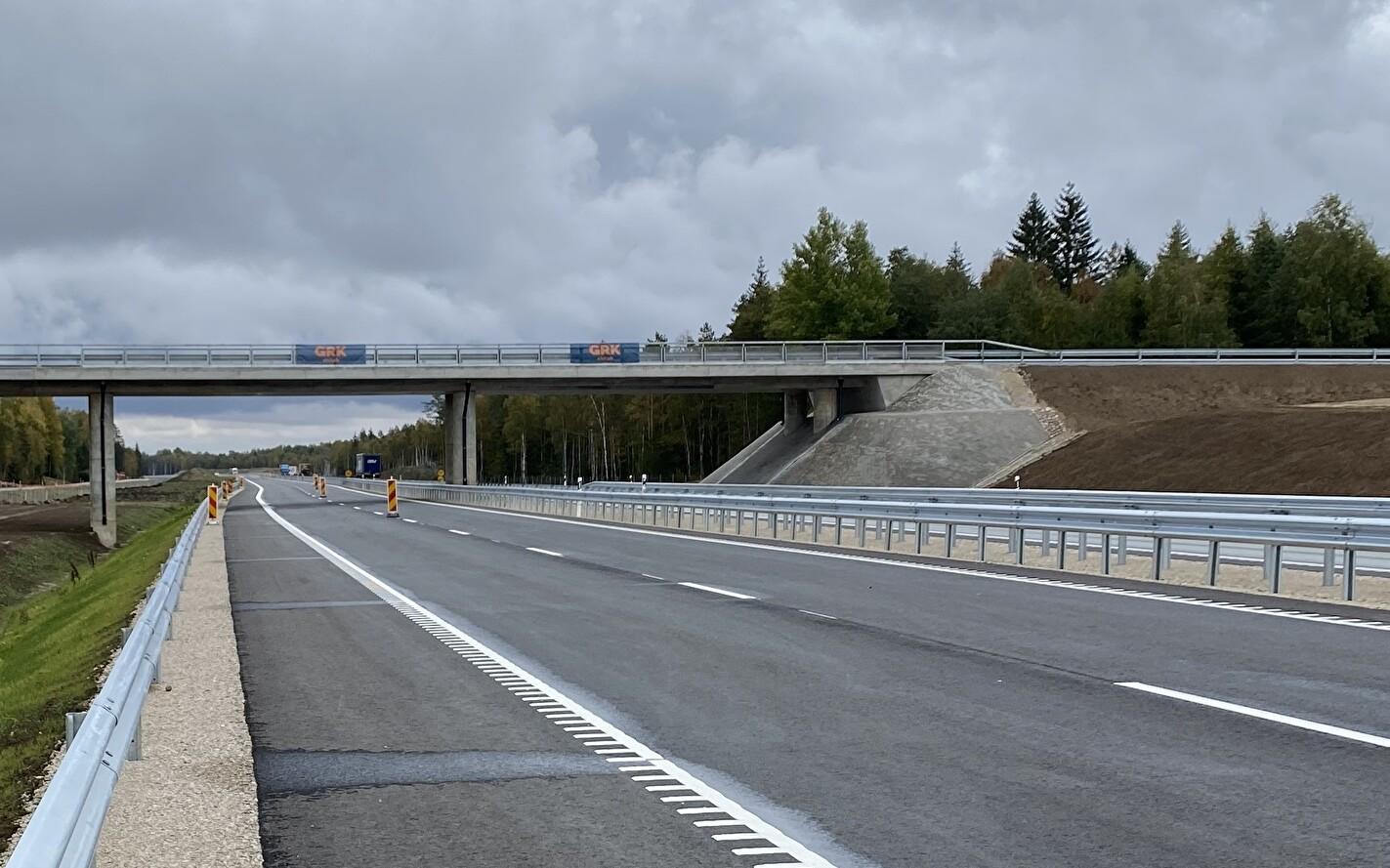
The Transport Administration is installing thermal cameras along major highways to collect data on when, at what speed, and what types of vehicles are traveling there.
The agency plans to procure counting devices that will help determine traffic volumes on different road sections. It estimates that designing, purchasing, and installing the equipment will cost around €740,000.
Pedestrians and cyclists will also be counted, but the agency stresses that all data will be anonymous and the devices will not take photos or record license plates.
Arno‑Marko Miller, a traffic‑monitoring equipment expert at the Transport Administration, told ERR that for vehicles, the system will collect data on date, time, speed, vehicle length, direction of travel, vehicle class, headway, and lane detection.
"For pedestrians and cyclists, the system will collect data on date, time, speed, direction, and user type," he added.
All data must be anonymous
Vehicles will be divided into three classes: passenger cars and vans, trucks and buses, and trucks with trailers.
"All data must be anonymous — the devices will not take photos, record video, or capture license plates," Miller emphasized.
In the first phase, 15 thermal cameras will be installed on the Tallinn–Narva highway, 18 on the Tallinn–Tartu–Võru–Luhamaa highway, 12 on the Jõhvi–Tartu–Valga road, and ten on the Tallinn–Pärnu–Ikla road. Additional units will be placed on the Riia roundabout connector road, the Mõigu connector road, and several other sections.
In the second phase, installations will include 15 devices on the Pärnu–Rakvere–Sõmeru road, ten on the Tallinn ring road, six on the Tallinn–Paldiski road, and five on the Ääsmäe–Haapsalu–Rohuküla road. Cameras will be mounted on metal poles or frames.
The collected data will be used in analyses and annual traffic‑count reports, which support road design, construction, maintenance, traffic‑safety planning, budget allocation, and the development of guidelines and documentation.
Procurement requirements specify that the devices must include integrated AI‑based detection and classification capabilities with updatable models. They may not connect outside the Transport Administration's private network, and they must not store images.
Cyclist traffic has never been counted this way before
Mobility expert Kadi Pihlak said that the permanent counting system will, for the first time, provide long‑term, standardized data on pedestrian and cyclist volumes and how they change over time.
"Pedestrian and cyclist movements along state roads have never been counted with thermal cameras before," Pihlak noted.
The data will help assess seasonality, trends in walking and cycling, and the impact of traffic‑management measures, new infrastructure, improved winter maintenance, and the opening or closing of destinations. It will also help prioritize which pedestrian and cycling paths should be maintained or repaired first.
"Creating a counting system is an important step toward better understanding walking and cycling and making data‑driven decisions in infrastructure development and mobility policy. It also supports the implementation of Estonia's cycling strategy," Pihlak said.
Vehicle‑counting devices will be installed on international road sections, while pedestrian and cyclist counting points will be placed along state roads across Estonia, in both urban fringe and rural areas.
The densest concentration of counting points will be near Tallinn and Tartu — urban nodes in the TEN‑T transport network — where pedestrian and cyclist data play a key role in developing mandatory sustainable urban mobility plans.
According to Miller, the Transport Administration has previously counted road users at both permanent and temporary locations, but the new system uses different technology.
--
Editor: Karin Koppel, Argo Ideon


