Estonia enters ETS reform talks without setting numerical targets

The Riigikogu's EU Affairs Committee (ELAK) clarified the government's mandate for negotiations on reforming the Emissions Trading System (ETS) at its meeting on Friday, but avoided setting any numerical parameters.
"We made significant corrections to the positions proposed by the government," ELAK chair Peeter Tali (Eesti 200) told ERR on Friday.
He said the mandate confirms three principles that must guide Estonia's negotiations: security of supply, security considerations, and socio‑economic impact.
"When we talk about the oil‑shale industry, security considerations in Ida‑Viru County also mean stability and employment for people. And security of supply — that we can still get energy and that our economy and industry can develop. We also highlighted the oil‑shale oil sector separately, stressing that it is important and must be kept alive as long as possible," Tali said.
Free emission allowances need to be retained longer
Energy and environment minister Erkki Keldo (Reform Party), who attended the meeting, gave ERR a more detailed overview of Estonia's aims in the ETS 1 reform.
"First, we have proposed — and the European Commission has also suggested — that free emission allowances should not decrease as quickly as previously planned. Estonia can agree with this. Our goal is to retain free allowances for as long as possible, both now and in the future — and as many as possible, to put it simply," Keldo said.
He noted that while free allocation was initially set to end in 2039, the timeline is now being extended to 2046–2047, and the reduction pace will slow. "For us, it is important that the first phase slows down as much as possible — that the reduction happens at a minimal pace so our sectors remain competitive," he said.
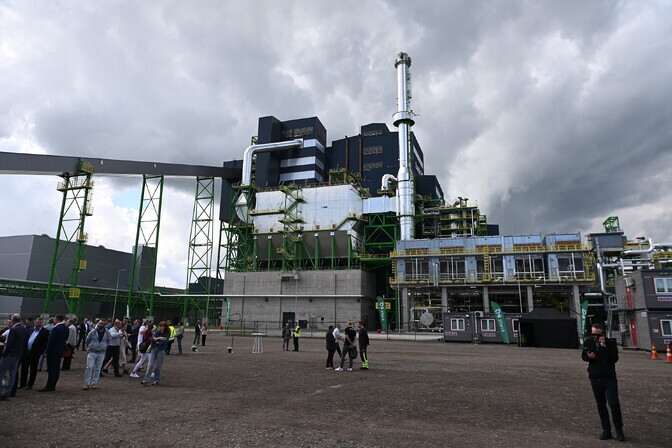
Second, Keldo highlighted the need for greater price stability in ETS carbon allowances — something Estonian businesses have also requested, as sharp price swings make planning difficult.
"The idea of the reform is to give the CO₂ price more stability and predictability. The discussion is about automatically releasing additional units onto the market if the price per ton rises above a certain threshold, to stabilize it. The goal is a predictable price with less volatility," he said.
Keldo added that Estonia wants free allowances to cover the oil‑shale sector and that allocation must consider Estonia's specific circumstances — including security, socio‑economic impacts, and security of supply.
He also stressed Estonia's position that free allowances should take into account past investments that have already reduced emissions, rather than being tied only to future investments. Under the Commission's current proposal, free allowances would be granted only to companies that commit to future emission‑reduction investments.
Emissions reduction hindered by lack of technology
"As we know, it is not realistically possible to make many future investments in oil shale. And when we talk about innovation, such as carbon capture, it is extremely expensive and there are no economically viable technologies. We want to ensure our oil‑shale sector is not put at a disadvantage," Keldo said.
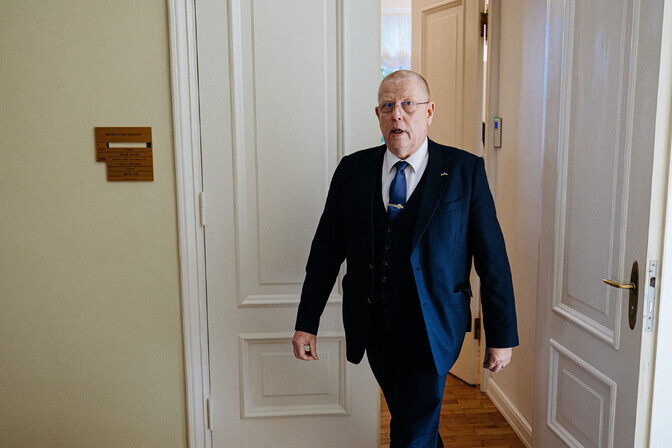
Both Tali and Keldo emphasized that Estonia's positions were not defined numerically, so negotiators would not be overly constrained — especially since ETS decisions in the EU are made by qualified majority, meaning Estonia's exact numbers could simply be ignored.
"This is how the EU works — ETS reform does not require unanimity, only qualified majority. That means negotiations and finding common ground with other member states. That's why Estonia's positions clearly explain why we seek exceptions and what our needs are, but we have not locked ourselves into specific numbers or percentages," Keldo said.
"All principles are written into the government's positions, but we did not include exact percentages. I can say that the government's goal is to secure as many free allowances as possible for as long as possible for Estonian companies. That is the goal we will negotiate," he added.
Tali echoed the same: "The exact percentage is a matter of negotiation. Experienced negotiators say there is no point putting a number in, because then you're boxed in — and you need room to maneuver."
Both Tali and Keldo also stressed that all Estonian representatives — politicians and officials, government and opposition, and members of the European Parliament — must consistently explain Estonia's interests and specific circumstances in the EU.
--
Editor: Mait Ots, Arp Müller, Argo Ideon