New enforcement threshold and warning signs cut speed trap fines by €1 million a month
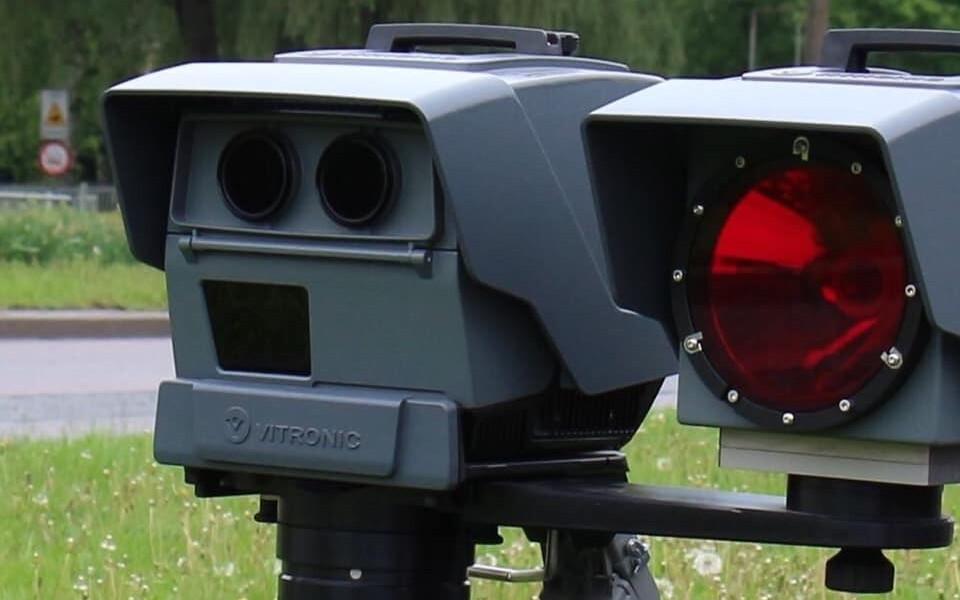
Since warning signs became mandatory for mobile speed cameras, the number of fines issued has fallen by nearly 90 percent, while revenue from fines dropped by almost €1 million in September.
In September last year, police issued €1,256,318 in fines using mobile speed cameras. This September, following the installation of warning signs ahead of the cameras and an increase in the enforcement threshold, fines totaled just €199,052, a decrease of nearly €1 million.
The drop in fine revenue was driven by a 90 percent decline in the number of fines issued. Raising the enforcement threshold nearly halved the number of violations, while the introduction of warning signs reduced it by roughly half again. As ERR has previously reported, citing police statistics, mobile speed cameras issued 26,228 fines in September last year, compared with just 2,939 across Estonia in September this year.
However, police spokesperson Taavi Kirss said revenue from fines has never been a priority for the police and will not be in the future.
"Our only priority has always been to make Estonia's roads safer and ensure that drivers obey speed limits. Higher speeds make it harder to spot hazards and lead to more severe consequences and more serious injuries in the event of an accident," Kirss said.
MP: The goal is to slow down traffic, not fill the treasury
Madis Timpson (Reform), chair of the Riigikogu's Legal Affairs Committee, who pushed for mandatory warning signs ahead of mobile speed cameras, told ERR that short-term police statistics may not provide a complete picture and that a longer period and more thorough analysis are needed to assess the actual impact.
"I think it's a little too early to draw conclusions based on just one month. We really need to look at a longer period than one or two months," Timpson explained. However, he said the decline in fines was a positive sign. "If the police say the number of fines has fallen by 90 percent, that's a good thing."
Commenting on the fact that the sharp drop in fines has left the state budget nearly €1 million short in a single month, with the trend likely to continue in the coming months, Timpson said issuing fines should never be an end in itself for either local governments or the state, even if it means forgoing millions of euros in potential annual revenue.
"The police have always said that the goal is not to issue fines but to calm traffic. If traffic has become calmer, that's a success," he said. "I certainly wouldn't want to live in a country where we try to fill the state coffers by issuing as many fines as possible," he added.
Timpson: I have not seen senseless speeding
Timpson disagrees with observations by some road users that drivers only obey the speed limit in the immediate vicinity of warning signs. The politician said his assessment is based on extensive personal experience driving between Tallinn and Viljandi every week.
"I drive between Viljandi and Tallinn several times a week. I don't think the situation is that bad. In my opinion, the overall traffic situation has improved considerably over the years," Timpson said, adding that it is wrong to regulate the behavior of all road users because of a few offenders.
"There have always been speeders, although there seem to be fewer of them lately. I haven't even noticed anyone driving recklessly fast," Timpson said.
Timpson also described his own negative experience with a mobile speed camera.
"I was once caught by a speed camera myself, doing 56 kilometers per hour. It was midday on a straight stretch of road with speed limit signs showing 90, 70 and then 50. I know because I drive that road several times a week. I switched off cruise control and coasted into the 50-kilometer-per-hour zone at 56. There were no cars coming from either direction, no other road users and the road was straight for three kilometers. Of course, I paid the fine, but it still left a bit of a bad taste in my mouth," Timpson recalled.
According to Timpson, however, his own fine was not the main motivation behind the legislative amendment. Rather, his decision to initiate the bill was a matter of principle: to restore fairness after police initially promised to install warning signs themselves but subsequently failed to do so.
"The bill actually originated from the fact that the police came to the Riigikogu in late 2018 and said they wanted to install mobile speed cameras and that warning signs would be placed ahead of them. In 2019, when the law was passed, this was reiterated on the floor of the Riigikogu. The law was passed, but the signs were never installed. In other words, the Riigikogu was deceived. If you went to your employer and promised to do something but then failed to deliver, what do you think would happen to you? I'd fire you," Timpson said.
On July 1, the Police and Border Guard Board (PPA) raised the enforcement threshold for mobile speed cameras on its own initiative. Mobile cameras now issue fines only when drivers exceed the speed limit by at least 6 kilometers per hour, up from the previous threshold of 3 kilometers per hour, to avoid penalizing momentary lapses in attention. The change applied only to the eight mobile speed cameras operated by the PPA across Estonia. Fixed speed cameras continue to enforce speed limits starting at 3 kilometers per hour over the limit.
In May, three Riigikogu members — Valdo Randpere, Madis Timpson and Marek Reinaas — introduced a legislative amendment requiring police to place warning signs ahead of mobile speed cameras. The amendment was passed despite police opposition and took effect on August 1.
A study published by the Estonian Transport Administration in September found that 77 percent of drivers exceed the speed limit on at least some types of roads, an increase from last year. Of those who speed, 22 percent have encountered a dangerous traffic situation as a result, a figure that has also risen.
--
Editor: Marcus Turovski