Ministry plan to scale back occupational health checks met with pushback
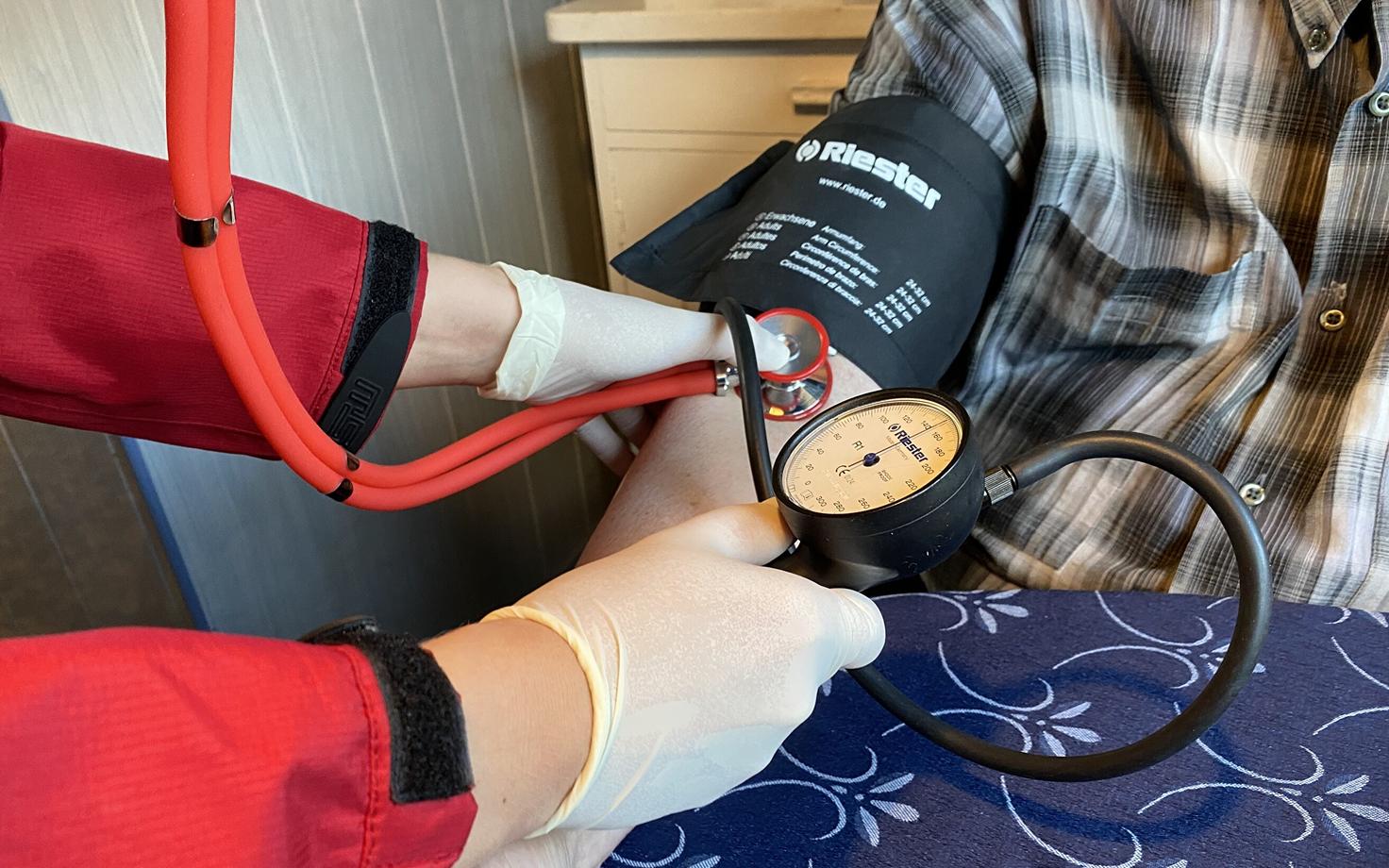
A ministry plan to scale back routine occupational health checks has sparked pushback from doctors, providers and employers, who argue the plan could hobble preventive care.
Currently, employers in Estonia must generally send new employees to an occupational health doctor within their first four months on the job, with follow-up checkups typically every three years.
After nearly a year of discussions involving some 20 stakeholder groups, however, a Ministry of Social Affairs working draft is proposing a more targeted approach, drawing criticism from occupational health providers, physicians and employers.
Ulla Ilisson, a board member of the Estonian Association of Occupational Health Service Providers (ETTOL), said the new plan would further narrow a service that is already underused as a preventive health measure, despite consensus among all the working groups that the role of occupational healthcare should instead be expanded.
"Occupational health doctors are the only established, legally regulated means of regularly monitoring the health of the working-age population," Ilisson noted.
Ministry seeking greatest added value
The ministry says it wants to avoid duplicating services, not reduce the role of occupational health.
Kristel Plangi, a project adviser at the ministry's Department of Health Services, said the focus of occupational health should be assessing how work affects health, preventing work-related illness, preserving people's ability to work and adapting workplaces.
"We want to focus on the areas where occupational healthcare has the greatest proven added value," she said. "Studies show that simply conducting more health checks, or the same checks for everyone, does not automatically lead to better health outcomes."
Checks should be guided by actual risks and needs, Plangi argued, and followed by appropriate care.
She noted that occupational health checks can also identify broader health risks, but the key question is what steps should follow to ensure no patients fall through the cracks.
Depending on the issue, these could include counseling, workplace adjustments, further assessment or referral to another healthcare provider. In other cases, follow-up may be more appropriately handled through regular primary care or another health service.
Familiarity with working environments
Meanwhile, Evelyn Aaviksoo, a board member of the Estonian Society of Occupational Health Physicians (ETTAS), likewise sharply criticized the ministry's working draft, saying it places too much emphasis on workplace hazards and undervalues the role of regular checkups.
She called the document's claim that periodic health checks are insufficient for adequately assessing work-related health risks unbelievable.
"We know the companies we serve," Aaviksoo explained. "I'm already aware of what risks are present [in their working environments], and when I see an employee, I can assess their health in light of whether any of those risks could affect them."
Given the limited financial and human resources available in healthcare, she argued that occupational healthcare should play a much stronger role in supporting primary care.
That could include allowing occupational health doctors to order more followup tests or request e-consultations themselves, rather than sending patients back to their family doctors to start the same processes all over again.
Wasted potential
Ilisson agreed that the field's preventive potential is being wasted when occupational health doctors can't follow up on identified issues themselves and have no choice but to send patients to already overburdened family doctors.
She suspects the resistance to expanding their role is tied to the healthcare system's current funding model and an interest in keeping the ability to order additional tests in the hands of family doctors.
"When a health risk has already been identified in someone, occupational health doctors are actually likewise specialists with specialist medical training," Ilisson said. "From the state's perspective, it would make a great deal of sense to utilize this resource more efficiently."

The Estonian Employers' Confederation (ETK) also sees occupational health services as a way to prevent illness, maintain people's ability to work and cut down the need for sick leave, but ETK healthcare working group chief Marja-Liisa Alop said patients often fall through the cracks when these checks identify health issues.
Under the current system, occupational health doctors can refer patients directly to specialists, but patients then have to pay for those visits themselves.
"Why send them back into the family doctor system and put even more strain on it just to identify the same problem again?" Alop asked.
'Occupational health could play an even bigger role'
With healthy life expectancy in Estonia still stagnant, putting further pressure on the Health Insurance Fund's (EHIF) budget, she argued that every opportunity for preventive care should be used.
The working groups, she added, agreed that expanding occupational healthcare is the right way forward.
"Given the labor shortages Estonia is facing, employers have a strong interest in keeping people healthy and able to work," Alop emphasized.
"Occupational healthcare surely isn't the answer to all of these challenges, but it is an essential part of the picture," she continued. "And we believe it could play an even bigger role and deliver even more benefits. But that will require some changes."
The Social Affairs Ministry, meanwhile, maintains that checkups should not be an end in themselves or be required at the same intervals for all workers.
How often employees should undergo occupational health checks should instead be determined by evidence on specific workplace risks, with guidelines developed accordingly, the ministry said.
--
Editor: Mirjam Mäekivi, Aili Vahtla


