Estonia plans accessible treetop trail in rare flying squirrel habitat
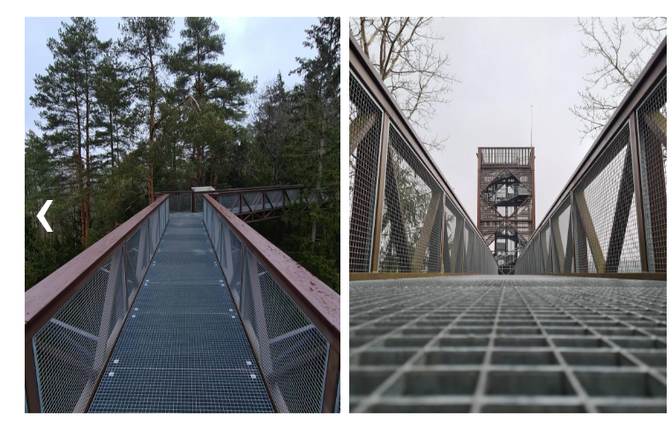
Estonia's State Forest Management Center (RMK) plans to build a unique, wheelchair-accessible treetop nature and study trail in the Alutaguse National Park in Ida-Viru County.
Set between the Kauksi campsite and visitor center, the elevated route will replace stairs with gentle ramps so visitors with mobility issues can explore the forest canopy.
RMK Innovation Projects Manager Ulvar Kaubi said the structure is designed as a calm educational trail for a wide audience rather than an adventure course, allowing visitors to experience the forest from the height of the treetops.
"The central principle is accessibility. RMK wants the trail to be navigable by wheelchair and for the solution to take into account visitors' various special needs," Kaubi said, adding that RMK has already consulted the Estonian Chamber of Disabled People on the design.
Under current plans, the climb will use suitably graded walkways and rest platforms rather than stairs, opening up canopy views to people unable to use standard hiking trails and observation towers.
The trail's exact architectural design, height and length will be determined through an upcoming design competition. Kauksi was chosen after RMK, Enterprise Estonia (EIS) and Environmental Board (Keskkonnaamet) specialists evaluated 17 candidate sites nationwide, selecting it for its proximity to existing trails, the visitor center and the soon-to-be-renovated Kauksi recreation and camping area.
Rather than spanning the entire coastal forest between the campsite and visitor center, the elevated walkway will supplement the existing footpath so visitors can ascend smoothly into the canopy. Seating, observation points, information boards and interactive exhibits are planned along the route, while keeping foot traffic on a fixed path will protect forest-floor vegetation from trampling.
The RMK says it hopes the landmark will encourage longer stays in the Alutaguse area and boost business for local accommodation, catering and guiding providers.
In September, the government approved an expansion of the Alutaguse National Park of 24,749 hectares, to reach 69,768 hectares. This was done to link protected habitats together more effectively.
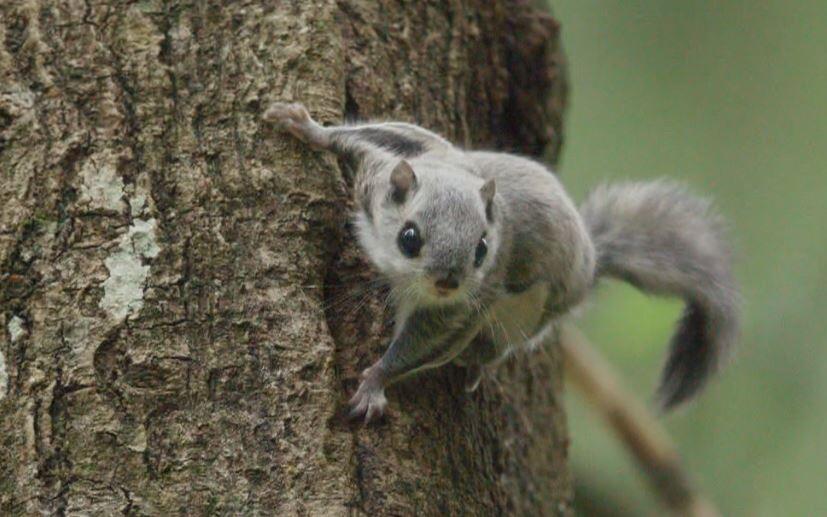
The park is Estonia's sole habitat for the critically endangered Siberian flying squirrel (Pteromys volans, pictured), a nocturnal glider that depends on continuous old-growth canopy cover to move between nest trees.
--
Follow ERR News on Facebook and Twitter and never miss an update!
Editor: Mari Peegel, Andrew Whyte


