Auditor general: Estonian state must sort out existing tasks before taking on new ones
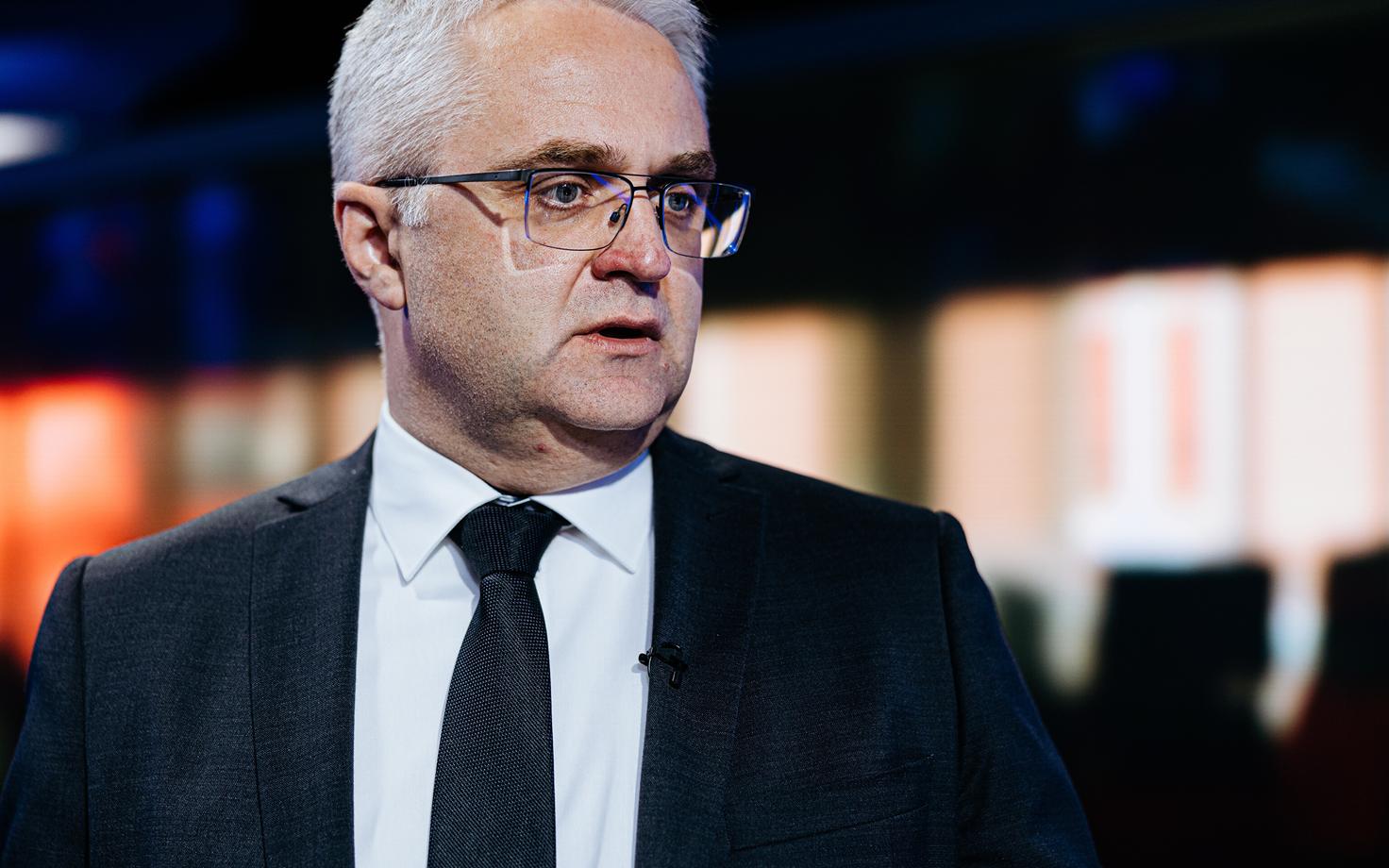
The state should first focus on fulfilling its existing responsibilities and resolving current problems rather than continually taking on new obligations, Auditor General Janar Holm said on ETV's "Esimene stuudio" talk show.
You've completed your annual report and delivered a lengthy speech to the Riigikogu. If we were to describe the tone in terms of colors, it was mostly shades of gray and black. What happened to the National Audit Office's optimism and sunshine?
I wouldn't say the optimism and sunshine have disappeared. We also highlight things that are going well, but the National Audit Office's job isn't just to talk about what's going well. It's primarily to draw attention to the problems we face and that need to be resolved. That's what we're allocated money in the state budget to do.
A few quotes: "The state is unable to set priorities," "Budget discipline is falling apart," "The state doesn't have a sufficiently clear picture of its future obligations." Have these problems grown over time or do you also see solutions?
The problems have remained relatively similar in recent years. If we look across Europe, Estonia is no different in this respect. We're in a relatively similar position to other countries. Our leaders know what the problems are, but they're difficult to solve because society has become polarized and the challenges are extremely complex. This isn't just an Estonian problem. It's the same across Europe.
One of the key instruments of management and governance is money and when it comes to money, you say the state lacks a comprehensive overview of how much of its funding for future years has already been committed. Why doesn't the Estonian state, or the Ministry of Finance, have this under control?
This is indeed one of the problems we highlighted. As we know, there is occasionally a need to make longer-term commitments and the law allows for this. Up to 50 percent of the current year's expenditures can be carried over into future budgets. When we asked how much spending we'd already committed to future years, knowing that we're facing a deficit, it turned out that nobody knew.
The Ministry of Finance doesn't know and neither do the other ministries, although some claimed they did. When we asked for the actual documentation, unfortunately it turned out that they didn't have it. We could eventually find ourselves in a situation where future governments and the Riigikogu are bound by decisions being made today. Their only role would be to find the money to cover those expenditures, and that's not how things should work.
It's one thing when you buy or plan something, but commitments can also be made in other ways. Your office's latest report says that unless European Union policy changes, Estonia could face a bill of up to €1 billion for failing to meet its climate obligations. That would be a staggering blow.
Absolutely. Just yesterday, we published an audit concerning the achievement of environmental targets in land use. There are indeed certain risks that we could end up having to pay out of our own pockets in the future. How much exactly, we don't know. That will become clear in the future. Time will tell.
And again, there are those people who say they warned us back then that we couldn't take on these obligations because they were beyond the state's means. Yet we agreed to them. Our government gave its consent. We said yes in Brussels. How is all this possible?
That's how these things happen. It's quite complicated and I understand the people who go to Europe to negotiate these terms. But we have to stand up for Estonia's interests and insist on clarity. I think quite a few countries, not just Estonia, are currently struggling to meet this particular target.
Thinking back to this audit, the saddest thing is realizing how many of these so-called solutions depend on methodology. A great deal can be decided without ever leaving your desk, including whether we're meeting the targets or not. The biggest problem with this issue is really the uncertainty. If we won't know until 2032 whether we've fulfilled our commitment for 2030, then we can't manage the process.
But who will be held accountable if it turns out that the amount is €1 billion, half a billion or some other sum? Who bears that responsibility?
In this audit, we've clearly outlined in an appendix how the decision-making process unfolded and who participated in it. That's where the responsibility lies. But the main question is always whether we actually knew what we were deciding or whether, as so often happens, we simply let things slide.
Continuing with the bigger budget picture: When you talk to politicians, they say it's all because of the major war between Ukraine and Russia, the war launched by Russia. Can an aggressive neighboring country be an excuse for the disorder in our budget accounting?
I think the war taking place next door has certainly played a major role in the fact that we're running a deficit. A lot of it also stems from the fact that we've only recently emerged from the COVID-19 crisis, during which we spent quite a lot of money. What's happening now has undoubtedly had an impact, but there are also areas where we can look at what we're doing ourselves and see what we could do better. We certainly can't blame everything on that alone.
We've talked about defense spending before. This fall's biggest buzzword has undoubtedly been Datasel and the infamous artillery shell affair. Are you aware of any developments in this case or do we once again have to trust that all parties are acting in good faith and that the matter will simply be resolved?
I think the media have done a very good job of taking over the auditing from us. They've kept a close eye on the matter since we left off in September and I think things are pretty much exactly as they appear to the public right now. The matter is being investigated and various parliamentary committees are also looking into it.
One area the media may be paying less attention to, but which the National Audit Office is monitoring, is the audit of the Defense Forces' entire inventory. How are things going there? Because even in your speech to the Riigikogu, you specifically addressed the argument that, in difficult and urgent times, the Defense Forces shouldn't be counting socks but boots. Yet even those essential items haven't been properly accounted for.
Yes, the Defense Forces is currently working on this issue and we have quite good communication with the current defense minister. The government discusses the situation every month. Looking ahead, we'll probably be delivering a fairly similar message next year, because the problems have continued this year. We'll simply try to highlight what has improved.
There is a genuine effort underway to improve inventory records so that the financial accounts can also be corrected. But I'm afraid the problems will probably persist next year. We'll try to highlight whatever positive developments there have been.
And you're still not demanding that every cartridge and sock be counted. You're interested in much more expensive items, such as weapons systems, their components, communications equipment, fire-control devices and camouflage equipment. Yet even in those areas, the Defense Forces can't adequately account for these items.
Yes, and that's why I included those examples in my speech. At one point, I was quite concerned that people were trying to trivialize the issue by reducing it to cartridges and socks when we were actually dealing with serious weapons systems, specialized weaponry and other important equipment. There's room for improvement and I think perhaps by this time next year, the situation will be a little better.
But has the chaos that prevailed in defense procurement now been brought under control? Unsigned contracts, documentation errors and sometimes not even knowing when particular goods will arrive or what will be delivered. Have these problems started to be resolved?
We'll be able to say next year. This report covered the previous year and, as you know, a new director took over at the Estonian Center for Defense Investments at the beginning of the year. I also had quite a lot of contact with him early in the year.
My impression is that he's working to improve oversight of contract implementation because there really was something of a chaotic situation there too. It was quite difficult to establish exactly what had been received, what complied with the contracts and what didn't. We'll see next year. It's hard to say, but we have to hope for the best.
Looking at how Estonia is governed from your desk at the National Audit Office, how well is our country being run?
Every time I've spoken with a colleague from another country and then thought about Estonia, I'd say that, by comparison, I'm still proud to be Estonian. It always depends on what you're comparing us with. Our job is to highlight the problems that need to be resolved and the areas where we could do even better. And there are still plenty of areas where we could do better.
The question against this backdrop is how thoroughly different impacts are considered when decisions are made in our country. How well are we doing at that?
I get the feeling that we sometimes approach things the way they do in our literary classic "Kevade" (Oskar Luts' "Spring" —ed.): If you can't do the whole arithmetic problem, do half of it.
Sometimes, when preparing reforms and plans for governing the country, we do something similar. A great many costs and consequences only become apparent once implementation is underway. There are plenty of examples of this.
But if we do the wrong half, that's a problem, isn't it?
We really should do both halves. For a reform to succeed and changes to be successful, we need to know what the costs will be. It's absolutely essential that, whenever we launch an initiative, we understand right from the outset what it's going to cost.
Tomorrow (Friday — ed.), the government will begin discussing the closure of Estonia's eastern border. What does the impact assessment for closing the eastern border look like?
I can't say. The government will be briefed tomorrow on exactly what that would entail.
Isn't that impact assessment already available in the government's meeting information system?
I haven't had a chance to check. I imagine it probably is, if the meeting is tomorrow.
The president says a country shouldn't be governed on the basis of emotions. Do you agree with her?
That applies not just to the border but to every issue. We can't make decisions in the heat of emotion. We have to make rational decisions.
Could the decision to close the eastern border be overly emotional?
I can't say. I can't read the minds of government ministers. I hope the impact assessments have been carried out and that a wise decision will be made.
Let's also talk about development plans because you say there are quite a lot of them. Have you tried to count how many development plans the Estonian state has adopted?
There are fewer than there used to be. Work has been done to reduce their number, but there are still far too many for them to be taken seriously. Take the healthcare sector, for example, where there are 16 development plans in addition to the central public health development plan, with another seven being prepared.
There are people constantly drafting these plans and getting paid for it. Outside experts are brought in and paid, stakeholders are involved, brainstorming sessions are held and then it all gets put down on paper?
The work goes on.
How much does all this cost?
The work goes on constantly and it costs money. But the biggest cost is the decisions that aren't being made. Plans are good, but failing to make decisions comes at a cost.
I wouldn't even consider the cost of the consultation process or the people involved to be the main expense. It's the fact that things keep getting postponed. In certain sectors, development plans have simply provided an opportunity to put off making decisions.
Are we actually trying to implement these plans or is the problem that all the energy, manpower and money go into drafting them and when it comes time for implementation, there are no officials assigned to the task and no funding?
I'm not sure that implementing every development plan is even the intention from the outset. Sometimes the aim may be more about calming people down and giving them hope because when there's no money, hope doesn't cost anything.
So basically, they're just pretending to do something?
Well, putting together a development plan is real work and it takes real time. But we should measure it by the results it produces.
I do want to stress, though, that this criticism doesn't mean Estonia shouldn't engage in development planning. Quite the opposite. There are positive examples too.
Take the defense sector where various development documents also serve as a basis for choosing between investment options. There are other examples as well. But we're talking about situations where, despite a development plan having been drawn up, nothing actually happens.
In the healthcare sector, we've been asking about various issues for several years and we're told that the one thing standing between us and success is just one more development plan. We come back later, the plan is finished, but success still hasn't arrived.
Let me give you another example from a different sector. About a year ago, an energy sector development plan was adopted. A couple of months later, Elering announced a new €1 billion procurement for gas-fired power plants that wasn't included in the plan. How is that possible? Could the fact that we're facing an electricity shortage really have come as a surprise to Elering?
Even before the new energy sector development plan was adopted, there was already an energy sector development plan and that wasn't being followed either.
I think the process of drawing up the new plan was positive in the sense that it took certain things off the table. There was also agreement on what wouldn't be done. But indeed, as this example shows, those decisions don't necessarily follow directly from the development plan.
But what would happen in Estonia if we agreed that we weren't going to draw up a single development plan ever again?
I don't think we should set that as a goal. We should continue to draw up credible development plans. We should still agree on where we want to get to, what we need to do to get there and how much it will cost. But we need to take the process seriously. And as I said, fortunately, there are examples of this being done well.
Let's take the healthcare sector, which you've also cited as an example. Your latest report says that healthcare capacity is falling increasingly behind demand for treatment and that reform plans exceed the ability to implement changes. Help us translate that into plain language. From a patient's perspective, doesn't it simply mean things are going to get worse?
Patients have an enormous selection of development plans to choose from, but indeed, that doesn't translate into better access to treatment.
What's the problem? If you look at each development plan individually, everything seems fine. But when you put them all together and consider what it would take to implement them, you have to think about the people needed, the money and the IT solutions. It's simply not possible to do all of that at once. Choices have to be made and those choices are difficult.
We have elections coming up soon and I imagine that although the party platforms haven't been published yet, all the parties will probably promise to shorten waiting lists for treatment and make healthcare even better. Some may be more candid about bringing private money into the system, although voters probably won't understand exactly what that means. But you already know that none of this will save the day or solve the problem, don't you?
Yes, that's right. There are no easy solutions to be found anywhere. But we have to start somewhere.
I also don't want to suggest that nothing is being done. Just yesterday, for example, the health minister defended a bill at its first reading that addressed issues involving family doctors, including provisions for situations where no family doctor is available, as we know is sometimes the case.
The opposition says she was solving her own problem?
Well, yes, that other issue added a certain twist to the matter, but the bill does genuinely address the problem of the large number of people on substitute patient lists.
But still, looking at this from the politicians' perspective: They promise things will get better, officials work toward making things better and then you come along and say they've only gotten halfway there. What should be done?
The first thing is that we should make a serious effort to finish what we've started.
First, we need to distinguish the basic functions that the state must fulfill. That includes healthcare, education and even public transportation. We should resolve the problems we've already left unaddressed. The worst thing we could do now is take on piles of new initiatives while leaving existing problems unresolved.
Part of the problem with these development plans is that they read like a description of paradise, but the cost of maintaining that paradise has to fit somewhere into the budget and the state budget strategy.
We're already struggling enormously to meet our existing obligations. Take special care services, for example. According to the ministry's own calculations, there's a €200 million funding shortfall.
And while we're talking about money here, we're also in a situation where we don't have enough people. One of the biggest problems in healthcare is that you can decide through the state budget strategy to provide more money, but you can't train a doctor in six months the way you can train a trolleybus driver. It takes much longer.
There are two solutions: Either provide more money, although we both understand that's very difficult, because judging by society's reaction to various tax increases, a large part of the population doesn't agree with that. The other option is simply to do less. How much thought is being given in Estonian politics and government today to the idea of actually doing less?
The problem is that taking things away is painful. It's much easier to add something new alongside what's already there. And that's how the state keeps getting bigger and bigger, with new functions being added while the old ones remain in place.
There have been cuts in the state budget, of course, both genuine cuts and cases where initial ambitions have simply been scaled back.
As a rule, people are simply told to do the same work with less money. That doesn't really solve the problem, though. It just creates more hardship.
Sometimes giving less money can also be a solution because it forces resources to be used more efficiently. But I think Estonia's problem right now is that the state has too many responsibilities.
If we were to say today that we're cutting the number of government officials by 20 percent, but all their responsibilities remained, life wouldn't get any better as a result.
So even when we're talking about reducing the number of officials, we should be honest about what we're going to do less of.
On Tuesday, I interviewed the President on Vikerraadio. She spoke at length about having the courage to make decisions, including unpopular ones. Does that courage exist in the public sector, among officials and politicians?
As I said at the beginning, I think there's an understanding that we can't go on like this.
When I referred to Europe, take France and Spain, for example. Everyone knows things can't continue this way, with expenditures constantly increasing. But try making those decisions when society is so polarized. It's really difficult.
Yes, I think having that courage means there may not be much chance of getting into a governing coalition after the next election. But decisions still have to be made.
With politicians, it's particularly understandable before elections that they want to be popular. So it follows that officials should help keep things on track and bring everyone back to reality. But thinking back over your own career — you've been a government official for a few years more than a quarter of a century — was there more courage when you started?
I think there was more courage, yes, and I also think society was more receptive to change.
There's a bit more anxiety now and I think a great many people agree that cuts are necessary. But it's a bit of a "not in my backyard" situation. People agree that cuts can be made, just not when they affect them personally.
A great many of the areas where substantial cuts could be made affect a great many people. So it's a catch-22. People want cuts, but at the same time, they don't.
Although we're constantly told that the state is short of money, your annual report once again raises the SmartCap case. How is it possible that the state borrows several billion euros while almost a quarter of a billion euros is just sitting in a checking account — or perhaps it's no longer there today? How is that possible?
At the beginning of the year, that was indeed the situation. The state was borrowing money with one hand and handing it over to investment funds with the other where it simply sat earning what was essentially deposit interest.
As the finance minister has said, this is regrettable and it's a problem.
Work is now underway to resolve the issue and I think that if things are done properly — meaning money is allocated when the time is right — the savings could be quite substantial.
--
Editor: Marcus Turovski, Merilin Leetna


