Retired commodore: Russian ships here in the Gulf of Finland are no longer safe
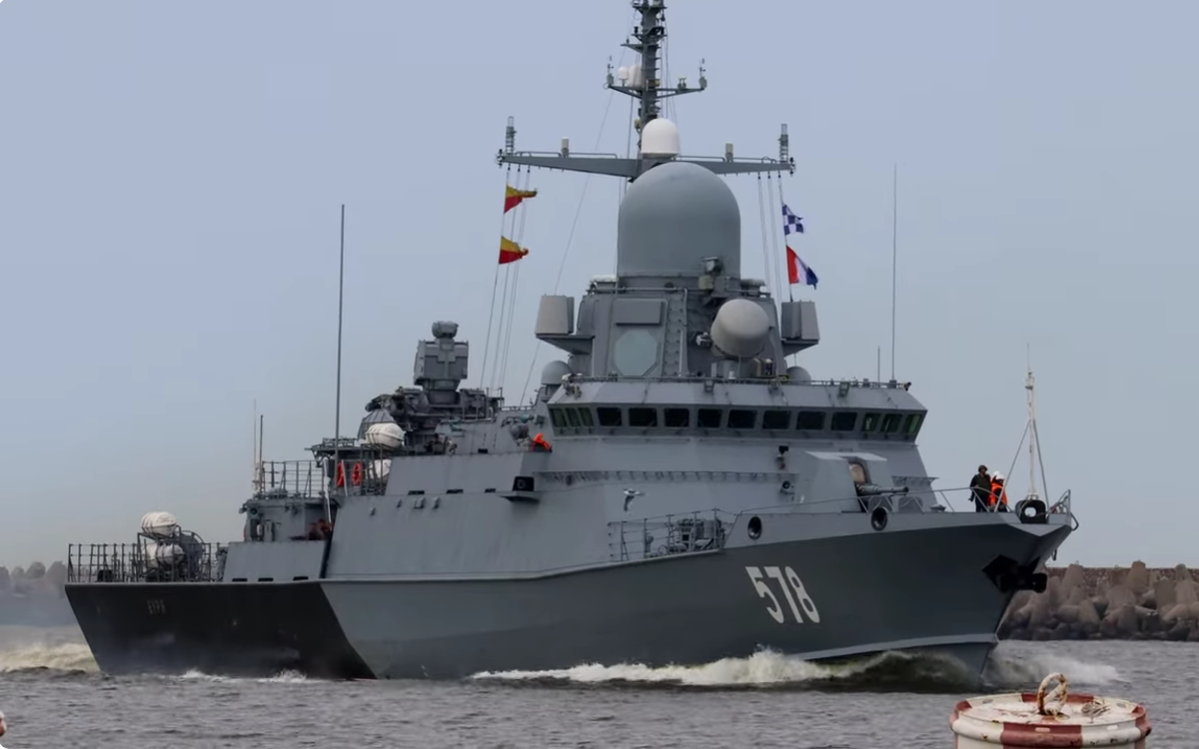
As long as Russia needs the Baltic oil channel to keep its war machine running, tensions in the Gulf of Finland will not ease, former navy commander, Commodore (ret.) Jüri Saska said.
Speaking to "Ringvaade" Friday in the wake of Ukraine's recent successful drone strikes, which hit a Russian corvette, Saska noted Russia is not out of danger even in these waters.
This forces the aggressor to protect its shadow fleet and makes the situation in the region increasingly unpredictable, he went on.
In the early hours of Wednesday, we received reports of drone strikes in our region of the Gulf of Finland, and later news that a Russian warship had been hit — a smaller one, and not by accident but deliberately. What thoughts or feelings did that news stir in you when you read it?
That drone warfare has reached a new level — that the capability now exists to hit moving targets, including ships, at that kind of distance. My first thought was that some kind of technological leap has happened on the Ukrainian side, allowing them to redirect drones in real time, re-target them, attack repeatedly and find targets. That requires quite a strong technical solution for the real-time picture from the drone's nose to reach the people controlling it. That was my first thought.
There was initially some doubt whether it could have been an accidental incident on the ship — it wasn't clear whether a drone hit it or something happened aboard. But with hindsight it has been confirmed that it was indeed a Ukrainian drone that hit the Russian vessel there. What was the drone's trajectory? Since here in Estonia it is very important to state that the drone did not pass through our airspace or maritime area.
I can't say exactly which direction it came from, but it most likely it came from the south. Whether it passed through our airspace or maritime areas is something the competent people sitting in front of the surveillance screens can say.
Does that capability exist though?
What I have been reading via open sources is that it probably came from the south. Whether it came over Russian territory — clearly the vessel was in the northern part of the Gulf of Finland, closer to Finnish territorial waters than to ours. Why was it sitting there and what was it doing? It certainly doesn't look like it was part of the air defenses for the port of Ust-Luga. First, the ship's construction and armament are not designed to provide regional air defense. If you look at its weapons, it's rather feeble even for its own self-defense if it's attacked by many drones at once. In a drone attack like that, mass matters — the sheer number of drones, to overload the opponent's air defense systems.
The ship is named the Naro-Fominsk. What kind of ship is that? I understand it's not the largest kind. It was hit in such a way that it could still make its own way to port, and didn't sink. What ship is it and what is it used for?
As has done the media rounds today, these were built as Kalibr missile carriers. Their compact size gives them the advantage of being movable between different maritime areas. Using Russia's inland waterways, they can be taken up to the North Sea, to the Caspian, and brought to the Baltic.

They came into service after Russia's aggression against Ukraine began in 2014. When the first sanctions were applied, the Russian Federation could no longer get large diesel engines from Western countries for large ships. So long-range weapons began to be installed on smaller platforms. These platforms are the result — smaller ships built, but with capable weapons such as Kalibr-class missiles and Onyx anti-ship missiles.
But these are the first generation of that type of ship, whose own air defense is relatively limited. The air defense armament of the next ships of this class — the modernized project — is significantly better.
What is actually happening here in the Baltic and on the Gulf of Finland? How many of these ships do the Russians have here? One expert said there have never been this many before. Why is that?
I have exactly the same information. Since I left the navy in 2024, the Russian navy's presence has grown. There's an obvious reason for this — the contacts involved in dealing with the shadow fleet. I wouldn't say clashes, but contacts both from the Estonian navy and from the Finnish side, and more broadly from NATO units, precisely in the Gulf of Finland. There have never been this many Russian navy ships in the Gulf of Finland, and the message is relatively simple: "These are our shadow ships, so don't poke them."
They are essentially escorting their own oil traffic, and evidently successfully. Why this particular ship was standing or operating at that spot is hard for me to comment on. Why was it hit in that way, and several times? Probably the Ukrainians have made a big step forward in technology, targeting and reconnaissance. There's also a bit of war luck needed when operating at long range. And you can never rule out that classic word that runs through the Russian system — bardakk (a Russia-specific general disarray — ed.). They may well have believed aboard that they were away from the danger zone, on the grounds they were not a target. But as with the Moskva (a Russian cruiser sunk on the Black Sea in April 2022 several years ago — ed.), where the Ukrainians haven't even concealed that they had luck. But they also knew very well how the opponent thinks, and the Russians weren't alert — they weren't in a heightened state of readiness to react to an air threat.
This is, on the one hand, a very strong message from Ukraine. The Russians now know their ships right here nearby, in the Gulf of Finland, are entirely strike-able. What are they going to do differently as a result?
The Russian side has already been doing things differently — it has installed nets, moved ships, even repainted them to confuse the video picture and so on. Those countermeasures exist, but there is no silver bullet to say that this is now completely ruled out in future and couldn't happen again.
There's also talk of the risk of escalation. We have a historical example where the Russians themselves sank a ship here in the Gulf of Finland and provoked things to grow larger, and the whole situation escalated. What incident was that in 1939?
You're probably referring to what happened when the Polish submarine Orzeł was detained in Tallinn. The Estonians let it go, and later the Russian side said that Orzeł had sunk the ship Metallist. With that they pressed the argument that bases should be established, as Estonia couldn't control its own territory.
Would similar diplomatic pressure, or playing out such a case, become relevant again?
I'd put it this way: listening to what is being discussed about Ukraine in negotiations today and what clauses the Russian side is putting forward, I wouldn't rule out any kind of strange connections in those people's heads.
So how will life here in the Gulf of Finland go on in the future? What will the Russians do differently, knowing their ship can be hit? And what will the Ukrainians do, knowing they're capable of hitting ships?
That is hard to say. If I had a crystal ball that would tell me how this will play out on one side or the other — but I think, as you said, the Ukrainians have sent a tough message and the Russians have probably received that tough message. Will they now move ships more, protect them more, arm them and put more air defense capability on them? Hard to say. One thing is quite certain: as long as the war in Ukraine continues and the Russian war machine depends on its oil channel, nothing here will get easier or better. Not for those directly at war today, and not for those on the southern and northern shores of the Gulf of Finland.
--
Follow ERR News on Facebook and Twitter and never miss an update!
Editor: Andrew Whyte, Johanna Alvin
Source: 'Ringvaade'


