Pavel Talankin: How a cage of Putinist propaganda was built on top of the Soviet cage in schools
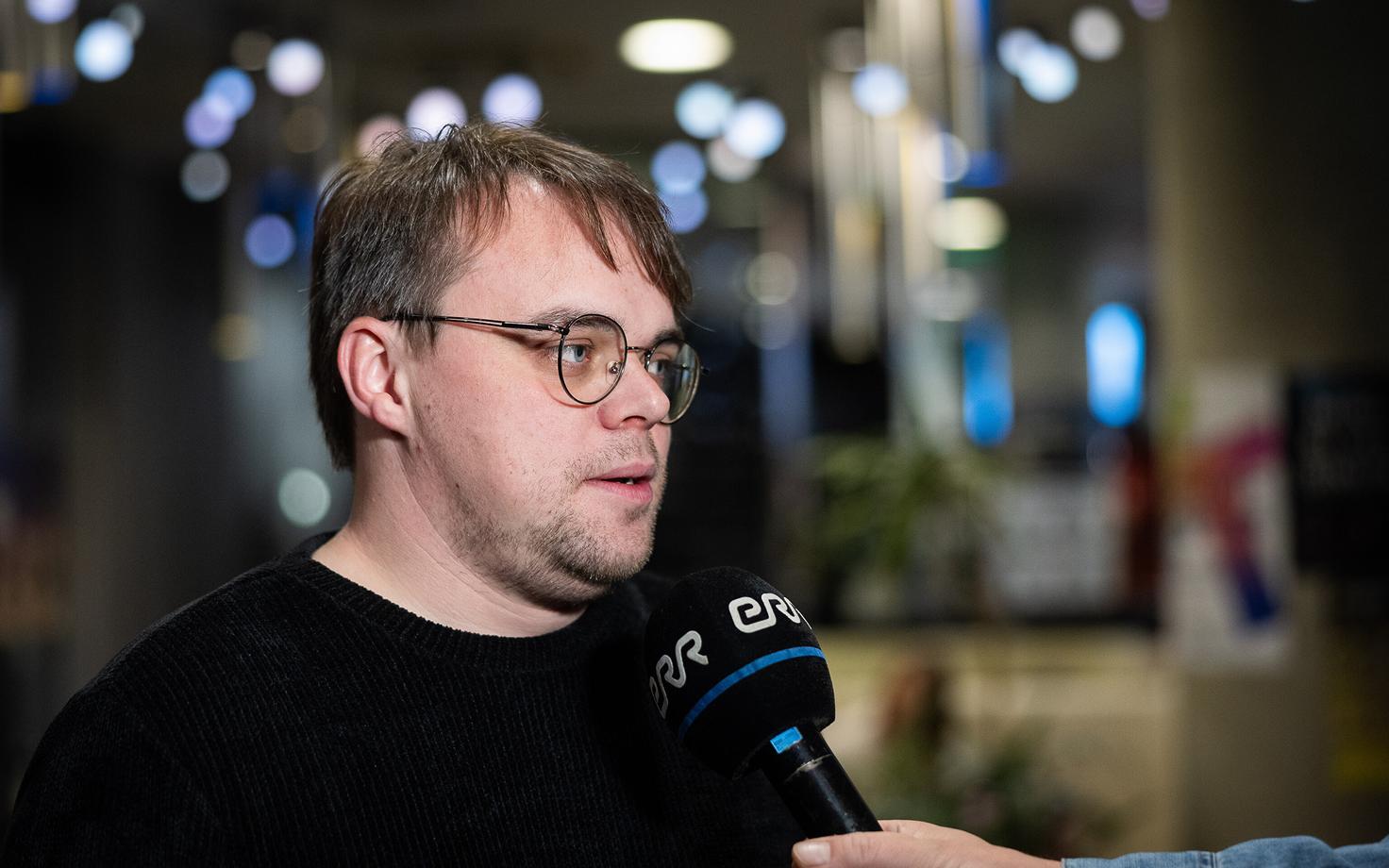
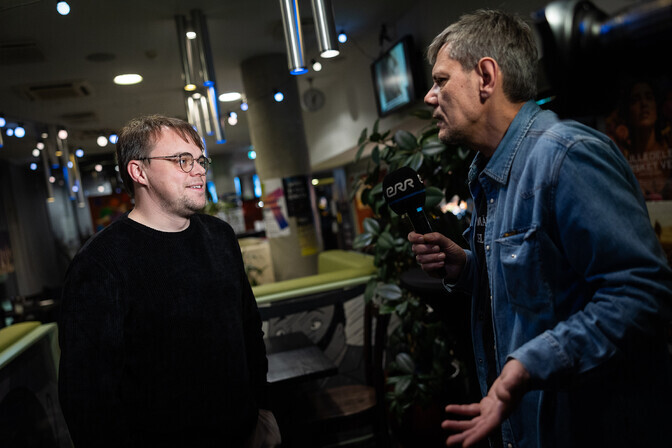
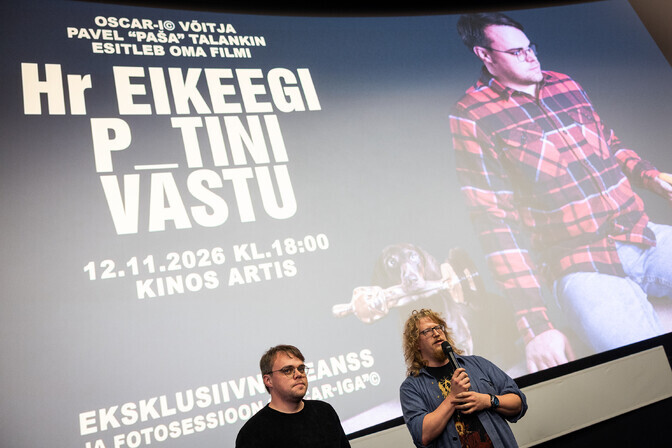
Teacher Pavel Talankin from the small Ural town of Karabash jokes that he has become the first film director in the world whose films have a 100 percent Oscar success rate. Admittedly, he has made only one film so far, the documentary "Mr. Nobody Against Putin" (2025). Talankin came to Tallinn to screen the film at Artis cinema and speak with viewers afterward. While the audience watched the movie, he reluctantly gave an interview to ERR.
The film shows how Russian schools changed after Russia launched its full-scale invasion of Ukraine, how state propaganda entered classrooms, and how militaristic events and lessons such as "Conversations about important things" became commonplace. It all unfolds through the example of an ordinary school in the small Ural town of Karabash, where the film's author worked as a teacher.
Before winning this year's Academy Award for Best Documentary Feature, the film had already received several awards at international film festivals, as well as a BAFTA.
You left Russia in 2024, so you have now spent two years as an émigré. Have you gotten used to your new life?
The easiest thing would be to say "in exile." I do not really like it when people say "in exile." Am I an emigrant? Yes, a forced emigrant. There is no ready-made formula for getting used to it. Everyone adapts in their own way. In some respects it has been easier for me because I was not disconnected from the process of making the film (which was edited in Denmark -A.A.), nor from the work that followed its release. We travel to festivals, speak at lectures and present the film. So I have remained busy.
At the moment, it seems your whole life revolves around this film. You already have all the awards, even an Oscar. What comes next? A Nobel Prize?
Yes! That is what I will work on now!
In what field?
Physics. So that everyone back at school completely loses their minds.
By the way, what subject does the film's main antagonist, teacher Abdulmanov, teach?
History and civics. And physics too, because there are not enough teachers. There was a year when he taught physics to students.
What grade did you get in physics?
I got a C.
And yet your goal is the Nobel Prize?
Why not? Einstein got a C too.
But right now your life revolves around the film. You have the fame of an Oscar winner. What happens when that fame fades? Are you afraid of that?
No, there is no fear. Maybe it only looks that way from your perspective: Oscar, BAFTA, Sundance! I do not see myself that way. I am the same person I was before. I understand that if I start putting myself on some pedestal now, it will hurt when I eventually fall back into ordinary life. So I never really left ordinary life. It feels as though we are speaking two different languages. You say Oscar, BAFTA, fame. I sit here thinking: who are you talking about?
At the beginning of the war, Ukrainian documentaries dominated the spotlight. Mstyslav Chernov's "20 Days in Mariupol" won an Oscar in 2024. Two years later, the Academy chose a film about the other side of the conflict. Why do you think that happened?
That is really a question for the members of the Academy. I do not know. They are the ones who vote. It is probably better to ask them.
How does a film even end up at the Oscars? What has to happen?
First, we took part in various film festivals. Then we submitted Oscar applications. There were two submissions. One was for Best International Feature on behalf of Denmark, since the film is a Danish-Czech production. Their system works similarly to the Oscars. They choose among three films, and eventually selected "Mr. Nobody Against Putin." The second submission was in the documentary category. Then the process unfolds in stages. First, members of the documentary branch watch the films and vote. Then they vote again. Then again. In the final stage, everyone votes.
So for the first three rounds only documentary filmmakers vote?
Exactly. Long list, short list, nominations. Then all Academy members watch the nominated films.
Do you still keep in touch with Karabash and your former students? In one interview you said the graduates featured in the film wrote your speeches for award ceremonies.
They write my speeches.
What do you mean?
Well, when you win an Oscar you have to go on stage and say something. That little statement is your speech.
But that is only a minute, maybe less.
A minute? I wrote to my students and said: "Listen, if we actually get called up, if we actually win, what would you want to say?"
They sent me an enormous wall of text with everything they wanted to share. They got together, wrote a speech and sent it to me.
Then we were sitting at the Oscars, and our interpreter Robin asked me: "If you get called up, what are you going to say? I am nervous because not all words translate directly. You have to understand the context." I told her I would read what the students wrote. She said: "Show me, so I know how to translate it."
I showed it to her, and she said: "Have you completely lost your mind?"
In the documentary category, you only get 45 seconds. Since I share the time with David, the film's producer David Borenstein, I am left with about 20 seconds. Since I have an interpreter, that time is cut in half again. So I had about 10 seconds.
We had to compress everything the students wrote while preserving the meaning.
Did any of your students watch the ceremony?
Of course. All of them did.
And what did they say afterward?
They congratulated me.
None of them felt you had put them in danger with the film? I mean the students and teachers who appear on screen.
No. They have not suffered because of it, and they are not angry with me.
What about the teachers? When I watched the film, I found the students likable, but the teachers...
Well, the history teacher Abdulmanov gave an interview to Andrey Malakhov (well-known Russian TV presenter – ed.), where he said he liked how he was portrayed. He said I made him look even more patriotic and even more devoted to Russia...
...than he actually is?
Apparently. So he is delighted. What happened in Karabash is a genuine phenomenon. People there say bad things about me, but not about the film.
Have many people in Karabash seen it?
Everyone!
That is strange. The students like it, the people of Karabash like it, audiences here like it, teacher Abdulmanov likes it, yet Putin's government labeled Pavel Talankin a foreign agent. Why do you think that is?
You should ask him!
Oh, by the way, you just got a WhatsApp message.
And who is writing?
Some Maria Zakharova...
That is the Telegram channel of Maria Zakharova, the official spokesperson of the Russian Foreign Ministry. I have to follow it for work. So, back to Putin?
Look, a lot of things ordinary people like are things the president of the Russian Federation does not like. People generally like living according to the law. He does not. People generally value human life and health. He does not. People generally respect the territorial integrity of neighboring countries and do not spend their time thinking about war. He does not. He is a deeply disturbed person. Only God knows what he likes and dislikes.
After receiving the Oscar, you had the statuette blessed in a church in Paris by the well-known Russian priest Alexey Uminsky. Why?
We will come back to Uminsky later. I had it blessed by someone who did not support Russia's war crimes, who did not support the invasion of Ukraine, who was expelled from the Russian Orthodox Church and forced to leave Russia.
That answers why you chose him. But why bless the Oscar at all?
In the film, Putin quotes a phrase that is not actually his: "Wars are won not by generals but by schoolteachers." The full quote is: "Wars are won not by generals but by schoolteachers and priests." When you hold that Oscar in your hands, you immediately understand that there are schoolteachers and priests who oppose the war. And that means he will never win this war. That is all.
So you believe teacher Talankin and priest Uminsky are stronger than Putin?
Yes. I do.
The film covers the first two years of the war and shows how the propaganda machine gathered momentum. I was born in 1971, attended a Soviet school and was a Pioneer. We had our own versions of "Conversations about important things" and all that patriotic education, but by then nobody really believed in it anymore. Do children today believe what they are told, especially by the film's main antagonist, Abdulmanov?
Listen, adults believe it. Grown adults believe it. People with multiple university degrees and doctoral degrees believe it. So of course children can. The historian and writer Edward Radzinsky once quoted a phrase attributed to Stalin. I do not know whether Stalin actually said it: "After my death, garbage will be piled on my grave, but the ruthless wind of history will sweep it away." Putin is that ruthless wind of history right now. Because when these schoolchildren grow up, they may say: "Actually, things were better under Putin." And that is the most frightening thing that could happen.
This film will continue to be watched and shown. It is not a one-time documentary product. After we won the BAFTA, a well-known educator said something remarkable: "At first, it becomes routine. Nobody wants to do it, neither the teachers nor the children. Then it becomes culture, part of everyday life, like waking up and having coffee. And then it becomes a cage from which there is no escape."
This film shows how quickly teachers stepped into that cage once again.
There was already a Soviet cage, and no one ever seriously examined what had happened. No one said: "Friends, you were all indoctrinated." Nobody crushed that cage with a tank. Nobody flattened it with a steamroller. Nobody dissolved it with acid. Instead, another cage simply grew on top of it, the cage of Putinist propaganda.
People's minds are a complete mess, and getting them out of that cage will have to be done one person at a time. People do not like admitting they have been deceived.
But among your students, are there some who have not been indoctrinated? One wants to believe so...
There are. At least I hope there are. The effect is different for everyone. There is no universal recipe for avoiding it.
(A long pause.)
Some students support Putin and the war. Some do not. A great deal depends on the family. If parents tell their child: "Try not to listen too closely to what your teacher is saying. Look out the window. Draw something. Think about something pleasant," then the child develops a kind of immunity to war. You can see such children in the film.
When soldiers are displaying grenades, some children simply refuse to touch the weapons. Compare the number of children who were forced to sit through lectures by Wagner Group mercenaries with the much smaller number who stayed afterward to take photographs with them.
The film has also faced criticism. Some people have accused you of constantly creating an atmosphere of secrecy around your activities, yet you appear on camera so often that someone must have been filming you. Who was the cameraman?
Let's just say God helped.
You spend a lot of time meeting audiences. Do foreigners ask different questions than Russians?
The questions are different. To really understand the difference, you would have to travel with me to various countries. There have been so many questions that I cannot remember them all. But there is one notable distinction.
People from Russia, Ukraine and Belarus usually say, "Thank you for the film."
People from other countries usually say, "Congratulations on the film."
You have said you want to return to Russia. Why?
Because it is necessary.
Even if you do not want to, you will have to pack your bags and go back to Russia when the regime falls. We will need to dismantle both cages that people are trapped in now, the first one and the second one, and tell people that they were deceived. People do not like admitting they have been deceived, and they will have to be led out of those cages one by one.
It will be individual work. And there will be a great deal of it.
--
Editor: Irina Kirejeva, Argo Ideon
Source: rus.err.ee


