Retired general: Without women, Estonia may run out of conscripts, reservists

Estonia will not find enough conscripts in future because of demographics, meaning conscription should be extended to women, a retired general said.
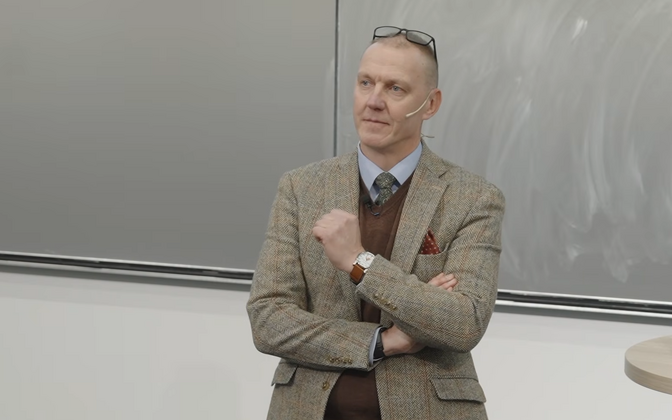
Speaking at a public lecture by Defense Minister Martin Herem at the University of Tartu, Maj. Gen. (retd) Veiko-Vello Palm said Estonia cannot meet its target of over 4,100 conscripts a year by 2040, adding women will help address that issue as well as bringing a degree of rational behavior to proceedings.
The issue of women conscripts has already been addressed in recent months; in general conscription has an effect long beyond the terms, around a year, personnel serve – as conscripts remain on reservist lists and are liable to attend annual exercises thereafter.
Palm said the challenge is renewing that reserve. "We could state that a 55-year-old today is the same as a 35-year-old in the old days, but at the end of the day that isn't really the case."" he said. "
"It seems we have no other option for renewing the reserves than a completely total conscription," Palm went on. Even now, with compulsory conscription, Estonia takes only a little over 50 percent of each male cohort for all sorts of reasons, he added. "Inevitably the drop-out rate before conscription is relatively high — whether because of mortality, which is fortunately low, or mainly health problems."
Palm said despite this Estonia's picture is not that bad compared with Finland's. "Finland, too, has universal conscription, but about 60 percent of each cohort reaches military training." Even matching that, he said, would not get Estonia to the required number.
As to the supposed physical standards objection sometimes raised by opponents of women conscripts, Palm said a young woman in good shape already meets every physical requirement as set out for men. "The first counter-argument is that men also have different physical standards" — the defense forces already accepts that a 50-year-old and a 22-year-old machine gunner are in different condition, despite carrying the same work on the battlefield.
Palm said a clear problem is physical dimensions, and that the state should therefore develop equipment suited to women. "This is especially important for personal protective equipment such as flak jackets, body armor and helmets," Palm continued.
Palm also argued that a larger share of women would bring more rational and logical behavior and thinking to the Estonian Defense Forces. "A share of women in the defense forces would undoubtedly be positive for defense leadership, but also for military decisions."
Former Supreme Court chief justice Rait Maruste argued in May that national defense obligations should apply to women as well, calling the male-only system discriminatory and saying modern defense includes many functions that do not require physical strength. Anu Rannaveski, director general of the Defense Resources Agency (KRA), said at around the same time that female conscription is "rather a question of when, not if," and by October that around 250 women serve on active duty and women "can handle any unit," including special operations, engineers and military intelligence. This year's intake was cut to about 700 from the usual 4,000 as a "gap year," with all 32 women who opted in accepted while two-thirds of male applicants were not — and both Defense Minister Martin Herem and current EDF commander Andrus Merilo, who succeeded Herem as commander-in-chief, believe female conscription should be encouraged yet remain voluntary.
Women in any case serve in the EDF as regular soldiers and in the volunteer Defense League and its women's counterpart, Naiskodukaitse.
--
Follow ERR News on Facebook and Twitter and never miss an update!
Editor: Andrew Whyte, Valner Väino


