Estonia lowers apartment building renovation support share
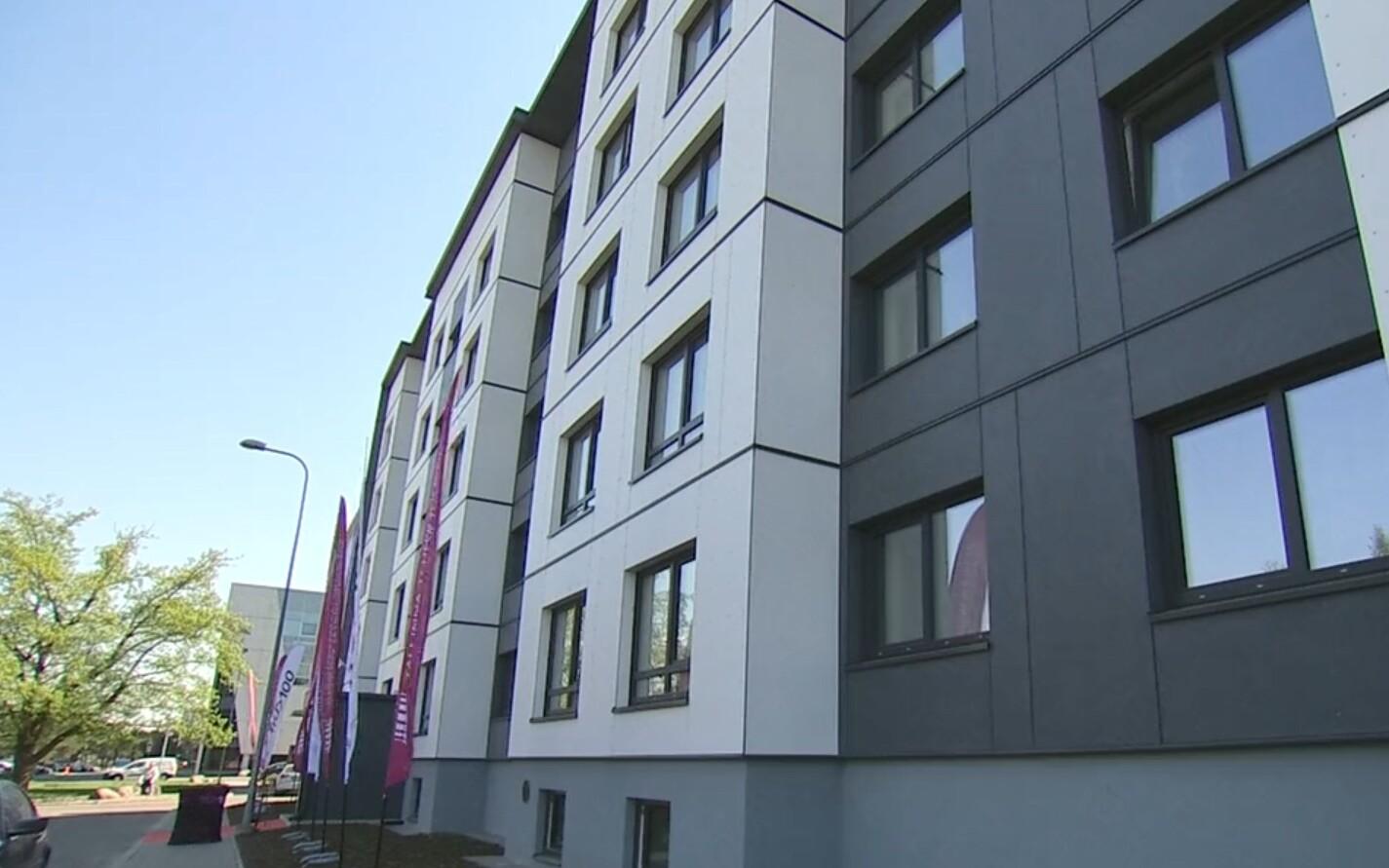
While government support for apartment building renovations has so far covered 30 to 50 percent of renovation costs, in the coming years the government will cover just 20 percent.
In previous years, apartment building renovations have been supported mainly with European Union funding. As one EU budget period is coming to an end and another is only beginning, a gap has emerged in EU funding.
Infrastructure Minister Kuldar Leis said the government decided during budget talks to cover that gap from the state budget, allocating a total of €160 million for renovations over the next four years. The first €80 million application round is expected to take place as early as next year.
However, the use of state funding comes with stricter conditions. Previously, for example, renovation grants covered a higher share of costs in rural areas than in Tallinn or Tartu.
Those differences will now disappear. Regardless of whether an apartment building is located in Kehtna, Valga or Tallinn, the grant will cover 20 percent of costs.
Leis explained that at this level, the grant is budget-neutral because the money returns to the state budget through taxes.
"In the future, the trend will be toward lower grant percentages. There are currently so many apartment associations that want to renovate and it has become so popular that as a country we can no longer continue with grants covering 50 percent or more of the cost. It simply isn't possible," Leis said.
Asked whether poorer municipalities or rural areas could fall behind wealthier areas in renovations with the grant set at this level, Leis said a great deal still depends on local initiative — in other words, whether people are interested in renovating or not.
"Current experience shows that the most successful places have actually been smaller towns, not major cities. In smaller towns, it is easier to reach an agreement and they have also had very strong local leaders who have driven apartment building renovations. In some towns — take Põlva, where I live — more than 80 percent of apartment buildings have already been renovated," he said.
The situation is not as rosy everywhere, however. Kohtla-Järve finance chief Aivar Kamal said, for example, that not a single building in the city has yet been fully renovated. That is despite the fact that four-fifths of the city's residents live in prefabricated apartment buildings.
On the one hand, apartment values in the Ida-Viru County city are low, making loans financially unviable; on the other, Kamal said older residents simply do not see a need for renovation.
"If the grant rate falls this low, interest here will probably be close to zero. No one is going to prepare a grant application and apply to the state for support for that amount of money," Kamal said.
Kamal said he believed Kohtla-Järve residents would only be interested in renovation if the state covered around 90 percent of the cost.
Andres Jaadla, head of the Estonian Union of Co-operative Housing Associations, said the government's decision has both positive and negative aspects. He said it was positive that the government was allocating at least some money for renovations. According to Jaadla, the last apartment building renovation grant round took place in fall 2025 when nearly 350 apartment associations missed out on funding because there was simply not enough money available.
"Apartment associations will certainly now have to consider whether, with grant amounts changed to this extent, they can reach agreements within their buildings and move forward with renovations. This reduction in the grant percentage is certainly something that will require serious discussion," Jaadla said.
Apartment associations also betting on EU money
Jaadla said that, based on interest from apartment associations, the amount of funding could have been several times higher — somewhere around €400 million to €500 million.
"That might cover the current demand from associations that have already completed their preparations for renovation. From our perspective, this amount is certainly not sufficient," Jaadla said.
Kuldar Leis said, however, that the €160 million in state budget funding will not be the only support available.
This fall, for example, the government agreed that €288 million from the European Union's next budget period, covering 2028 to 2034, could be directed toward apartment building renovations, or about €40 million a year.
That could be supplemented by another €186 million from the European Union's Social Climate Fund, provided Estonia joins the ETS2 emissions trading system. The government has been critical of ETS2, however, and wants it either scrapped or at least postponed.
By comparison, around €330 million was earmarked for renovation grants in the previous European Union budget period, covering 2021 to 2027.
--
Editor: Marcus Turovski, Urmet Kook