Rescue chief: Estonia short of more than 100 firefighters as pay lags

Estonia's rescue service needs around 100 more personnel, its deputy director has said, warning pay remains too low and the shortfall threatens response capacity.
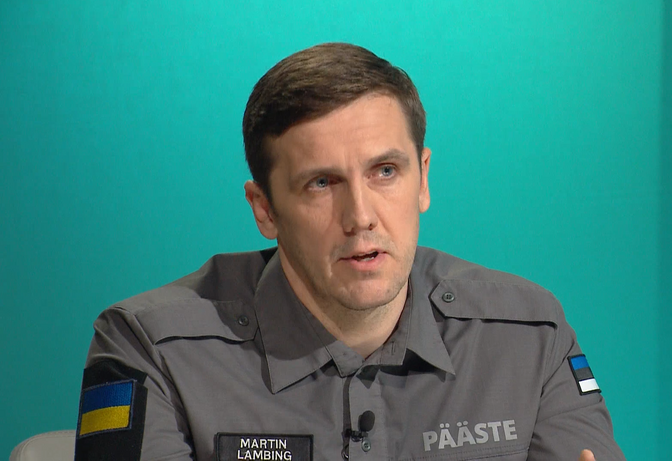
Martin Lambing, the Rescue Board's (Päästeamet) deputy director, said while the service has 34 unfilled positions officially, the real need is over 100
This would allow fully staffing four-person rescue and three-person ordnance disposal teams, he went on.
'Working at the current understaffed levels means crews at certain moments operate with as much as double a standard workload, and with it double the risk, a risk which can also be passed on to the public.
While the rescue service's wage fund received a small increase for next year, this is not a fair rise, Lambing went on.
Under the freshly announced 2027 state budget, firefighters' pay will rise €48 per month to €1,654.
"The pay rise — as far as the cost-of-living component goes — the fact that firefighters got a raise is welcome. But where the dissatisfaction comes in is purely related to the fact that when we look at firefighters' current and future pay and compare it to the average wage and how the average wage is moving, the gap is large and that shortfall keeps growing," Lambing said.
According to Lambing, a fair level for firefighters would be 1.2 times the national average. "That takes into account the risk of the work, the responsibility and the movement towards it. Today this pay and this pay rise certainly do not reduce that gap," he said.
Lambing added firefighters' work and civil protection as a whole are part of national defense, and that if firefighters were to leave their posts it would create a security risk.
"The risk arises simply because these people are highly qualified. They are skilled workers who know how to do this job, and such employees are not easy to find," Lambing said. "When a decision is reached and a person leaves, it is not the case that they go one day and come back the next. And for the rescue system that is a great loss, because they have been through very complex long-term training and if they have also been on the job for years, they are genuinely very competent people."
At the same time, Lambing conceded politicians have not had an easy task finding solutions.
"The Rescue Board, the Ministry of the Interior and also the union — we are actually standing for one goal: to move towards 1.2 times the Estonian average wage. Finding solutions for permanent funding for civil protection and valuing voluntary rescue in the same way — that is a common goal and joint efforts are being made towards it," he went on.
Lambing credited Interior Minister Igor Taro (Eesti 200), noting he has fought for firefighters' pay and for crisis preparedness.
Lambing added there are currently 1,700 professional firefighters, augmented by over 3,000 volunteers. Officially while there are 34 unfilled positions, including firefighters and crew leaders with higher-level qualifications to lead complex rescue events, taking a broader context including national defense needs into account, the shortfall is more than 100 personnel, Lambing concluded.
--
Follow ERR News on Facebook and Twitter and never miss an update!
Editor: Andrew Whyte, Aleksander Krjukov
Source: 'Esimene stuudio,' interviewer Andres Kuusk.



