Almost all forms of heating to become more expensive for Estonians this winter
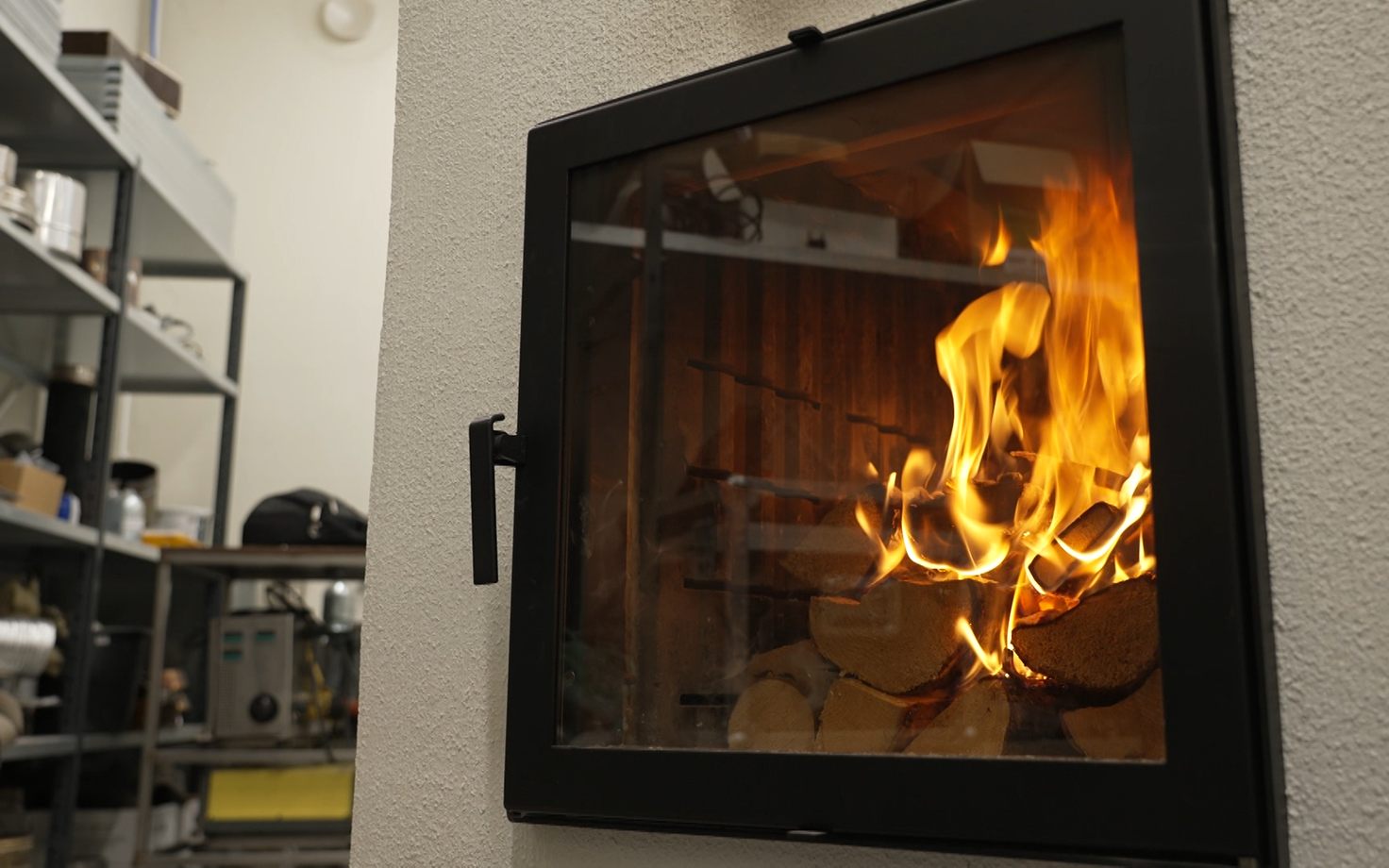
Prices for nearly all types of heating will rise as the heating season gets underway. The increase will be particularly steep for those who heat with natural gas, as its price on the global market has more than doubled.
Most homes in Estonia are heated by central heating, but wood-burning stoves, gas heating and heat pumps are also used. Global fuel prices have risen because of ongoing crises and this could have an impact on the cost of heating homes this winter.
Merike Kaljula, a longtime music teacher in Türi, still heats the more than 100-year-old house where she was born with firewood. Although firewood became more expensive this year, she believes switching to another type of heating would cost even more.
"I've been offered electric heating, like the heat pumps and everything they have now, but I don't want it. I bought my firewood at the beginning of May and it was €80 per cubic meter, and I bought 15 cubic meters. It is more expensive, but since I'm happy with Toosikannu, I'm not complaining," Kaljula said.
Mart Liivak, head of firewood sellers Harju Puu, said the increase in firewood prices over the past year has nevertheless been small because raw material prices have remained stable. There is a significant price difference between wet and dry firewood.
"The price of dry firewood may rise by 5 to 10 percent at most. When producing kiln-dried firewood, wood chips — which we use to heat the drying chamber — are a fairly significant expense for us. Electricity costs are also considerably higher. The lowest cost is for fresh, loose firewood, which explains the large price difference," Liivak said.
Wood pellets, however, are reaching record-high prices. They did not see their usual summer price decline because Estonia's pellet exports to Poland have increased by half.
"They had this Clean Air program, which helped quite a large proportion of people replace their wood-fired boilers, coal-fired boilers and old heating systems with more modern ones," Liivak said.
Central heating can be used to heat a row house or several apartment buildings at once. More than half of Estonia's residents, however, use district heating, through which heat producers supply large heating areas.
"We have eight district heating areas, including Tallinn and Maardu. Unfortunately, prices are indeed rising in five of the eight, with an average increase of around 10 percent. We've seen a relatively large increase in fuel prices. As for Tallinn specifically, the Iru waste-to-energy unit supplies heat to Tallinn residents and it raised its price by 6 percent this spring. Wood chips have risen by around 20 percent, by our estimate," said Robert Kitt, head of Utilitas Estonia.
The main culprit behind the price increases, however, is natural gas, which district heating companies use to produce between one-third and one-half of their heat. Compared with the previous heating season, the market price of natural gas has risen two and a half times because of the Hormuz crisis. Elenger is trying to keep its price increases smaller.
"The average price during the previous heating season was €0.54 per cubic meter and today it is €0.96. That's not a doubling," said Elenger Commercial Director Armen Kasparov.
Elenger has 15,000 customers who heat their homes with gas. Most live in detached houses, while 25 percent are apartment associations with their own boilers. The size of their price increase depends on the gas plan they use.
"If you've been on a market-price plan, that's the fairest comparison. You can expect an increase of 35 to 40 percent compared with the previous heating season, while district heating providers will also see some percentage increase," Kasparov said.
Narva is in the worst situation because the city's district heating system depends predominantly on gas. In a city where heating was inexpensive until recently, heating prices have now risen to the highest level in Estonia.
"There is one municipality in Latvia where it is even more expensive. They're at €150, while we're at €137 per megawatt-hour. And what's the reason? The price of gas," Narva Mayor Jaan Toots said.
Natural gas is currently more expensive than shale oil. Narva is asking the state for a special permit to use shale oil for heating this winter, saying residents could otherwise become unable to pay their bills.
"Thirty percent are pensioners and 13 percent are unemployed and both figures are considerably higher than in Estonia as a whole. And that hurts. Worst of all, of course, we have Khrushchev-era apartment buildings that, partly because of the residents themselves, have not been insulated or weatherproofed and have old windows, so the costs are enormous. Heating now eats up half the money pensioners receive. So this is a very serious problem for me as mayor and we hope the Environmental Board grants the exemption," Toots said.
The Environmental Board will issue Narva a special heating permit next week. Utilitas is also considering applying for one.
"As a provider of an essential service, continuity is naturally one of the most important things for us and we are seriously considering applying for permission to use other reserve fuels, including shale oil, should the need arise," Kitt said.
Utilitas will be able to reduce its dependence on gas to below 10 percent during the next heating season as a large-scale wastewater and seawater heat pump plant in Paljassaare nears completion.
--
Editor: Marcus Turovski, Aleksander Krjukov
Source: "AK. Nädal"



