Mikk Kasesalk: Estonian culture has no other refuge anywhere in the world
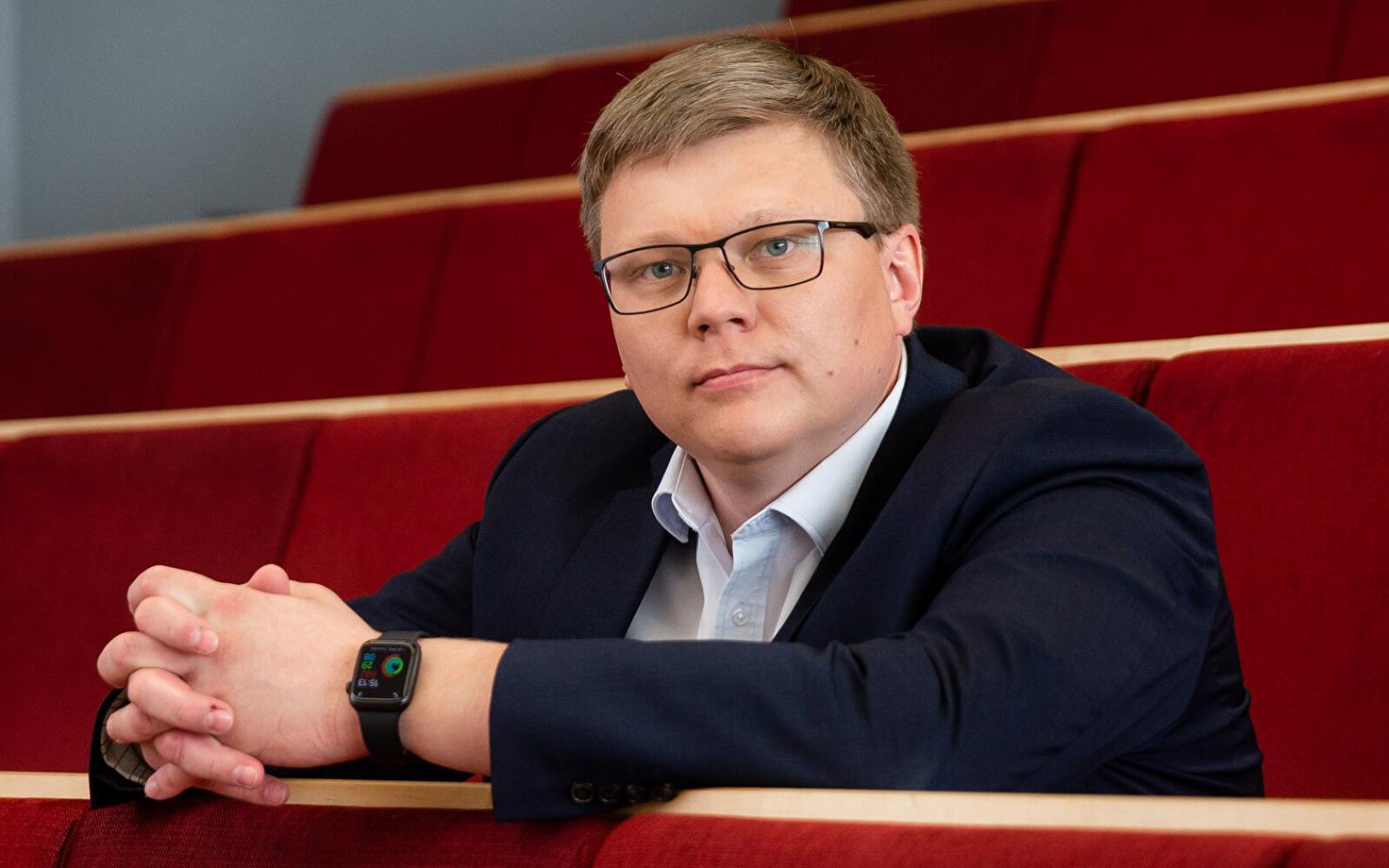
Estonia's competitiveness must largely rely on capable, educated people, but that idea is under pressure as the education system's capacity fails to keep pace with demand, writes Mikk Kasesalk.
Societies are held together not only by laws and institutions, but also by shared beliefs. When those beliefs are strong, we take many of the common obligations stemming from them for granted. When they weaken, we increasingly have to ask why we should take on those obligations at all and bear the costs associated with them.
I would highlight three convictions that have played a key role in Estonia's development:
- We must defend our country.
- Everyone is responsible and individual effort matters.
- Culture is a cornerstone of the Estonian state.
The annual drafting of the state budget provides the clearest indication of how important these convictions are to the government of the day and how it weighs them against one another.
We must defend our country
The story of a small nation that, against all odds, built a state of its own, lost it and then regained it through song is one of the deepest layers of our shared beliefs. That story has shaped Estonia's self-image and also strongly influences our thinking on security and foreign policy.
There is currently a very broad political consensus in Estonia on the need to rapidly increase defense spending. NATO and relations with allies are at the heart of our security policy, while the security threat posed by Russia gives defense spending an exceptionally strong position in state budget discussions.
The broader the political consensus on the necessity of a particular expenditure, the more important it is to maintain critical oversight of how the money is used. The need for defense spending does not mean that every defense expenditure is automatically justified. Even before the recent scandals in the defense sector, experts warned that money may have been allocated to defense faster than it could be put to effective use.
Every euro spent without justification undermines trust in government decisions and strengthens the hand of those who argue that public money is being spent carelessly. When it comes to national defense, there is no question whether the state is willing to pay for it — its importance is clearly reflected in the state budget. But the greater the spending, the greater the accountability must be for ensuring that it is justified.
Everyone is responsible and individual effort matters
After the restoration of independence, Estonia was built on the belief that a free market and individual effort lead to success. Estonia's competitiveness must largely rely on capable, educated people because we have neither vast natural resources nor historically accumulated wealth on which to build our success. That idea is now coming under pressure because the education system's capacity is not growing in line with demand. This is particularly evident in higher education where funding stumbles from one crisis to the next.
The promise of a society built on effort is credible only if people have a reasonable opportunity to develop their abilities and advance through their own efforts. The education system is one of the institutions that creates that opportunity. If capable people who are willing to work hard are denied educational opportunities for reasons beyond their control, the moral promise that "work hard and you will succeed" becomes less credible.
This spring, negotiations on administrative agreements between the education and research minister and the Council of Rectors raised the question of what will happen to young people graduating from high school in the coming years. Their numbers are higher than in previous years and there are not enough places for them in higher education. The problem did not emerge overnight. A few years ago, the same parties sought to resolve the long-term funding crisis in higher education, but the Ministry of Education and Research ultimately failed to fully pay the amount promised to universities under the agreement reached at the time.
During negotiations on the administrative agreements signed in May, it was agreed that universities would gradually add up to 1,000 study places a year over the next four years, while the education and research minister pledged to find €146 million to fund them and included that commitment in the state's next budget strategy.
If the additional funding is not found, increasing admissions will mean either dividing existing funding among more students or abandoning plans to create the additional study places. In either case, pressure on the capacity and quality of Estonian-language higher education will increase as demand grows.
This is where the principles of individual effort and state responsibility come together. The state cannot promise people that effort matters while failing to create the opportunities through which that effort can bear fruit. If we consider individual effort to be a foundation of Estonia's success, the importance of the education that makes it possible must also be reflected in the state's budget choices.
Culture is a cornerstone of the Estonian state
Estonian culture has no refuge anywhere else in the world, no place where it will survive if we ourselves do not value it. It is therefore difficult to understand why culture has been one of the areas expected to make additional savings year after year. Why is culture repeatedly among the first areas to come under pressure for cuts whenever the state's finances deteriorate?
Lennart Meri is credited with saying: "Culture is as important to society as vitamins are to the human body." The effects of a deficiency may not be immediately visible. The consequence of prolonged underfunding of culture may not be the immediate closure of an institution or the cancellation of an event. The shortfall may also manifest itself in existing activities being kept going at the cost of lower pay and heavier workloads for those working in the field.
Culture should not be seen as an expense that can be afforded only when there is money left over. Its value does not lie solely in what can be measured in ticket revenue, visitor numbers or economic impact. Culture also creates new meanings and connections through which society makes sense of itself.
That value cannot be totaled up in a spreadsheet. But the meanings that are never created and the bridges between people that are never built make the Estonia we collectively experience increasingly duller, poorer and easier to abandon. If culture is a cornerstone of the Estonian state, its place in the state budget must reflect that as well.
Inevitability or political will
How much can the Estonian state weaken the institutions through which the Estonian language and culture are passed on to the next generation before it begins to undermine the very rationale for its own existence?
The scale of the sums involved helps illustrate the choices we are actually talking about. Estonia's 2027 state budget amounts to about €20 billion. Defense spending will reach approximately €2.4 billion in 2026 and will account for at least 5 percent of GDP in the following years as well.
Covering the agreed increase in higher education funding will require €146 million over four years. There is no comparable overall figure for the needs of the cultural sector, but the entire budget of the Ministry of Culture's area of government is around €350 million a year. Purely to illustrate the scale, even if we were to use one-tenth of that amount as a point of comparison, we would be talking about roughly €35 million.
These figures do not mean that defense spending, higher education and culture are directly interchangeable items in the budget. They do show, however, that the sums involved are on very different scales. Scarce resources place limits on the choices available, but they do not predetermine how we choose among the options we have.
The budget is where abstract values become concrete choices. Every line in the budget is the result of someone's decision and many of those decisions could be made differently.
This brings us back to the three convictions mentioned at the outset. National defense protects the possibility of the Estonian state's continued existence. Education gives people the opportunity to develop their abilities and advance through their own efforts. Culture creates and carries forward the meanings through which society makes sense of itself. None of these can replace the others.
--
Editor: Marcus Turovski



