Government sets 2032 target for Rail Baltica's Tallinn–Pärnu section
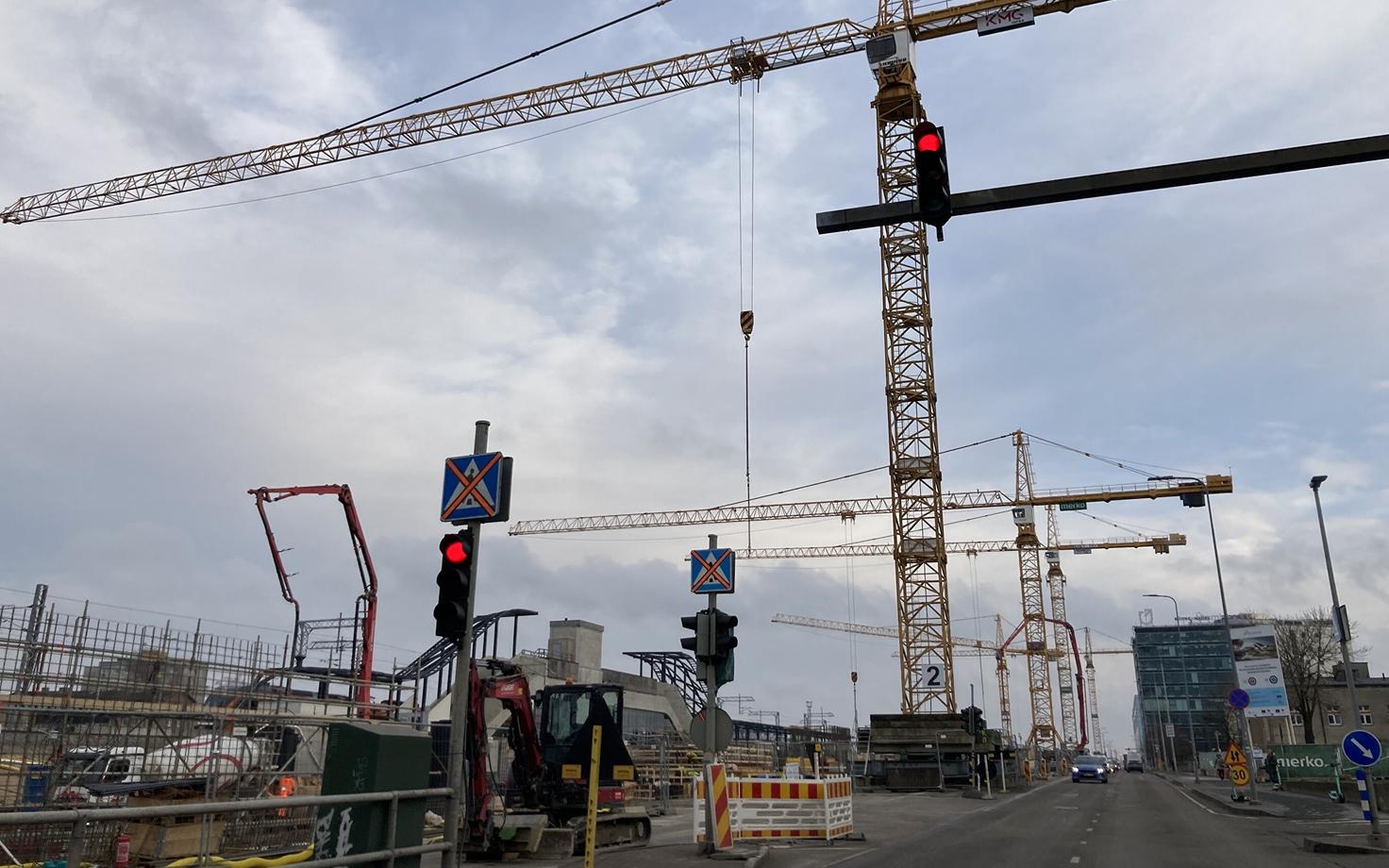
Although the completion of Rail Baltica is being postponed, work continues on the sections already started. The Tallinn–Pärnu section should be completed in 2032.
Martin‑Erich Torjus, adviser at the Ministry of Climate's communications department, confirmed that construction work already begun in Estonia will continue as planned.
"Construction is underway at the Ülemiste passenger terminal and on the Tallinn–Pärnu route over more than 100 kilometres. Planning of construction activity also continues along the rest of the route," he said.
Torjus noted that when starting new construction phases, the construction pace will be set in such a way that it allows avoiding overheating of the construction market, taking into account the progress of construction in neighbouring countries and, among other things, considering funding opportunities in the next European Union budget period.
According to Estonia's domestic plan, the Tallinn–Pärnu section will be completed no later than 2032, the Soodevahe–Muuga section in the north no later than 2033, and the Pärnu–Ikla section in the south no later than 2034.
Prime Minister Kristen Michal said that the works fall within the European Union's next budget period, 2028–2034. At the same time, he stressed that it is important that the Latvians also take on the obligation to finish their part by 2034.

Lower costs
According to Michal, postponing the works will result in lower costs.
"Put very simply: if we had done it faster, we would have had to borrow more money, the market would have been hotter and prices higher. By proceeding gradually, we can likely build more cheaply and, thanks to this budget period, use approximately €660 million more EU funding than we would have received if we had rushed," Michal said.
On Tuesday, the prime ministers of Estonia, Latvia and Lithuania confirmed in a joint statement that instead of the previously agreed 2030, the route crossing the three Baltic states will be completed in 2034.
Secretary of State Keit Kasemets wrote on social media on Thursday that the government did not cut Rail Baltica funding in the 2027 budget and in the 2027–2030 budget strategy.
"All funds previously foreseen in the budget are also in the budget now. Next year's funding is the largest ever — €541 million (1.15 percent of GDP). This is €32 million more than this year. In the following years, approximately 1 percent of GDP will be invested annually in Rail Baltica construction until 2030," he added.
The 2030 pace would have meant additional investments of 1 percent of GDP in both 2027 and 2028, Kasemets said. For the construction sector this would have meant very large volumes in a short time and then a rapid decline.
Kasemets added that he believes that in 2032 the train will depart from Ülemiste terminal to Pärnu, and in 2034 to Kaunas and from there onward to Warsaw.
According to initial plans, Rail Baltica was supposed to be completed in full by 2026.
Minister of Infrastructure Kuldar Leis said that the total funding requested from Europe by the Baltic states is €10 billion. Funding applications to the European Commission will only be made for the next budget period.
Construction timeline changes
Clarifying the completion stages now also changes the construction timelines somewhat.
Anvar Salomets, CEO of Rail Baltic Estonia, said that the intensity of ongoing work will not change, and regarding upcoming procurements they will be wiser once the precise construction schedule based on the submitted funding proposal has been completed. "It can be assumed that certain works on the priority section Tallinn–Pärnu will receive longer deadlines in upcoming procurements," he noted.
Salomets added that between Tallinn and Pärnu there is more than one hundred kilometres of active construction area and resources are loaded to the maximum. The new schedule therefore also slows down the current hyper-fast construction pace, he noted.
Additional EU financing for Rail Baltica not clear
The Estonian government's claims that postponing Rail Baltica's completion deadline will bring hundreds of millions of euros in additional funding from the European Union budget are not certain, because the new seven‑year budget (MFF) itself and the rules for using it have not yet been agreed upon.
"Funding for Rail Baltica's construction has mainly come from the Connecting Europe Facility (CEF), and it is a fund — unlike structural funds and other funds that Estonia has used, for example, to finance regional development — from which you are not given money for a project in advance. In other words, it is actually impossible to say beforehand how much money one project or another will receive from this specific fund," said Ave Schank‑Lukas, head of the European Commission Representation in Estonia.
Schank‑Lukas said that in the European Commission's proposed budget for the new period, CEF is indeed allocated twice as much money as in the current MFF — €51.5 billion — but its distribution will still take place on a project basis according to specific criteria and in competition with other applicants.
"It must be said that Rail Baltica has been one of the biggest beneficiaries from there (from CEF — ed.) and the project has actually progressed a great deal in recent years, which is why it has received money from the Connecting Europe Facility," she noted.
Rail Baltica is also included in the next budget framework, Schank‑Lukas added.
"But the conditions have not been agreed upon yet. It is not possible to state with full certainty how much money Rail Baltica will receive from there in the next budget period," she said.
This article was updated on 26 September with Ave Schank‑Lukas's comments regarding Rail Baltica funding.
--
Editor: Valner Väino, Mait Ots, Liisbeth Rats, Argo Ideon