Trans activists accuse state gender committee of bias and obstruction
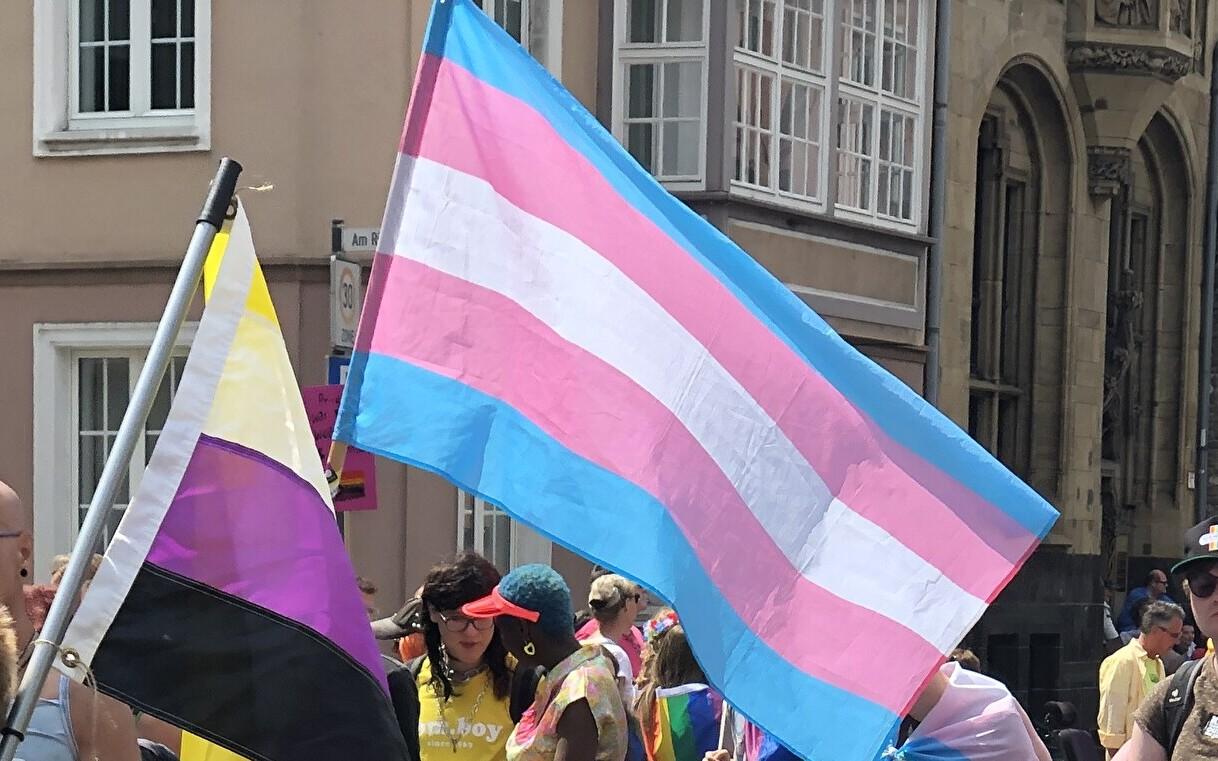
Trans activists in Estonia have accused the state gender reassignment committee of obstruction and bias, and are demanding that the committee's chair be removed.
ETV show "Pealtnägija" heard both sides of the heated dispute; the gender reassignment committee (Riiklikku soovahetuskomisjon) says its critics represent a small but vocal minority.
Appearing in the "Pealtnägija" segment which aired this week were Karmen Ott, 22, and Stephanie-Emma Zorianska, 27, both from Harju County, and Sona Kravtšenko, 26, from Ida-Viru County. All three were born as boys but had felt since childhood that this gender assignment was not right for them.
The upbringing for all three and the struggles with gender identity which accompanied this could each make for a long story of its own, "Pealtnägija" reported, but suffice to say that Stephanie, who was born into challenging circumstances and grew up in a foster family, "came out" at around the age of 15; Karmen told her parents two years ago, while Sona, whose family is devout Jehovah's Witnesses, only revealed her identity to her family last summer.
All three appeared on "Pealtnägija" under their own names and were going public for the first time, with all its associated risks. These were particularly great for Sona. Not only has her mother not accepted that the person she calls her son in fact identifies as a trans woman, but the segment will likely be the first time many in the Jehovah's Witness congregation the family belongs to will have heard about the situation.
More than that, in giving the interview, Sona says she risks being shunned by the Jehovah's Witnesses, a socially conservative sect, and even of her mother no longer speaking to her. "I do hope she will, but that risk is very real. The possibility that I'll be thrown out of my home and no one will speak to me anymore is also a very real risk."
However, the reason Sona, Karmen and Stephanie are publicly sharing their journeys is much bigger than even these personal struggles, they say – and go all the way to the committee itself.
"I think this entire process, the way it works in Estonia, is so drawn out. It is long, it is humiliating, it weighs on people who are already having a hard time, because we are a minority in Estonia. And it is clear that the whole point of this committee is not to help people, but to fob them off and waste time and simply hide them away somewhere," Stephanie said.
To understand these accusations, a detour into history is needed. While during the Soviet era such issues were taboo or even punishable as a criminal offense, just before the turn of the millennium and a few years after Estonia had restored its independence, a medical expert committee on gender reassignment was established under the auspices of the Ministry of Social Affairs. This would investigate whether to permit a person to change their gender in terms of officialdom – for instance Estonian ID codes start with a "3" if the holder is male and "4" if female, if born in the 20th century; those born from 2000 onwards similarly have a "5" (male) or "6" (female) at the start of their ID code.
Initially, the rules set up required genetic testing to prove that a person was transgender, a document signed by the minister authorizing the start of medical intervention and, finally, if desired, another appearance before the commission to change the first digit of one's personal identification code.
The committee's work was suspended for a year in 2021, and its chair also changed. The rules were then also streamlined: A psychiatrist's diagnosis that the person is transgender and one meeting with the committee have since then been sufficient to decide this; also that decision is signed off on by the committee chair rather than the minister.
The committee consists of 11 doctors and other specialists. At least three, and usually four of these attend each and every meeting. The meetings are held on the premises of the West Tallinn Central Hospital.
According to the official statistics, the number of applications for gender transition has more than quadrupled in just the past five years: From 42 applications in 2020 to 177 last year. Compared with the situation 10 years ago, however, the committee's workload has increased tenfold during that time: A decade ago there were just nine recorded gender change applications.
The committee is chaired by long-serving gynecologist and fertility specialist Kai Haldre. According to Haldre, most applicants are young trans men, ie. women seeking to become men.
The rise was in line with trends elsewhere in the world, Haldre said. "We knew that in Western Europe and elsewhere there had been a sharp spike from around 2013-2015. Gender dysphoria among teenage girls had increased so sharply that wait lines suddenly appeared in many countries, and we were also told: You'll see, you'll end up with long waiting lists of several years," Haldre said.
There is no single explanation for why the increase has been so large. A separate question is how far social media has contributed to the rise in applications. Although the committee has upped the frequency of its meetings several times, it is still struggling with the volume of work. It has the capacity to meet with around 150 applicants a year, giving an average waiting time of two years. This very fact drew criticism from the gender equality commissioner in summer this year.
Karmen cited her own case, saying that in 2024 she realized she had to do something. "So what had happened was that I put my name down for the commission, sent a letter, and then they replied that my commission appointment should be sometime in 2027. That made me very disappointed in our health care system," she said. In the end, Karmen sought help from a foreign clinic which prescribed hormone therapy for her.
Formally speaking, the committee merely confirms the diagnosis of transsexualism which had been previously made by a psychiatrist, which carries the code F64.0 under the official classification, but in practice, in many respects, gender transition cannot be carried out in Estonia without it. For example, a doctor can prescribe the hormone therapy needed for gender reassignment independently, but confirmation from the committee is nevertheless generally required. In addition, without it the population register will not change a person's personal identification code from male to female or vice versa.
Karmen nevertheless got an available commission appointment unexpectedly this spring, as well as permission to begin treatment. Sona, however, was so disheartened by the lengthy wait time that she sought treatment on her own initiative too. Stephanie meanwhile had been turned down about a decade ago on the grounds she was still a minor then; she, too, has now been on the waiting list for a lengthy period of time.
"For some time I was writing to them every month, but the replies were along the lines of: 'look, we don't have time and we can't, and, essentially, stop writing to us'. You're sent running from one place to another, and then you realize that in their eyes you're not even a person at all. By law, these people are supposed to be the ones who help, but there is zero help from them. The whole process is humiliating," Stephanie said.
Added to the humiliation is the fact that Stephanie was attacked in the Mustamäe district of Tallinn last winter, due to her appearance. While traveling to work and having applied light makeup, she noticed a young man taking pictures of her on the bus. When Stephanie remarked that it was not pleasant to be taking pictures of people, she was violently assaulted, and suffered a broken tooth.
The investigation into the assault fizzled out, and no suspect was apprehended. In the wake of the attack, however, Karmen, Sona and Stephanie set up an initiative group with like-minded people, and at the start of summer sent the ministry an extremely extensive request for clarification; the content of this questionnaire sharply criticized the medical expert committee in its current guise, and, in a short period of time, garnered 400 signatures from transgender people and their supporters.
Karmen said the most troubling issue was that under the new regulation, the committee's only requirement is for gender identity issues, yet medical professionals have said the committee should green-light procedures such as hormone XXX therapy. "You don't need to go there for hormone therapy or any other medical procedures. In practice, however, nothing has changed, as doctors still require it. We know of one specific case where a doctor refused to prescribe hormone therapy to a patient out of fear that they could go to prison as a result," Karmen said.
In addition to the long waiting times, transgender people have charged the committee with humiliating transgender people by requiring a diagnosis which implies a psychiatric illness, basing its work on outdated scientific research and being ideologically biased.
Haldre's response was that patient groups tend to develop their own "mythologies." "I've sometimes said, half-jokingly, 'you know, I'll do anything you want, but bring me an article. Bring it and show me where the evidence base is'," Haldre said, adding that the core group, which consists primarily of young people, may not understand how the medicine works or the logic behind it.
Haldre, who has fought for women's abortion rights for decades, said the nucleus of the critics consists not only of young transgender people, but of people who often have complicated family backstories, not to mention strong views. For example, Stephanie bore a sign at this year's Tallinn Pride which effectively told the committee to go to hell. One anonymous letter from an activist, however, was so threatening that Haldre felt she had to contact the police.
Another source of frustration for activists is that since obtaining the necessary treatment via official channels takes years, many young people turn to foreign pharmaceutical intermediaries, or even run the risk of obtaining hormones on the black market.
At the same time, doctors say they never refuse to prescribe any medication simply out of small-mindedness.
"If medical intervention is needed, if an endocrinologist assumes such great responsibility, including, so to speak, with off-label drugs or medications which are not intended for this and have never been studied for it, then they need broader confirmation. That is also the case from the standpoint of medical ethics, not to mention surgery in this field," Haldre explained.
The same core group recently began calling themselves "Transrinne" ("Transfront"), which "Pealtnägija" said was a signal move. They have authored pages of analyses and appeals, suggesting that the committee and its chair are biased. Among other things, several activists secretly recorded their appointments with the committee, to demonstrate what they say are regressive and irrelevant questions being asked there. One of the clearer criticisms is that the committee does not follow World Health Organization (WHO) principles in determining whether someone is transgender. They also criticize Haldre for links to organizations that they consider transphobic.
What particularly offends those involved is that being transgender was historically speaking classified as a psychiatric disorder, and even to this day is classified under the code F64 in Estonia's system, denoting a disorder. Internationally, however, it is no longer considered a disorder – for instance in the U.S. gender identity disorder was struck off the American Psychiatric Association's diagnostic manual in 2013; WHO officially removed being transgender from its list of mental disorders at the start of 2022. According to Haldre, the classification issue in Estonia is an administrative one and not a regressive one.
"Pealtnägija" communicated with Haldre on a continual basis in preparation for its reportage, both by phone and in writing. Clearly disturbed by the accusations, Haldre repeatedly recalled that the committee's previous chair, Imre Rammul, had stepped down partly because of similar criticism. Social Affairs Minister Dr. Karmen Joller (Reform), who "Pealtnägija" asked for comment, also warned that doctors should not be attacked personally. "There are few competent specialists, and involving them is made more difficult by the fact that committee members have come under intense pressure," Joller said.
There is, however, one thing the parties agree on: that the regulations could be changed so that the committee would no longer have to consider whether or not to allow the first digit of a person's personal identification code to be changed. The gender equality commissioner, Christian Veske, said he supports this idea.
"To my mind, this is wholly problematic. A medical committee, as the name infers, should deal with health-related, medical procedures, as it were. To then give that medical committee an additional function, on which a transgender person's ability to bring their documents into line with their identity hinges, is a major issue for me, and I personally consider it unfair," Veske said.
The original "Pealtnägija" report is here.
--
Follow ERR News on Facebook and Twitter and never miss an update!
Editor: Andrew Whyte
Source: 'Pealtnägija,' reporter Heliis Raudsik.