Rail Baltica deadline shift could help Estonia tap more EU funds
Construction on the Tallinn–Pärnu section will continue, but work on other segments can be postponed, says infrastructure minister Kuldar Leis.
Intense work is underway along the Rail Baltica route in Estonia. Builders have so far operated under the assumption that trains must be running by 2030.
The government's message on Thursday — that the railway's completion deadline may be pushed back by four years — saddened construction company TREV-2's CEO Sven Pertens.
"From a builder's perspective, it's very unfortunate," said Pertens. "Construction companies have built up their resources assuming the market would remain more or less stable. If there's no work, we simply cannot keep people on payroll waiting for the possibility that maybe years later something will come up."
About ten kilometers away, another builder Verston has carved the rail corridor through more than ten meters of limestone and is preparing to cross a bog. On such difficult terrain, extra time could allow for more cost‑effective solutions, said Verston Group CEO Veiko Veskimäe.
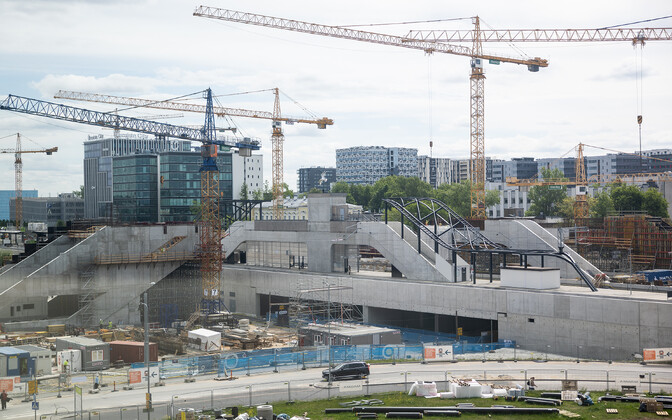
Tallinn-Pärnu section is the most mature
"I just visited the project office and asked the site manager what the biggest problem is right now. Naturally, he said they're short on trucks," Veskimäe noted.
Rail Baltic Estonia believes that extending deadlines could cool the construction market and allow the project to rely more on EU funding.
"A longer construction period would certainly ease the situation, making it possible to build kilometers at a more reasonable price," said Rail Baltic Estonia board member Lauri Ulm.
A delay would also affect train procurement. After the failure of its first tender, Elron is preparing a new one. Elron CEO Lauri Betlem wants new trains to begin operating within Estonia by 2030.
"I think we should stick to the proposed deadline, mainly because the project becomes more expensive with each passing year," Betlem said.
Although Latvia's construction pace gives little hope that trains could run beyond Ikla by 2030, the Tallinn–Pärnu section could be completed by the end of the decade.
"The Tallinn–Pärnu section is the most mature. Construction is underway across nearly the entire stretch," Ulm said.

Minister: We must decide what's sensible
Estonia's infrastructure minister Kuldar Leis said that revising the plan requires approval from Brussels.
"On Sunday and Monday, the three Baltic transport ministers will meet in Ireland at the gathering of European transport ministers. We'll discuss this again to ensure all three Baltic states act in the same way," Leis said.
"We must look at the entire process as one whole and bring all components together. First, whether Estonia is capable of finishing by 2030. Second, our southern neighbor Latvia has not given a clear signal about their ability to continue building. Third, the EU funding period is 2028–2034. If we truly finished by 2030, a large portion of EU support would go unused. Putting all this together, it makes sense to slow the pace now," Leis explained.
The minister said the plan remains to finish the domestic section — Tallinn to Pärnu — earlier. "The regional train tender will be relaunched immediately. We are not slowing down work on the entire route. Since construction on the Tallinn–Pärnu stretch is progressing very rapidly — over 100 kilometers where work is actively underway — that will continue. But south of Pärnu, and also from Ülemiste terminal toward the port in Tallinn, we can delay the start of work."
Leis added that early next week the Baltic prime ministers will also meet to discuss Rail Baltic's new timeline. "Much depends on Latvia — whether they will specify a year or not. Once the three Baltic states agree on our shared capability, we will negotiate with the European Commission on the pace of Rail Baltica. The European view is: agree among yourselves, say what you can deliver, and complete Rail Baltica."
--
Editor: Johanna Alvin, Argo Ideon


