Experts: Russia's elections have no impact on Estonia
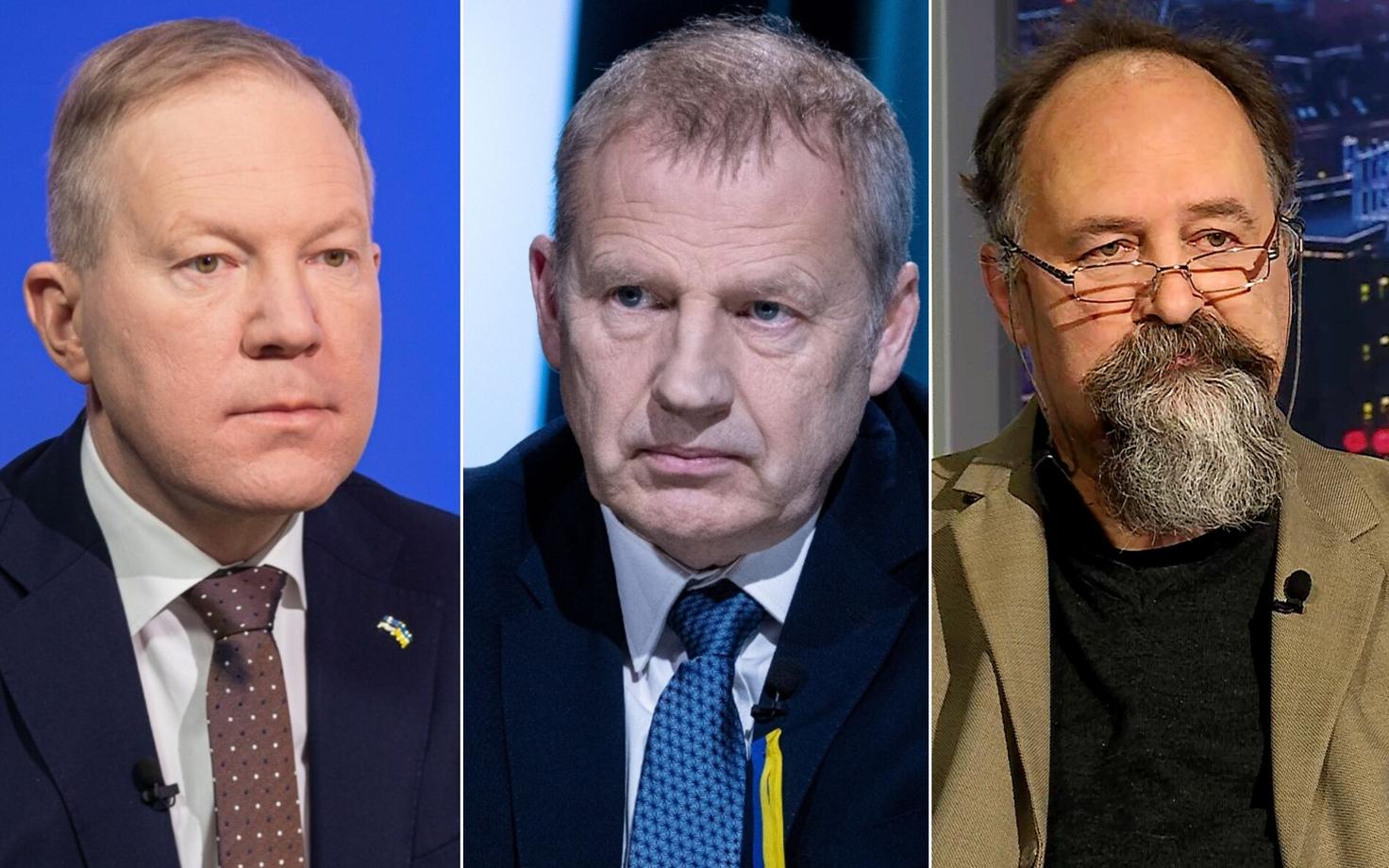
The pseudo‑elections that began in Russia on Friday do not directly affect Estonia, according to foreign‑policy experts Rainer Saks, Karmo Tüür and Marko Mihkelson. What is interesting, they noted, is how many Russian citizens living in Estonia will go vote for the State Duma.
"I don't see any direct connection to Estonia. This is an internal political event in Russia, and no major political shifts should be expected," security expert Saks told ERR on Friday.
"Directly nothing at all. Since nothing depends on these elections, nothing will change as a result," added Russia analyst Tüür.
"I think it's exactly the same as for everyone else," said Mihkelson, chair of the Riigikogu Foreign Affairs Committee, when asked about the possible impact of the Duma vote. "Estonia is not an exception here. These are not real elections. It's an imitation. (…) Our clear understanding is that this process does not in any way make Russia's so‑called parliament legitimate."
Saks noted that after the new Duma is formed, changes in the Russian government are possible, but major political shifts should not be expected.
"There are two potentially interesting questions: how the new government will be assembled — there are no strong hints — and whether mobilization will follow or not. But I don't see any direct impact on Estonia," Saks said.
Mobilization seen as unlikely
The experts were not convinced that Russia — which has failed to achieve decisive success in its war of aggression against Ukraine — will launch a new mobilization after the voting procedures, despite recent media speculation.
"Thanks to Ukraine's strong communication campaign, the question has arisen whether a new mobilization will follow the Duma elections. As we've seen, Russian leaders — especially President Vladimir Putin and several senior officials — have denied this quite categorically, unusually categorically," Saks said.
However, he added that Russia's military leadership is likely pushing for another mobilization wave.
"If toward the end of the year Russia's leadership sees that there is truly no progress on the front, and if Ukraine is more successful militarily, then one could imagine mobilization being carried out. But right now there are no clear signs," he said.
"In the short term, definitely not. Even if it's announced — which I personally doubt — the question is whether it would actually be implemented," Tüür said. "Pressure to mobilize may increase, but whether it will be officially declared, I doubt."
Even if larger recruitment happens, it would not mean much for Estonia in the near term, Tüür added: "Those citizens who are recruited will be sent first and foremost to fight in Ukraine (…) and nothing changes for us."
"If someday the war in Ukraine ends or is paused — that could change the situation and be a worrying signal about what might come next. But right now — the election show ends, they recruit another hundred thousand people across Russia — that is not a signal aimed at us. It simply means the same thing continues, maybe with more intensity," Tüür said.
Mihkelson, however, considered a larger mobilization wave in Russia possible.
"There has been a lot of speculation for some time about when exactly the number of mobilized or recruited people might rise. Russia's problem is clear: on the Ukrainian front they lose more men each month — killed and wounded — than they can recruit," Mihkelson said.
"And if the goal is to increase military pressure on Ukraine and possibly raise the threat level toward NATO, they may well do it."
He noted that laws enabling mobilization in Russia already exist, and additional mobilization could be carried out quietly, without public announcement.
Participation of Russian citizens in Estonia is telling
The experts emphasized that attention should be paid to how Russian citizens living in Estonia behave during the Duma elections.
"The only thing that is as interesting for us as in previous years is how many Russian citizens consider it necessary to participate in this circus. And if we could somehow know how they vote, that would also be interesting," Tüür said.
"Of course we must monitor participation among Russian citizens living in Estonia who have the opportunity to take part in this performance. Everyone who goes to vote in this so‑called election show demonstrates their support for the [Ukraine] war. It's very black‑and‑white — everyone who participates supports it," Mihkelson stressed.
According to the experts, Russia's leadership organizes elections — even if they do not meet democratic standards — to reinforce the appearance of legitimacy.
"It's a ritual that every regime, even the most undemocratic ones — North Korea, China, and so on — carries out from time to time to show others and themselves that they are legitimate rulers, that the people supposedly want them to govern," Tüür said.
Mihkelson pointed to the Russian constitution, which the authorities try to imitate adherence to.
Russia uses elections to project legitimacy
"Unfortunately, Russia's recent and distant history shows that what is written in the constitution is often an illusion for domestic or foreign audiences. And through this they try to show that elections supposedly take place in Russia — look, Ukraine doesn't have elections, but Russia does — so Russia is a 'democratic state' and everything happens according to the constitution," he said. "Again: Russia has not had free elections for a very long time. We should not pay much attention to this, because decision‑making remains in the hands of the dictator, and what happens in the Duma has absolutely no significance for decisions made in Russia."
Saks also highlighted the leadership's desire to ensure legitimacy and constitutional continuity, which is extremely important for Russia.
"Those who rule now remember the Soviet era and remember that although the political system was supposedly democratic and centered on the ordinary person, in reality they did the opposite and no political or personal freedoms were respected," Saks said. "They definitely want to create the impression that their system has public support, and they genuinely want the public to support the political system in Russia."
He added another aspect: "Another important point is that through these elections they try to understand what matters most to Russians right now, what bothers them most. They try to gather feedback and draw conclusions. We see that China also works hard to understand what people are most dissatisfied with, to address at least some of those concerns and show that the authorities respond to expectations."
"So for them this is a serious political process. They are not laughing about it among themselves," Saks said.
Russia's so‑called parliamentary elections, held 18–20 September, are the first since the aggressor state invaded Ukraine in February 2022.
--
Editor: Mait Ots, Argo Ideon