Mart Meri: 'Silverwhite' stayed with my father until the end
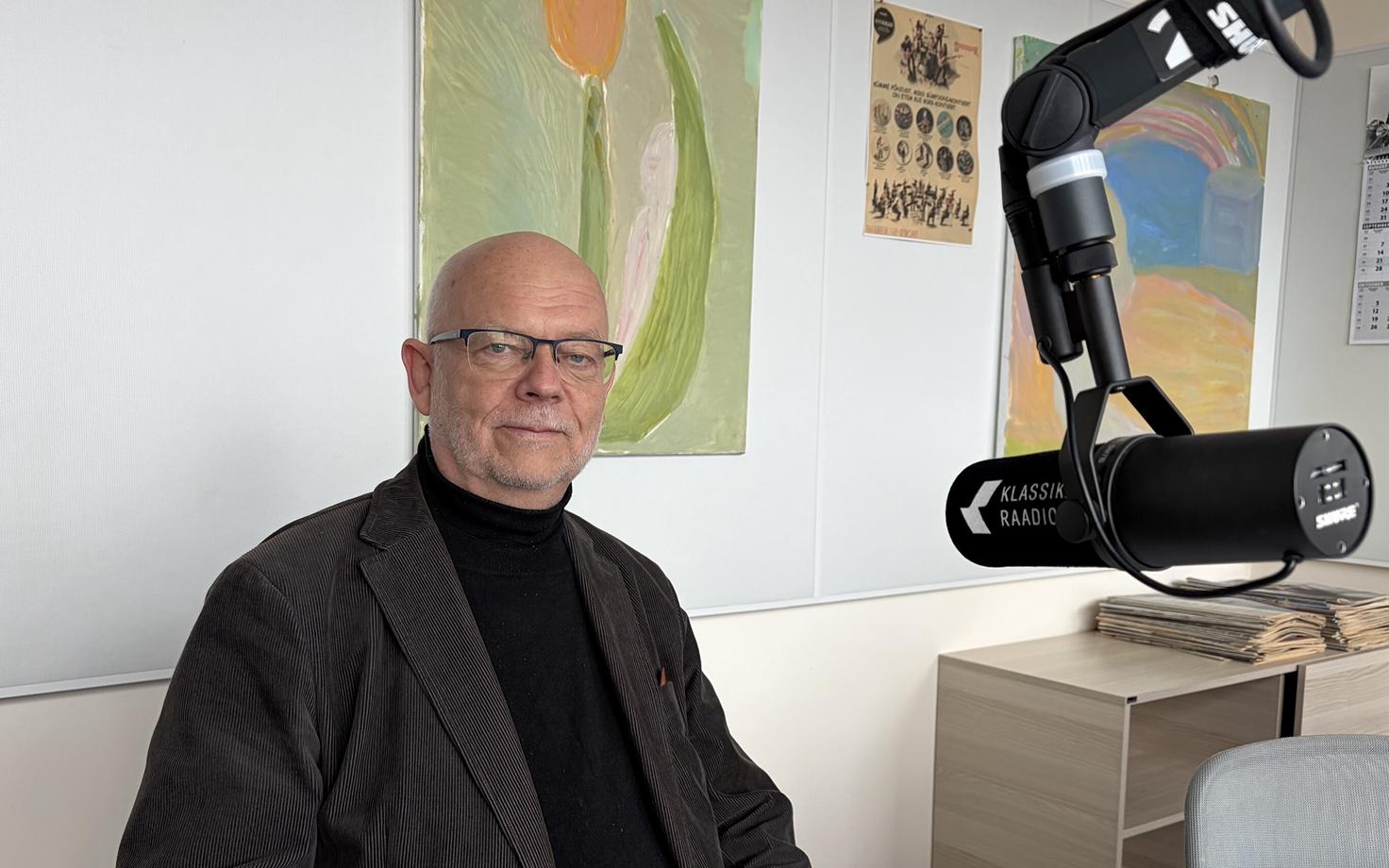
Philologist Mart Meri says the themes of "Silverwhite" stayed with his father, Lennart Meri, until the end of his life, surfacing even in his presidential speeches.
This year marks 50 years since the publication of Lennart Meri's book "Silverwhite" ("Hõbevalge"). On this occasion, an exhibition of the same name was opened on Friday at the Seaplane Harbour in Tallinn, and next year a feature film directed by Martti Helde will reach the public.
Mart Meri recalled that his father had been a very curious person all his life, and that curiosity is also an important part of the birth story of "Silverwhite", because between the covers came together, among other things, geography, history, seafaring, agriculture, botany, and zoology.
"He never brushed things aside when something very interesting was available somewhere to see, hear, or read. Apparently, piece by piece he gathered on his writing desk, beside it and on the shelves, a mosaic from which he began weaving his silver‑white fabric."
Meri clearly remembers how his father worked on the book at night. "Often it was so that when I went to school at eight in the morning, he came to the door with a surprised face and asked where I was going now. When I said I had to go to school, he wondered whether it was already that late. That means he had been in his 'Silverwhite' world the whole night," he described.
When the book appeared in 1976, it stirred quite a bit of passion in academic circles, and historians in important positions did not know how to react to it, Meri recalled.
"I think at the Institute of History they organised a literary court where they wanted to analyse 'Silverwhite' and show that it was rubbish. I remember some atmosphere at home — Lennart also had many historian friends who supported him wholeheartedly, and two camps emerged. I think they discussed what to do with that meeting. Lennart said, well, let's see. He was advised not to go. But he did it so that he deliberately arrived a little late, when the meeting was underway, and sat in the front row and began looking the speaker straight in the eyes. Because of that, the speaker felt uncomfortable and ended his vigorous criticism, and somehow the matter subsided without Lennart having to say a single word. Such tensions were in the air. In fact, they have continued through all these decades."
At the same time, Mart Meri knows that the writer consulted many scholars both from Estonia and abroad while writing the book.
"Something like: is his hypothesis likely or is it ruled out. When those academic people said that, well, we don't know, can't rule it out, then that was enough of an argument for Lennart. If it can't be ruled out, then it could have been so. Some probability that things were like that exists," he explained, adding that since Lennart Meri was by education a historian, he combined the historian's view with the writer's freedom.
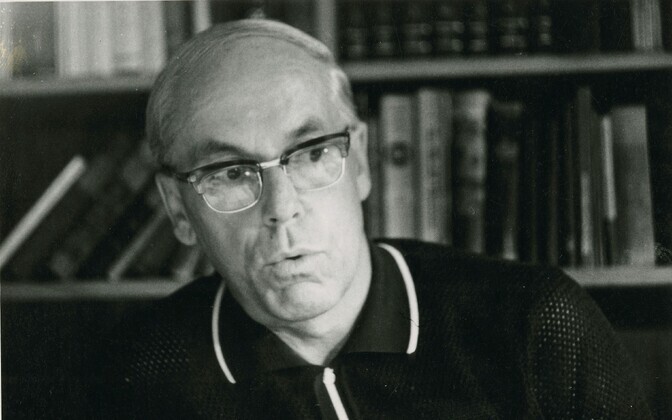
How much censorship ordered "Silverwhite"to be changed, Mart Meri does not know exactly. "But I think his text was so detailed, so complicated for the censor, that they eventually gave up," he reasoned. "There was a different approach to history, and especially in those years in Soviet Estonia it seems that this was very important for the people."
The most important theme in "Silverwhite"for Lennart Meri was Pytheas. "When we once discussed that 'Silverwhite' could be republished, he first shook his head and said, ah, who needs that. I pressed him a little, saying the books are already hard to get and people keep asking whether 'Silverwhite' could be read again. After long consideration he said, let's throw out the ballast, keep Pytheas. That shows that the Pytheas story was the most important for him, because it was also the most dramatic and most vivid story in 'Silverwhite'," Meri explained.
Mart Meri believes that one reason "Silverwhite" was born was the wish to heal Estonians. According to him, the book's title also hints at this — silver‑white is silver dust scraped from a silver ornament. In the past, it was scraped so that the dust fell into hollows in a sacrificial stone where rainwater had collected. Since silver has been considered a purifying substance, the resulting water was considered healing.
"It seems to me that the title refers to Lennart's wish to heal Estonia's historical understanding and give people a healing dose through this book. A philosophical approach, but I think in his case it is not impossible that he wanted to give breadth," he reasoned.
Eight years after the publication of "Silverwhite", Meri published "Silverwhiter" ("Hõbevalgem"), which according to the author is the introduction and first chapter of "Silverwhite". Later the two works were also published together under one cover.
"When in 2005 we talked about a new edition of 'Silverwhite', we even began looking at the two books together, what to do with them, what to leave out, what to combine. At first we did it as a trio: Lennart, me, and Urmas Sutrop, but then time ran out. The topic remained on the table for Urmas and me, and we thought what to do: the author's wish was to republish it, but in what form, that remained unclear. We did not consider it possible to start thinning it or rearranging it ourselves, but since one of his aims was still to make one new book, we found a somewhat mechanical way — we stitched 'Silverwhite' and 'Silverwhiter' together, also considering his remark that 'Silverwhiter' is the first chapter of 'Silverwhite'," Meri described.
"Silverwhite" stayed with Lennart Meri until the end, and he also mentioned its themes in his speeches as president.
"Once in Sweden, in one speech he spoke about the Kaali crater, Pytheas, Saaremaa, the wind, and called on Swedish scientists and circles to help start new archaeological excavations around Kaali. This theme stayed with him until the end," said Mart Meri.
The book "Silverwhite: The Journey to the Fallen Sun" by Lennart Meri has been also published in English. It was translated by Adam Cullen.
--
Editor: Karmen Rebane, Argo Ideon



