Retailers: People are buying less fuel each time they fill up
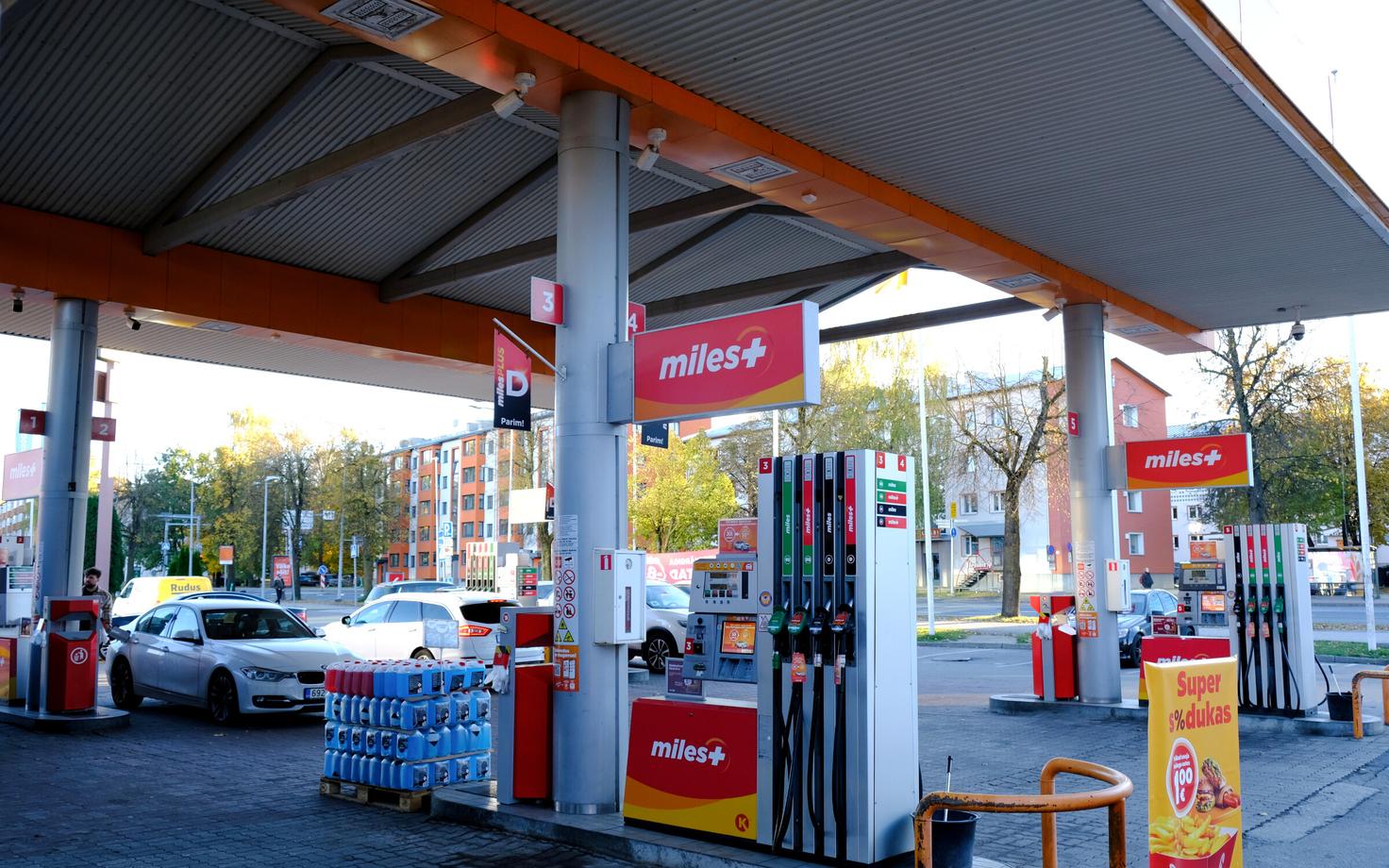
Fuel retailers' data shows that drivers are buying significantly smaller amounts of fuel at a time in the hope that prices will come back down. Fuel retailers, however, say prices are likely to remain high for some time.
High fuel prices have not yet prompted people to drive significantly less. However, drivers are buying less fuel each time they fill up and are therefore visiting gas stations more often, hoping prices will be slightly lower the next time around.
"Over the past couple of weeks, prices have been higher than they were in August. The biggest effect on ordinary consumers is that they are buying less at a time, which means they fill up more often during the month. For the most part, necessary trips are still being made," said Tarmo Kärsna, head of business development at Alexela.
"Spending on fuel has actually increased in monetary terms because fuel has become more expensive. Consumption in liters is broadly similar to last year — perhaps slightly lower overall — but people are filling up more frequently. People are certainly not keeping their tanks full either. Instead, they tend to drive with less fuel in the tank in the hope that fuel prices will fall again tomorrow," said Raimo Vahtrik, motor fuels sales director at Circle K.
Fuel retailers do not currently expect prices to fall quickly.
"We have to take into account that high prices will be with us for a longer period. The conflict is still ongoing and has, if anything, escalated, while inventories have declined at the same time and the heating season is approaching. In that sense, diesel in particular is currently the biggest concern both in Europe and globally. Inventories are low and that is certainly having the greatest impact on diesel prices," Kärsna said.
If high prices persist, their impact will no longer be limited to higher fuel bills for drivers. Rising diesel prices increase transportation costs, which then feed through into the prices of goods and services.
"Goods are generally transported by diesel-powered vehicles. There is a concern that high diesel prices could start spilling over into everything else. Estonia is one thing, but there is also the broader European picture. If we look at eurozone inflation, there is now speculation in the market that the central bank may be forced to raise interest rates again, perhaps even twice. That would feed through into borrowing costs. So there are more ways in which today's diesel prices could begin to affect people's lives than just what we see at the gas station," said Mihkel Nestor, an economic analyst at SEB.
"Average fuel purchases in liters have fallen slightly because people generally spend about €50 on a single fuel purchase. At today's prices, that buys around 22 to 23 liters of fuel, compared with almost 30 liters during the same period last year, when fuel was considerably cheaper," Vahtrik said.
According to the European Commission, a liter of gasoline cost an average of €2.063 across the EU on September 14, while diesel averaged €2.159 per liter. Based on the latest average prices, filling a 50-liter gasoline tank costs about €103, while filling a diesel tank costs €108.
Both figures were the highest since the European Commission began collecting data in 2005. The previous peak for gasoline was recorded in 2022, while diesel prices last approached their current level in April of this year.
Diesel fuel cost €2.3 per liter in some Estonian filling stations on Monday.
--
Editor: Marcus Turovski, Johanna Alvin
Source: "Aktuaalne kaamera"