Estonia's defense agency takes Datasel dispute to Swiss arbitration

Estonia's Center for Defense Investments (RKIK) is fighting Datasel in arbitration in Switzerland over a terminated Ukraine ammunition deal, with legal costs hitting hundreds of thousands.
The disputes are being heard under the rules of the International Chamber of Commerce (ICC), according to ERR's information. The RKIK has taken disputes over several contracts to international arbitration, with one joint contract dispute before Harju County Court — together worth a reported €59.8 million.
"Arbitration fees alone — the fees ultimately paid to the arbitrators and the arbitration institution for administering the proceedings — amount to hundreds of thousands," said lawyer Paul Keres, who is among the arbitrators representing Estonia at the ICC. Experts and lawyers' fees will add significantly more, he added, though the payoff is a faster and more specialized decision.
Keres said Swiss arbitration was a good choice. "Swiss arbitration is by no means a bad option: they are efficient and very good. I have been there myself, and everything is very well organized," he said.
Keres said taking disputes to arbitration is as yet not particularly common in Estonia.

"It is not as common as in some countries that have enjoyed democracy for longer. But there are more and more of these disputes, and they are becoming bigger and more interesting. Estonia is also gaining more representatives who know arbitration proceedings and are competent in the field. So I think we are moving in the right direction," Keres said.
Contracts often name the court in advance; without such a clause, cases go where the defendant is based. Datasel is incorporated in Italy, though its owners are Indian.
"What may cause confusion is who the owners are. If it is an SRL, I believe it is still an Italian company registered in Italy — by that logic, the case would have to be brought in Italy. But if it is an Indian company, you would have to go to India. I am glad for my colleagues that they do not have to deal with it. It is so confusing and fragmented, really very complicated," Keres said.
According to Keres, a case can end up in arbitration in two ways: "Firstly, it may have been agreed in advance — the contract contains a separate arbitration clause stipulating that the parties will resolve their dispute through arbitration. A proper arbitration agreement also specifies where the arbitration will take place, which institution will administer it, how many arbitrators there will be, and so on. Secondly, it is also possible to reach such agreements after a dispute has arisen. The contract may not provide for arbitration but, for example, for the jurisdiction of an ordinary court, yet the parties may decide that, for whatever reason, it would be more practical to resolve the dispute outside the courts, usually through arbitration," Keres explained, adding that an arbitrary award has the same legal force and is just as binding and enforceable as an ordinary court judgment.
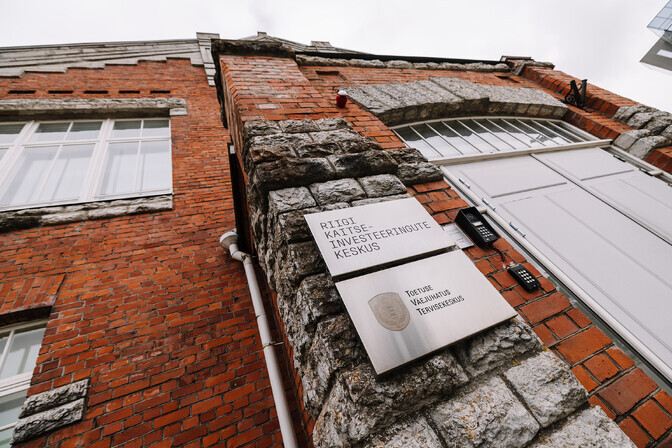
"There are simply elements of speed and perhaps specialization that may persuade the parties that arbitration makes more sense," Keres said.
"Usually, the parties have greater control over the proceedings, starting with who adjudicates the case — they can choose the arbitrators themselves. The course of the proceedings is more under the parties' control, generally confidential and usually faster than national courts. In addition, some institutions that administer arbitration, such as the ICC, offer particularly strong supervision and intensive review of drafted awards," Keres said.
This review ensures the award is well reasoned, logical and free of errors, and cannot later be challenged even on the narrow grounds on which arbitrary awards may be contested.
Keres declined to speculate on the outcome: "It could turn out that the Estonian state has to pay additional money, or it could turn out that the advance payment is recovered. Both sides have filed claims: there is a claim and a counterclaim."
Background
Datasel, an Italian firm acquired in 2024 by Indian-owned Neco Defense Munitions, signed four contracts with RKIK to supply artillery shells for Ukraine with roughly €70 million paid up front, but delayed and substandard deliveries led the RKIK to terminate the agreements and pursue legal action; none of the ammunition reached Ukraine.
The RKIK has now rejected Datasel's proposal for a joint working group, saying the European Peace Facility funding period has expired and it has no budgetary resources to accept further ammunition, while Datasel's lawyer insists the company has the resources and supply chain to fulfill its obligations — the two sides also remain at odds over whether the terminations were valid.
The fallout contributed to Defense Minister Hanno Pevkur's resignation on September 2, alongside wider accounting and oversight problems at the Defense Forces.
Auditor General Janar Holm said the defense scandals pose no security threat and that open discussion makes Estonia stronger, but warned several problems are systemic and money flowing into the sector is increasing confusion.
--
Follow ERR News on Facebook and Twitter and never miss an update!
Editor: Johanna Alvin, Andrew Whyte