Hanno Pevkur: I leave knowing we got things done instead of sitting around
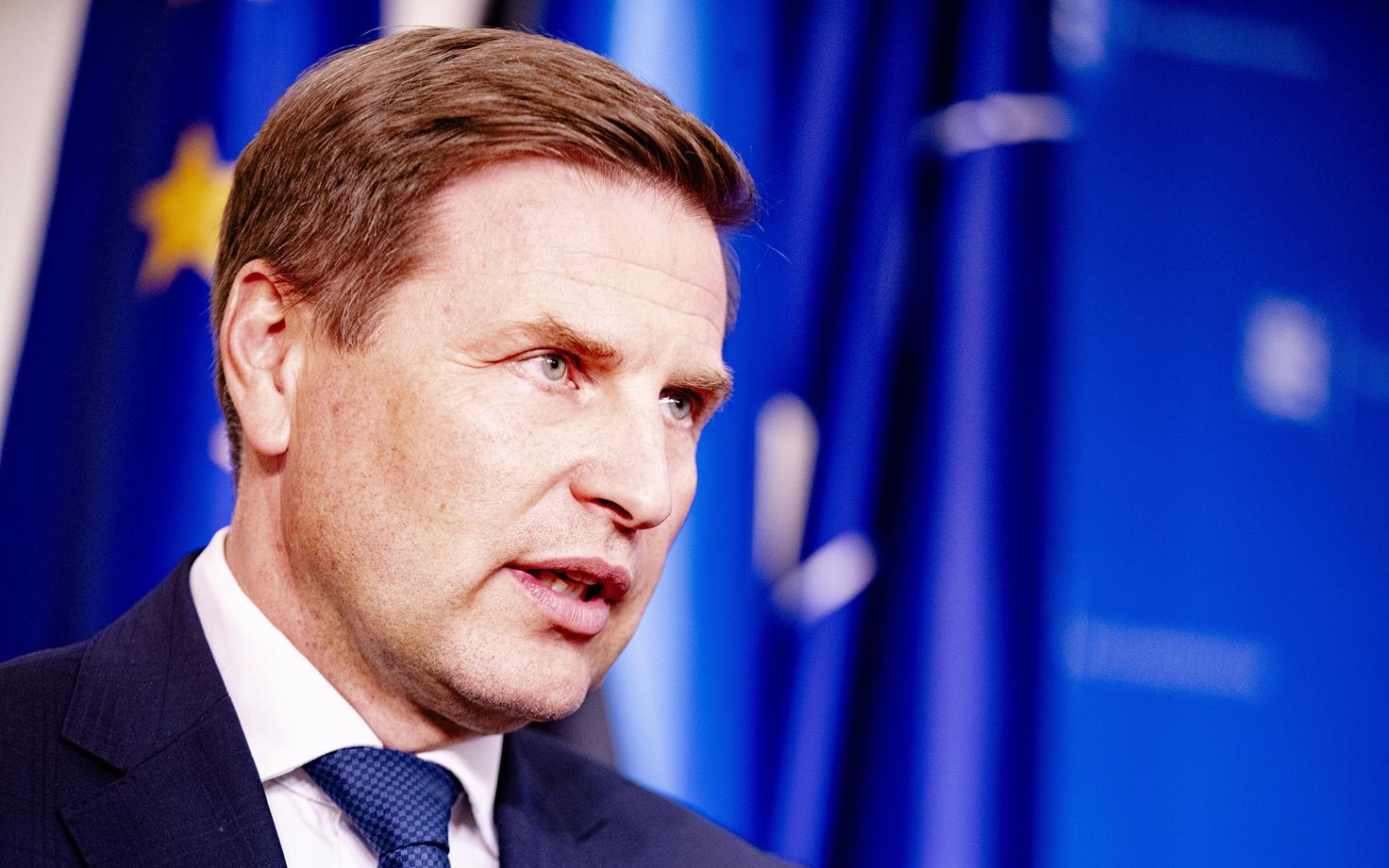
If Estonia or European taxpayers were defrauded while helping Ukraine, prosecutors must establish that, not politically charged Riigikogu committees, said outgoing Defense Minister Hanno Pevkur.
"A nation is defined not by what it has, but by what it believes in," Anton Hansen Tammsaare once said.
I believe in Estonia. I believe in our right to be free. To decide our own future. To speak our own language. To preserve our culture and raise our children. And to do all of this in a free Estonia. But the past four years have reminded us very clearly of one simple truth: Believing in freedom is not enough. We must know how to preserve it. And, when necessary, we must know how to defend it.
On February 24, 2022, Russia launched its full-scale war against Ukraine. A war aimed at taking away another nation's freedom. That day changed Europe.
For Estonia, it was not a wake-up call. We were already awake. For years, we had been saying that the threat from Russia was not theoretical. That political solidarity alone was not enough to defend NATO's eastern flank. That deterrence had to mean real military power. But once the war began, there was less time. From that moment on, the question was no longer simply what Estonia needed for its defense. The question was how quickly we could acquire what we needed and turn it into military capability.
Now, after four years at the Ministry of Defense, I can say with confidence that Estonia is stronger. Estonia is better armed. Estonia is better defended. And Estonia has never been more closely integrated with its allies than it is today. But we are not finished, because national defense is never finished.
Defense starts from the first meter
The War of Independence taught us something we must never forget. It is easier to hold on to your land than to take it back. That is why Estonia's and NATO's defense posture has changed significantly over the past four years.
Our goal is not to wait until the enemy is on Estonian territory and only then start thinking about how to drive it out. Our goal is to defend Estonia from the first meter. That is not just a nice turn of phrase. It changes how we plan, what weapons we buy, where our allies are stationed and how we train. Above all, it changes the message we send to a potential aggressor. The message is simple: Every Estonian city, every village, every island and every meter of Estonian soil is ours and, together with our allies, we will defend it at all times and at any cost.
To put this principle into practice, the Estonian Division was established at the end of 2022. The division is not simply a new headquarters or another box in the Estonian Defense Forces' organizational chart. It gives us the ability to command the defense of Estonia as a whole, bringing our brigades, territorial defense forces, artillery, air defense, intelligence, engineers and logistics under a unified command. And it brings our allies under that same command structure. Because the defense of NATO also begins in Narva, Võru, Valga, Pärnu and Tallinn, and on our islands.
The second major change over the past four years is firepower. Just a few years ago, Estonia had limited ability to strike an adversary farther beyond our borders. Today, the picture is different. We have K9 self-propelled howitzers, CAESARs and HIMARS. We have loitering munitions. We have more and more drones, increasingly capable intelligence and targeting capabilities and we are developing our own deep-strike capability.
Why does this matter?
Because war must be kept away from the people of Estonia. We must be able to strike an adversary's command posts, logistics, weapons systems and troop concentration areas before they can reach our people. That is the point of deterrence. An adversary must know that the cost of aggression will be unbearably high. And the more certain it is of that, the less likely it is that we will ever actually have to use these weapons.
Estonian skies must be protected
The war in Ukraine has also taught us that the modern battlefield extends everywhere. While the impact of aircraft and helicopters is diminishing, the threats posed by the growing use of cruise missiles, ballistic missiles and, of course, drones have increased many times over.
That is why, in recent years, we have taken one of the most important steps in developing Estonia's defense capabilities: We are building a multilayered air defense system. We have strengthened and will continue to develop our short-range air defense. We have Mistral and Piorun systems at our disposal, as well as interceptor drones. The IRIS-T medium-range air defense system has arrived and we are in the final stages of selecting a ballistic missile defense system.
This is a major change. But here, too, we must be honest with ourselves. Air defense requires continuous development. Drone technology evolves in a matter of months. Weapons systems change. Electronic warfare changes. We must change at least as quickly. We cannot prepare for the next war using only the weapons of the last one.
The sea also falls into out protected space
The same is true at sea: Our security does not end at the shoreline. The Baltic Sea connects us with our allies. People and goods move by sea. The seabed is home to connections on which our daily lives depend.
That is why we have also strengthened our maritime defense in recent years. The Blue Spear anti-ship capability represents a strategic shift for Estonia. We have also developed our naval mine capability and maritime surveillance capabilities.
Our geography is something we cannot change, but it does not have to be a weakness. With the right capabilities and strong allies, it can be our strength. And to ensure we have the right capabilities, a decision must be made in the coming months on the types and number of new vessels. We must build as much of these new vessels as possible in Estonia, and to keep the Navy focused on its core mission, my recommendation would be to transfer responsibility for marine pollution response from the Navy to the State Fleet.
Weapons are useless without ammunition
A few words, too, about ammunition, which has been the subject of much discussion in recent years. The fact is that a modern weapons system without ammunition is ultimately just an expensive piece of metal. That is why we have decided to increase Estonia's ammunition stocks very significantly.
Between 2022 and 2029, approximately €5 billion has already been invested in ammunition or is earmarked for ammunition purchases. That is an enormous figure, but it is even more important to understand what it means. We are not simply buying shells and missiles. We are buying staying power. We are buying the ability to fight not just on the first day, but for as long as it takes to defend Estonia.
Man still the most important weapons system
Now we come to the most important part of Estonia's national defense. It is not HIMARS. It is not the K9. It is not IRIS-T. It is not Blue Spear. Our greatest defense capability is our people. The conscripts who receive the best possible training to defend their country. The reservists who report for training exercises. The active-duty service members for whom defending Estonia is a daily commitment carried out with dedication. The members of the Estonian Defense League, including the Women's Voluntary Defense Organization, Young Eagles and Home Daughters, who contribute voluntarily. And also the rescue workers, police officers and others who contribute to Estonia's defense every day.
I would also call an employer who understands and supports an employee who has to attend a military exercise a defender of the country. And every family that understands why a mother or father sometimes puts on a uniform and leaves home is likewise contributing to national defense. In 2024, I told people who had devoted decades to national defense that without our people, our own capabilities and those of our allies are nothing more than pieces of metal.
I believe that even more strongly today. Behind every weapon stands a person. And behind that person stands society. The cornerstone of our defense capability is our will to defend. It cannot be bought from abroad. It must be cultivated at home. At school. In the family. In the community. And it must be sustained every day.
Yes, Estonia's independent defense capability is our first responsibility. But we are not alone. We are a member of NATO. Here on Estonian soil, service members from the United Kingdom, France, the United States and other allied nations serve shoulder to shoulder with our own. They do not wait for a crisis to begin before coming to Estonia. They are already here. We plan together, we train together, we know one another and, if necessary, we will fight together. That is NATO's strength. Not just Article 5. Not just signatures on a treaty.
A potential aggressor cannot look at Estonia and see a small country of 1.3 million people. It must see the most powerful military alliance in the world. At the same time, the presence of our allies does not mean relinquishing our own responsibility. The more we contribute ourselves, the stronger NATO is. The stronger Estonia is, the stronger NATO is.
And that collective strength of NATO naturally comes at a cost to taxpayers. In four years, Estonia's annual defense budget has grown from €780 million to €2.4 billion. That is more than 5 percent of our national wealth and it has represented a historic effort for Estonia because we must never forget where that money comes from. It comes from the work of the people of Estonia and it comes from our businesses. We make this investment so that the people of Estonia can live in peace. So that businesses have the confidence to invest. So that families have the confidence to build homes. So that a child can go to school in the morning without wondering whether their country will still be free tomorrow.
And as I have said before, freedom does not come free. Or, to put it even more simply: The purpose of increased defense spending is to preserve freedom and peace.
Ukraine is also fighting for our security
We have also decided to direct part of this defense spending toward supporting Ukraine's fight for freedom because we cannot talk about the development of Estonia's defense capabilities without talking about Ukraine. Ukrainian soldiers are fighting for their homes. For their children. For their freedom. Ukraine has shown us what the will to defend means. It has shown us the importance of drones. The importance of air defense. The importance of artillery. The importance of electronic warfare. The importance of logistics and ammunition. But the most important lesson is much simpler.
You cannot start preparing for war on the day the war begins. By then, it is too late. Every reservist we train. Every missile and shell we put into storage. Every drone we learn to use. Every ally we train alongside. Every defense industry company whose production capacity we expand today. All of this helps ensure that Estonia never has to experience what Ukraine experienced on the morning of February 24, 2022.
Is Estonia ready now?
We have learned from Ukraine and as a society we have made a major effort to increase defense spending. One might ask whether our national defense is now ready. My answer is that we are more prepared than ever before, but our work is not finished.
We must continue developing our air and missile defenses. We must expand our drone and counter-drone capabilities. We must develop electronic warfare. We must increase our ammunition stocks. We must strengthen the border and build defensive fortifications. We must develop our own defense industry. And above all, we must take care of our people because Estonia's greatest weakness would not come from having one fewer weapons system. Estonia's greatest weakness would emerge if we ourselves no longer believed that this country was worth defending. We must never allow that to happen.
Politics
The past few weeks have been turbulent for Estonia's national defense and for me personally. I decided to take political responsibility and pass the baton as defense minister. The political firestorm of recent weeks has been considerable, but I leave with my head held high, knowing that I have contributed as much as I possibly could to developing Estonia's national defense and helping Ukraine, and knowing that we took action rather than sitting idly by.
I thank everyone with whom we have worked to develop Estonia's national defense. It has been quite a ride on some very stormy seas, but it has all been about keeping Estonia safe. Before I go, I want to highlight a few issues.
First, aid to Ukraine.
Estonia's choice in recent years has been to support Ukraine to the greatest extent possible. We have also sought to lead internationally so that the Ukrainian people have the opportunity to defend their freedom. At Estonia's initiative, the European Union agreed with unprecedented speed on the initiative to provide Ukraine with 1 million artillery shells. The capability coalitions supporting Ukraine likewise grew out of the artillery coalition launched by Estonia. Estonia put the initiative to devote 0.25 percent of GDP to supporting Ukraine on the international agenda, we signed a drone agreement with Ukraine and much more.
The Ministry of Defense has played and continues to play a central role in organizing this assistance. No one has ever denied that and, naturally, as defense minister, there were heightened expectations of me in everything concerning aid to Ukraine. Did this entail risks? Of course.
After all, we were procuring ammunition that Russia was also seeking to procure and we were buying it from places and suppliers that often did not want their involvement in helping Ukraine to become known. It was entirely logical that, as minister, I kept myself informed about the current status of aid to Ukraine because it would not have been possible to do otherwise.
Every month or two, I attended meetings of the Ukraine Defense Contact Group, the so-called Ramstein group. Every six months, I traveled to Ukraine. On top of that, there was direct international communication, including with my Ukrainian counterpart, as well as expectations within Estonia that we provide Ukraine with more support, faster. At every one of these meetings, the recurring question was what more we could do and when we could do it. Expectations for supporting Ukraine were extremely high in Estonia, in Ukraine and internationally.
As minister, I have always stood unwaveringly behind support for Ukraine and I will continue to do so. It is clearly in Estonia's security policy interests for Ukraine to receive as much assistance as possible, as quickly as possible. Many people have worked extremely hard toward that goal, certainly including the then-leaders of the Estonian Center for Defense Investments (RKIK).
With Estonia's help, hundreds of millions of euros' worth of ammunition has been delivered to Ukraine. That is a fact and I believe we have thereby saved hundreds if not thousands of Ukrainian lives. It is regrettable that some companies have failed to fulfill their promises and I sincerely hope that Datasel, above all, understands that its actions mean another Ukrainian defender lost with each passing day.
I hope that was precisely what prompted Datasel to send an email to members of both the government and the Riigikogu at noon Monday, confirming its desire to resolve the dispute through negotiations. If the company can demonstrate that commitment through its actions, that is very good because Ukraine needs ammunition. If not, litigation over the breach of contract will continue, as will, certainly, the investigation led by the European Public Prosecutor's Office.
In other words, if European taxpayers or Estonia have been defrauded in the course of providing this assistance, it is for prosecutors and investigative authorities to establish that, not politically charged Riigikogu committees. We are six months away from elections and the Kremlin would dearly like to see us fighting among ourselves when the cause of these problems lies outside Estonia. Instead of arguing among ourselves over who did what on which date, we should be working out how to provide more help to Ukraine. The opposition should understand that as well.
Second, political culture.
Estonia is a democratic country. Among other things, that means the separation of powers and the need to understand the responsibilities that come with public office. The Riigikogu's role is not to conduct criminal proceedings, although it is certainly appropriate for it to demand answers about the government's actions. I would like to see constructive, substantive debate in parliament, rather than political point-scoring at any cost.
I am fairly certain that, following my departure as defense minister, the new defense minister should not expect anything good from the opposition. I would not be surprised if we start hearing questions during Question Time or parliamentary interpellations such as, "You were the commander of the Estonian Defense Forces when problems with the accounting of assets and stocks emerged, weren't you?" Or, "How do you explain going directly from the Defense Forces into the defense industry and now straight back again — in other words, making a 360-degree trip through the revolving door in a very short time?" Or, "What do you have against Kaimo Kuusk?"
Instead of questions like these, parliament should actually be focusing on questions such as, "How will the development of the fleet proceed?" and "When will the contract for ballistic missile defense be signed?" The danger of sinking into a quagmire of old grievances instead of focusing on substantive defense policy is clearly apparent and that does nothing to advance Estonia's national defense.
For that reason, I wish Martin Herem strength and stamina for the next six months. It certainly will not be easy for him to prove that, as defense minister, he is not simply the commander of the Estonian Defense Forces in civilian clothes. Anyone leading Estonia's defense policy must understand that it does not belong to any one official, any one general or any one institution.
Defense policy must transcend party lines because we have only one Estonia to defend and the task of the country's leaders is to instill confidence in society, not uncertainty; to increase the sense of security, not fear. People expect confidence and calm leadership from their leaders. Security threats, too, must be discussed honestly and directly, but this must be done responsibly, with a clear distinction between facts and risks.
We must show that Estonia is prepared to protect its people, work with its allies and respond calmly and decisively to potential threats. Fear does not make a society stronger. Trust, preparedness and unity do.
Finally
We cannot choose our geography. We cannot choose our neighbors. And we cannot choose what the world around us becomes. But we can choose how we face that world. With fear or with confidence. Alone or together. Hoping that nothing will happen or prepared to make sure that nothing does.
Estonia has chosen preparedness. Not because we want war, but because we want peace. We want Estonian children to be able to grow up in a free Estonia. To speak Estonian. To be able to choose who they want to become and, when they go out into the world, always know that they have a place to come home to.
That is what we are really defending: Estonia. Not just 45,000 square kilometers of land. Not just a border. We are defending our ability to be who we are. We are defending our language. Our culture. Our memory. Our families. Our right to decide for ourselves. Our future.
But we also know that freedom means responsibility. Responsibility for each of us, but also for political parties, politicians, officials and the media. The responsibility to distinguish what matters from what does not. The responsibility not to drag national defense into everyday political squabbling. The responsibility to keep populism and the deliberate amplification of Kremlin propaganda out of national defense. The responsibility to act as a statesman.
Let us not forget that those making decisions for our country today also have a duty to pass Estonia on to the next generation as a free country. I sincerely hope that every decision-maker and politician thinks carefully and measures their words ten times before launching a populist political battle over national defense. Because the fact is that every unnecessary dispute and every amplification of Kremlin narratives undermines our unity and sows hatred in society.
I am deeply convinced that this is the wrong path. It divides and weakens our people. I am equally convinced that the people of Estonia want to see the steady development of our national defense and to know that what they themselves are contributing to is worth their contribution. And that is precisely why I am stepping down with my head held high, because I know that over the past four years, our national defense has developed in the right direction. Our Defense Forces are stronger. Our alliances are stronger. Our arsenal is stronger. And our will to defend is strong. Let us preserve that will. Let us look after one another. Let us protect Estonia.
The comment is based on a speech given at the Riigikogu on Tuesday, September 15, 2026.
--
Editor: Marcus Turovski


