Former agency head: Defense minister actively involved in Datasel dealings
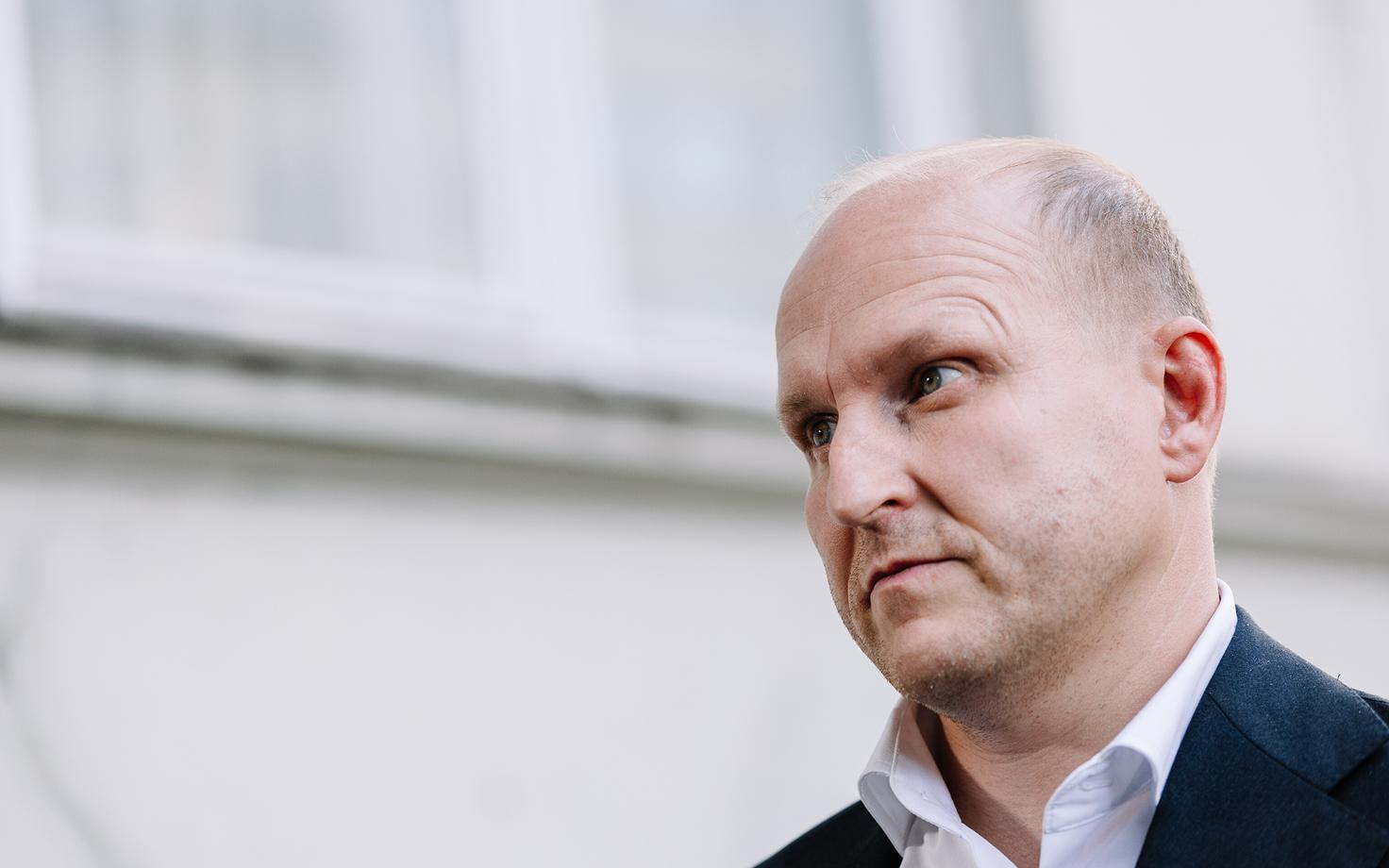
Former Estonian Center for Defense Investments (RKIK) Director General Magnus-Valdemar Saar has alleged that outgoing Defense Minister Hanno Pevkur personally pushed for several defense procurement deals and rejected a proposal to halt the arrangement.
Former Estonian Center for Defense Investments (RKIK) Director General Magnus-Valdemar Saar and outgoing Defense Minister Hanno Pevkur (Reform) were due to attend a special parliamentary committee hearing on Monday, but neither appeared. Saar said that because the European Public Prosecutor's Office has launched an investigation and he is unable to verify facts against documents, he would prefer to answer questions in writing.
The most significant part of Saar's eight-page explanation concerns Defense Minister Hanno Pevkur's role. Saar claims that the defense minister was not a hands-off client in this area who simply waited for reports.
"He personally brought forward and actively proposed deals, intervened in negotiations over contract terms, delivery schedules, the size of advance payments and prices in at least one major case, in some instances negotiated directly with the supplier, urged that payments be expedited after contracts had been signed and gave the contracting authority guidance during discussions held practically every week."
Responding later to follow-up questions, Saar said the final two deals in the Datasel case were concluded at Defense Minister Hanno Pevkur's personal initiative.
"The minister also had a specific interest in concluding the deals through the Greek company Nordeto. RKIK was urged to conclude the contracts quickly, with the short validity period of the offer cited as the reason. By that point, delays in deliveries under the first contracts had already been reported."
According to Saar, Nordeto was unknown to RKIK and, to his knowledge, its business activities were not connected with ammunition or defense-related goods.
"The offer had been sent privately to Defense Minister Pevkur. I am not aware of how the defense minister satisfied himself as to the partner's reliability and capabilities. RKIK did not enter into a contract with this intermediary. RKIK entered into a contract with the business entity as close as possible to the origin and ownership of the goods (the general principle), which in this case meant Datasel."
Saar was also asked whether businessman and Reform Party member Jaanus Rahumägi may have played any role in the matter.
Special committee chair Urmas Reinsalu asked: "Delfi has reported on Jaanus Rahumägi's ties to Defense Minister Hanno Pevkur and reported in August 2025 that Defense Minister Hanno Pevkur was in Greece where he spent time at Jaanus Rahumägi's villa and, among other things, met with the Greek defense minister. To your knowledge, were arms deals discussed during this visit, and if so, which ones?"
Saar replied briefly: "I had left office by then and am not familiar with the topics that were discussed."
Minister reluctant to stop mediation
Saar's explanation also shows that, while serving as RKIK director general, he made a formally recorded proposal to end the intermediary arrangement and return funds not covered by contracts.
"In late winter/early spring 2025, RKIK submitted a written proposal to a defense minister's decision-making meeting to stop concluding contracts in this manner and return funds not covered by contracts. Defense Minister Pevkur rejected the proposal and ordered procurement to continue. The minutes of the relevant decision-making meeting are held by the Ministry of Defense and I assume the committee will have an opportunity to review them in writing."
Saar added that the decision showed the minister clearly understood both the need to support Ukraine and the risks associated with providing that support and was by no means unaware of the details of how the aid was being brokered.
ERR was unable to reach Hanno Pevkur for comment by phone.
--
Editor: Urmet Kook, Marcus Turovski


