PM addresses opposition's defense procurement criticism in public letter
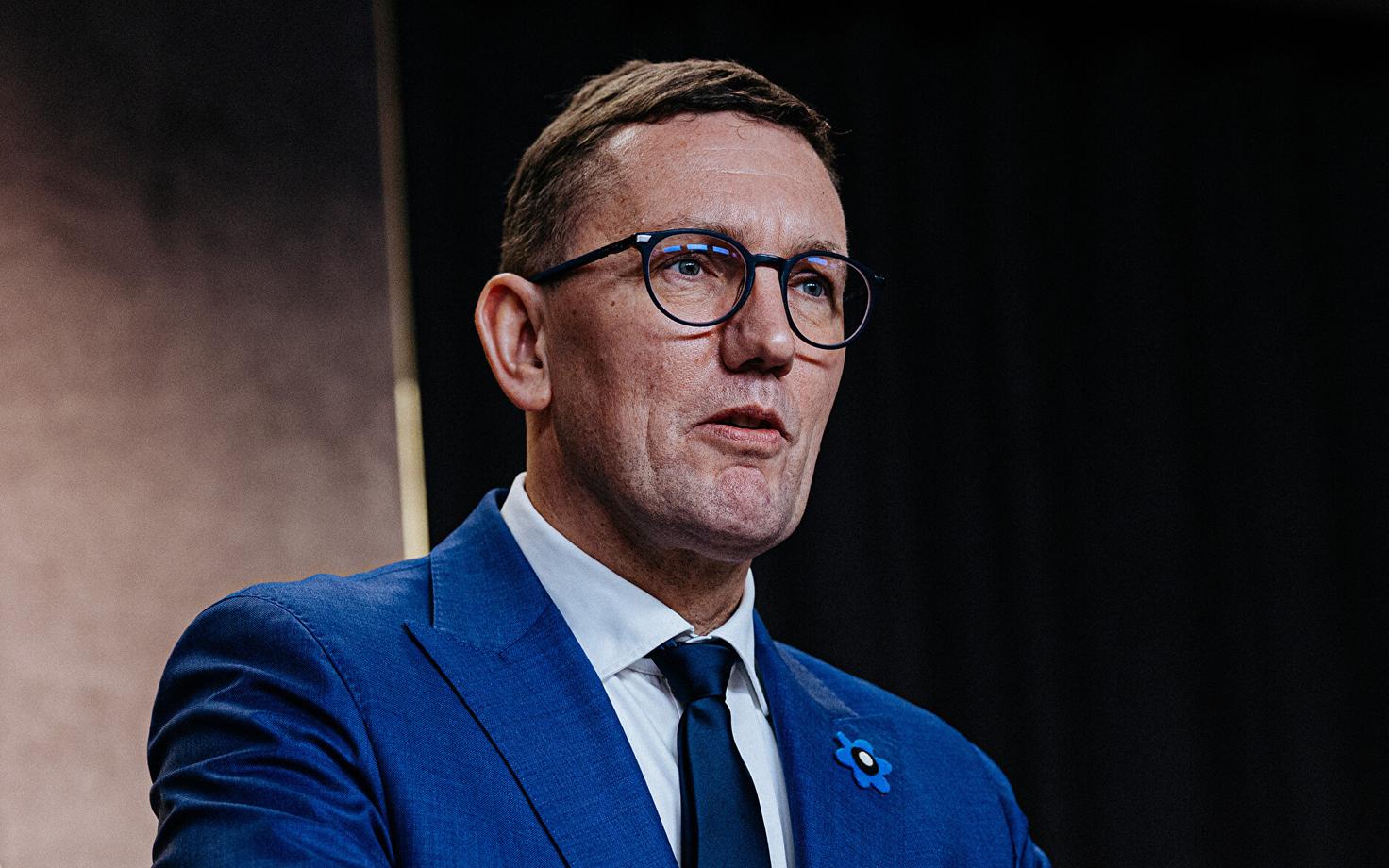
In his response to the opposition, Kristen Michal writes that he learned of the problems with the artillery shell procurements from a National Audit Office report and then asked national defense heads to brief the Cabinet.
Dear opposition,
Ukraine is fighting for the entire free world. In a warm room with running water and working electricity, it is sometimes easy to forget that others are shedding blood. Helping Ukraine quickly has been a nationwide effort and must remain so.
Countries procuring ammunition for Ukraine are racing against time and Russia. That involves risks. Without question, there are risks. But those risks must also be acknowledged honestly. Unfortunately, the government and the Riigikogu were not made aware of the budgetary risks, and that was wrong.
Aid to Ukraine must not falter. Let us ask ourselves: What would we expect from our partners if Estonia were in this situation? Would we hope our friends would do everything possible to help us, so that we had at least some ammunition as we fought a larger adversary at the cost of lives? Would we be disappointed if our friends were unwilling to take risks to help us? I disagree with those who would have been willing to abandon the procurement of ammunition for Ukraine as early as 2024 because they considered the risks too great.
I am always ready to answer any questions and want clarity on many matters myself.
I am as critical and demanding as the public.
The minister has taken political responsibility. The National Audit Office has examined the accounting and is continuing to do so. The Ministry of Defense is working to establish the facts. The Estonian Prosecutor's Office and the European Public Prosecutor's Office have opened criminal investigations. Two special committees of the Riigikogu and its National Defense Committee are also examining the matter.
The risks involved in helping Ukraine must be set out honestly, but we must certainly not stop helping. If cowardice or political gamesmanship keeps us from helping those who are shedding blood on our behalf as well, history will judge us no better than the scoundrels attacking Ukraine.
You will find answers after each question. I took the questions from news reports and from the letter you sent me, which you also sent elsewhere.
When did the defense minister inform you of the problems involving Datasel? When did prosecutors and police brief you on the criminal investigations they had opened? Why did you decide to keep this hidden from the public?
Answer:
I learned of the problems with the artillery shell procurements from the National Audit Office's report. I then asked the defense minister, the commander of the Defense Forces and the head of the Estonian Center for Defense Investments (RKIK) to provide explanations to the Cabinet.
Criminal investigations in Estonia are not conducted by political authorities. Under the law, the authority leading an investigation — the Prosecutor's Office — is responsible for disclosing information about its opening and progress.
How did the defense minister present the idea of buying ammunition from the ARCA factory to the government in February 2025 and when did you learn that Jaanus Rahumägi's company also had a financial interest in the deal?
Answer:
The foreign minister raised the matter in the Cabinet: Ukraine needed additional help at a difficult time. It was agreed to send 10,000 artillery shells as quickly as possible. The Cabinet tasked the defense minister with arranging that aid for Ukraine. Neither I nor the Cabinet has information about any financial involvement by Jaanus Rahumägi's company. The Cabinet is not informed of where ammunition is procured. The same applies to road or construction procurements: politicians do not conduct them.
Have you discussed defense procurements with Jaanus Rahumägi or, to your knowledge, has the defense minister done so?
Answer:
I have not discussed defense procurements with Jaanus Rahumägi.
You can ask the defense minister for an answer to the second part of the question, though I assume you meant the former defense minister.
The defense minister has said in the press that the €91 million in deals helped present ARCA favorably as it sought to build a factory. At the same time, Rheinmetall and BAE Systems are known to have abandoned plans to build factories because the state would not commit to purchases. Why did the government decide against similarly "presenting Estonia favorably" to Rheinmetall or BAE Systems?
Answer:
No such discussion has taken place in the Cabinet under my leadership.
How is construction of the [ARCA] factory in Kiviõli progressing? When can the promised €300 million investment and 1,000 jobs be expected to materialize? Do the new details and information that have emerged give you reason to review the decision concerning the ammunition factory to be built in Kiviõli?
Answer:
The state is, in fact, establishing a defense industry park in Kiviõli. Private investors will build their factories there. Decisions to invest in factories are therefore made by businesses, not the state.
Could it turn out that, in the case of the government's ARCA decision, there was never any plan to build a factory and that it was merely an administrative cover for ammunition deals in which the defense minister had a clear conflict of interest?
Answer:
The government has made no decision concerning ARCA.
An article in the press revealed that the defense minister repeatedly said the prime minister was demanding rapid deliveries from the ARCA factory. Was the defense minister acting under pressure from you or on his own initiative when he repeatedly said the prime minister was applying pressure and that the ammunition procurements were therefore urgent?
Answer:
Of course I asked in the Cabinet whether the aid promised to Ukraine had arrived. The press asked the same question. Neither the prime minister nor the Cabinet demands deliveries from a particular factory or manufacturer. Suppliers are determined through RKIK's procurement procedures.
The war is in its fifth year and Ukraine needs our help constantly as it also fights for our freedom. The Javelins supplied at the beginning of the war effectively helped stop Russian tanks near Kyiv. That was our swift, direct assistance. Every Estonian government must act just as decisively.
ARCA's owner has been convicted of corruption. As prime minister, what safeguards did you require of the defense minister to reduce the risks of corruption and reputational damage? As an experienced politician, you are aware of the potential risk. How could it happen that Jaanus Rahumägi's involvement instead increased the risk of corruption?
Answer:
No one needs to be separately instructed to obey the law. In preventing corruption, the Ministry of Defense follows the laws of the Republic of Estonia and cooperates with law enforcement and security authorities.
Jaanus Rahumägi is a longtime member and supporter of the Reform Party. A glaring conflict of interest has emerged from the deals. What specific steps did you take to prevent the defense minister from forming these business ties?
Answer:
When making decisions, the defense minister is subject to the same anti-corruption rules as any other minister, member of parliament, rural municipality mayor or city mayor.
Estonia ranks a high 13th in the world on the Corruption Perceptions Index. Prevention, rules and oversight work. Everyone must follow those rules and compliance is monitored by the authorities designated under Estonian law.
Jaanus Rahumägi has a fairly direct role in the Reform Party's defense and security policy network. For example, during the 2025 government coalition consultations, he was involved in discussions on internal security and public safety as a representative of ESC Global Security. What positions did he advocate?
Answer:
Views were sought from a very broad range of businesspeople while the coalition agreement was being drafted. Jaanus Rahumägi is listed as a participant in discussions on internal security and public safety. I do not know what, if anything, he contributed to those consultations.
How did the defense minister come into contact with Oculus Stretegic Solutions, the company that sought to act as an intermediary for Datasel's ammunition offer? Can you state with confidence that the contact was not arranged through Jaanus Rahumägi?
Answer:
I have no information about how the alleged contact was established. No such information was brought to me or the Cabinet. That question should be put to the former minister.
Why did the defense minister insist that the Greek company Nordeto be included as an intermediary in the Datasel deals and how did the minister come into contact with it?
Answer:
I have no information about the alleged contact or such a demand. No information about it was brought to the government or to me. That question should be put to the former minister.
According to press reports, the defense minister actively worked to steer the deals through a Signal group and his personal email account. Will you use your authority to make those conversations available to parliamentary committees?
Answer:
In a democracy, the prime minister does not have — and must not have — the authority to read or disclose other people's messages and emails. The confidentiality of communications may be breached only in circumstances prescribed by law and under judicial oversight in a criminal investigation.
Why did payments to Datasel continue after RKIK proposed considering the termination of the deals because of the risks? Press reports have since revealed that RKIK made that proposal in writing at least twice.
Answer:
I, too, am critical of this and want an answer from RKIK. I will share its response with the public when I receive it.
RKIK's previous director left office in the summer of 2025. The senior executives selection committee, led by the Government Office, took more than six months to appoint Elmar Vaher as the new director. Why did you decide to delay the process and why did appointing Vaher as RKIK director outweigh the risk of slowing defense procurements?
Answer:
The government does not organize the senior executives selection committee's work or determine its pace; civil servants do. Elmar Vaher has experience as a former police chief and is certainly capable of bringing clarity to the questions of interest to the government, the Riigikogu and the public.
--
Editor: Marcus Turovski